
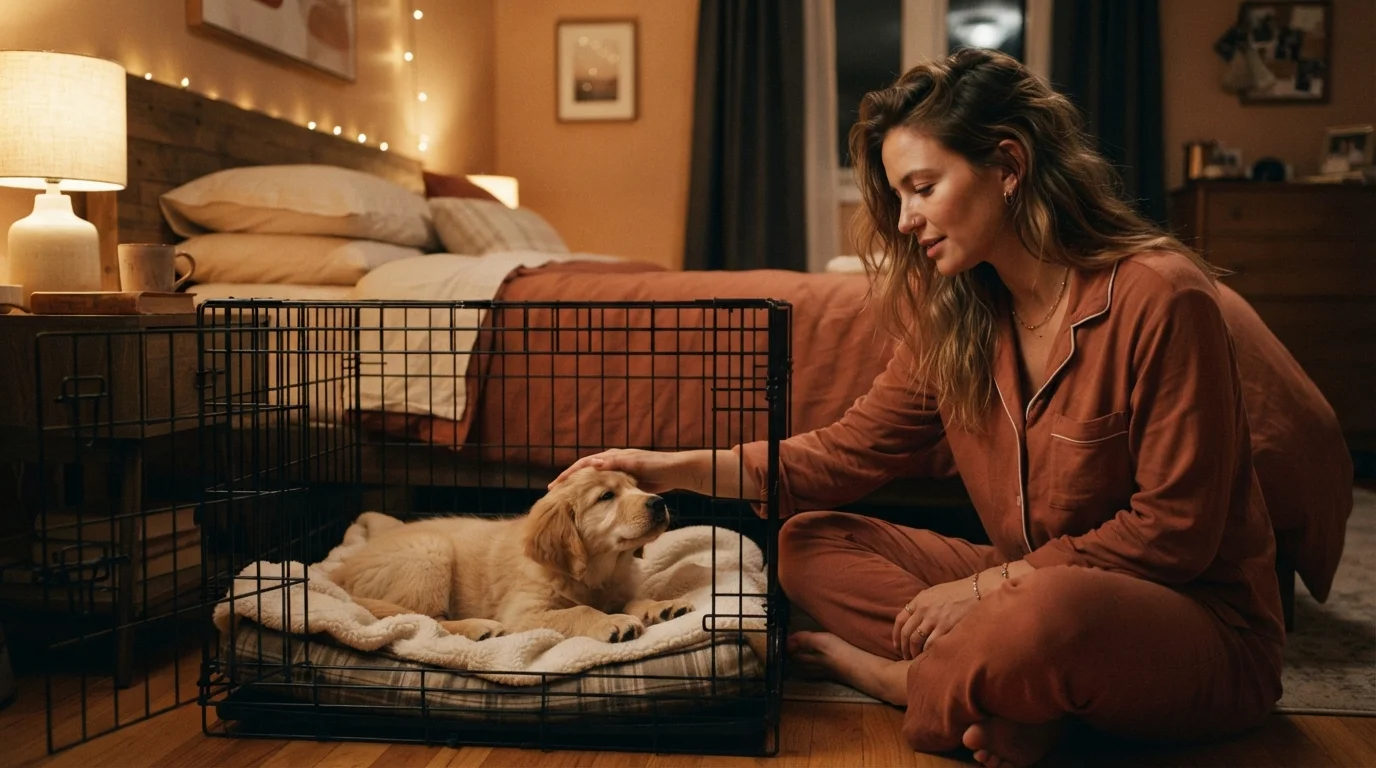
The 14-Day Blueprint: Mastering Overnight Crate Training for Your New Puppy
If you are reading this at 3:00 AM while listening to your new puppy howl like a siren from their crate, take a deep breath. We have all been there, staring at the ceiling wondering if you will ever sleep through the night again. Bringing a young puppy home is thrilling, but those first few overnight hours can test your absolute limits.
Mastering overnight crate training for your new puppy does not happen by magic, nor does it happen on a rigid, one-size-fits-all schedule. You need a realistic, step-by-step roadmap that respects your puppy’s developing bladder and your own sanity. Over the next two weeks, this guide will walk you through transforming the crate from a scary, foreign box into a safe, cozy den where your puppy actually wants to sleep. Let’s get you some sleep.
Phase 1: Days 1–3 — Introduction, Acclimation, and Positive Association

The absolute worst thing you can do on Night 1 is shove a terrified, exhausted puppy into a dark crate across the house and close the door. Their entire world just flipped upside down: they left their mother and littermates, entered a strange American suburban home with unfamiliar noises, and feel completely vulnerable.
For these first three days, your goal is simple: make the crate the best place on earth. Place the crate in your bedroom—ideally right next to your bed where your puppy can smell you and see your hand dangling down if they stir.
- The Daytime Game: Toss high-value treats (like tiny pieces of plain cooked chicken or string cheese) inside the crate with the door wide open. Let them walk in, grab it, and walk right back out without trapping them.
- Feed Every Meal Inside: Put their food bowl halfway inside the crate during daytime feeding times. Gradually push it further back as they grow more comfortable stepping inside.
- Leave the Door Open: Never force your puppy into the crate during this phase unless it is an absolute emergency.
Phase 2: Days 4–7 — Building the Nighttime Routine and Wind-Down

By Day 4, your puppy knows the crate is safe, but nighttime is still a hurdle because of the drop in household activity and the onset of the witching hour. This is where a strict, predictable pre-bedtime routine saves your sleep schedule.
Set a firm cutoff for water roughly two hours before bedtime to help minimize midnight bladder pressure, though never withhold water if your vet has advised otherwise. Take your puppy out for a dedicated, boring potty trip right before bed. Keep the lights dim, use a calm voice, and do not turn it into a play session.
- The Crate Cover Trick: Drape a lightweight, breathable sheet or blanket over three sides of the crate to create a dark, den-like atmosphere that blocks out stray bedroom lights and shadows.
- The Heartbeat or White Noise Aid: Place a ticking clock, a white noise machine, or a specialized heartbeat plush toy near the crate to mimic the comforting presence of littermates.
- The Magic Command: Introduce a cue word like “bedtime” or “kennel up” paired with a special, long-lasting chew or stuffed Kong that only appears when they go into the crate for the night.
Phase 3: Days 8–11 — Managing Midnight Whining and Nighttime Potty Breaks

Let’s address the elephant in the room: your puppy is going to cry. Figuring out whether a midnight noise means “I need to pee” or “I am throwing a tantrum because I want out” is the hardest part of this entire process.
As a general rule, a young puppy can hold their bladder for roughly their age in months plus one hour (e.g., an 8-week-old puppy can hold it for about 2 to 3 hours max). If it has been three hours since their last bathroom break, assume it is a legitimate potty emergency.
- The Boring Potty Trip: If you must take them out at 2:00 AM, carry them straight from the crate to the designated outdoor bathroom spot. Keep it strictly business—no talking, no playing, back into the crate immediately afterward.
- The Wait-It-Out Rule: If they just pottied twenty minutes ago and start whining again, wait thirty seconds of absolute silence before addressing them. If you rush to open the door the second they make a peep, you teach them that crying is a superpower that summons you.
- Soothing Without Releasing: If they are whimpering out of loneliness rather than a full bladder, drop a comforting hand down to let them lick your fingers through the wire, use a calm, low shushing sound, and then pull your hand back.
Phase 4: Days 12–14 — Solidifying Independence and Relocating the Crate

By the end of week two, your puppy should be walking into their crate willingly when given the command, and nighttime wakings should be down to a predictable schedule (or sleeping straight through). Now is the time to start testing independence if your ultimate goal is to move the crate out of your bedroom and into a hallway, living room, or designated puppy room.
Move the crate just a few feet further away from your bed every couple of nights. This gradual transition prevents a sudden panic relapse.
- Practice Short Daytime Crates: Lock the crate door during the day for 15 to 20 minutes while you walk into another room to teach them that you always come back.
- Keep Morning Excitement Low: When you wake up for the day, open the crate calmly and carry or guide them straight outside. Avoid high-pitched, hyper voices that spike their adrenaline levels first thing in the morning.
- Celebrate Small Wins: If your puppy slept through the night without a peep on Day 14, reward yourself—you earned it.
Frequently Asked Questions About Overnight Crate Training

Should I cover my puppy’s crate at night?
Yes, covering three sides of the crate with a breathable sheet or blanket helps create a dark, den-like environment that encourages sleep. Always leave the front unblocked for adequate airflow, and ensure your puppy does not pull the blanket inside to chew on it.
What should I do if my puppy pees in their crate?
Clean the crate thoroughly with an enzymatic cleaner to eliminate lingering odors, and evaluate your nighttime schedule to see if you waited too long between potty breaks. Do not punish your puppy after the fact; simply adjust your timeline and take them out more frequently during the next few nights.
How long should overnight crate training take?
Most puppies begin settling into a predictable routine within 10 to 14 days of consistent practice, but true bladder control and complete comfort can take several weeks or months depending on the individual dog’s age and background.
Is it okay to let my puppy sleep in my bed instead?
While sleeping in bed with you is a personal choice, crate training provides a crucial safety foundation that prevents midnight wandering, chewing hazards, and separation anxiety down the road. Many owners transition to letting the dog sleep in the bed only after they are fully housebroken and mature.
How do I stop my puppy from screaming in the crate?
Check first to ensure it is not a genuine need to eliminate, then wait for a brief pause in the noise before offering calm reassurance or letting them out. Responding only when they are quiet teaches them that calmness gets results, whereas screaming keeps the door shut.
Conclusion

Mastering overnight crate training takes patience, consistency, and a whole lot of coffee during those first few weeks. Remember that every small step forward builds lasting confidence for your puppy.


Jordan writes PuppySettled’s training and behavior guides, drawing on years of hands-on experience fostering and training rescue puppies through local shelters in Denver, Colorado. Jordan focuses on practical, force-free training methods — crate training, potty training, and the tough early behavior challenges that come with a new puppy. When not writing, Jordan’s usually out on a walk with a foster dog in training.