
First Night Home With a New Puppy: What to Expect Hour by Hour
You’ve got the toys, the bed, and a camera roll already full of photos, but as the sun starts to set, the reality sets in: you have to get through the first night with a new puppy. If you are reading this while staring at a whining furball and wondering what you got yourself into, take a deep breath. It is completely normal to feel overwhelmed right now. Your puppy has just left everything they have ever known—their mother, their littermates, and their first home—and dropped into an entirely foreign environment.
The goal for tonight isn’t perfect sleep; it’s survival, comfort, and setting a baseline for the coming weeks. Let’s walk through exactly what you need to do, hour by hour, to get both of you through until morning.
Quick Answer: Executive Strategy for Night One

Here is the approach, at a glance, for surviving your puppy’s first night home.
The primary goal of night one is minimizing distress, not enforcing rigid discipline. Keep the puppy’s crate or bed right next to your bed so they can hear your breathing and smell you. Take them out for a potty break immediately before laying them down, and set an alarm for every two to three hours during the night to preempt indoor accidents. When they cry—and they will—offer calm, gentle reassurance with a hand near the crate, but avoid taking them out to play or cuddle in your bed, as this builds habits you will have to break later. Keep all middle-of-the-night potty trips strictly business: dim lights, no talking, and straight back to the crate. Have your leash, slip-on shoes, and a flashlight ready by the door before you go to sleep so you aren’t scrambling in the dark.
Preparing for the First Night With a New Puppy

Featured Snippet Target: To prepare for the first night with a new puppy, set up a covered wire crate directly next to your bed. Line it with a machine-washable blanket and a toy that smells like their littermates. Gather your leash, training treats, paper towels, and an enzyme cleaner by the door.
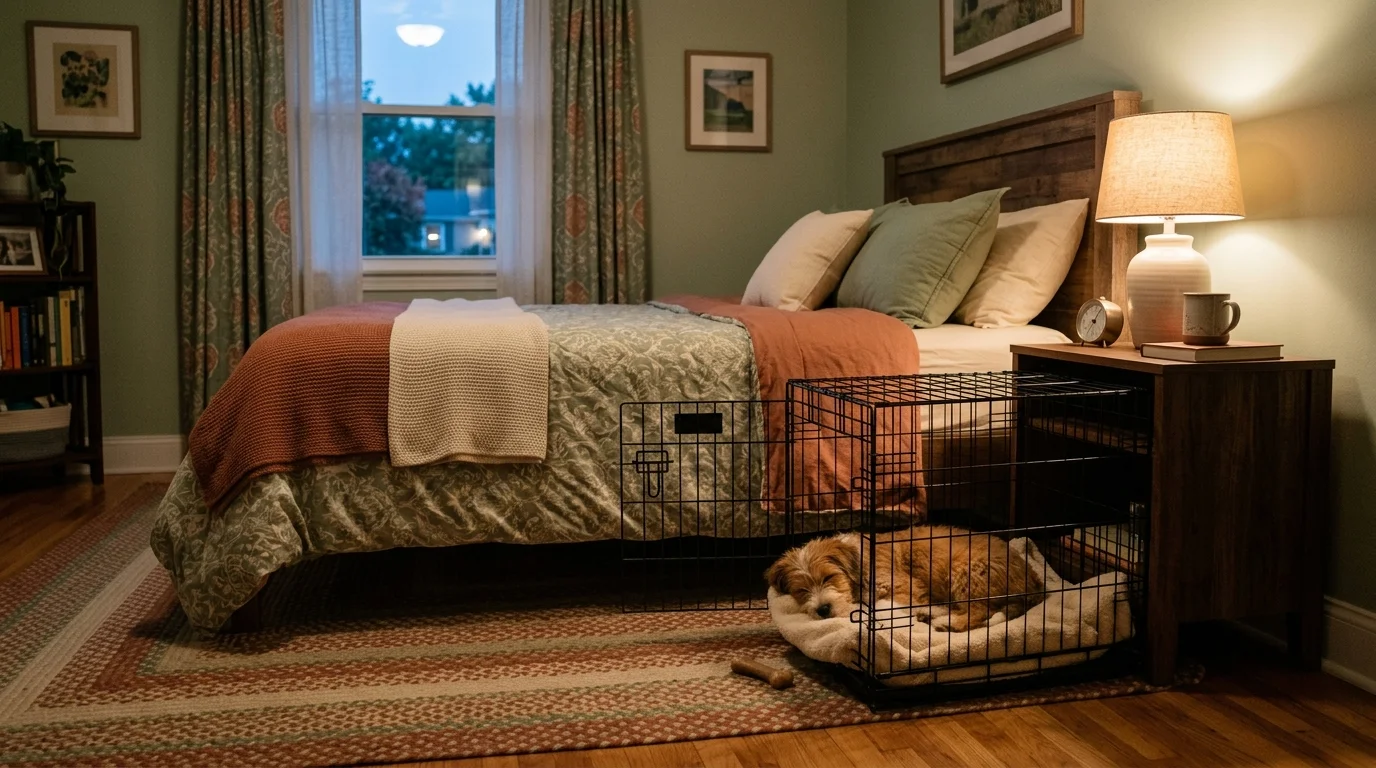
Before the sun goes down, make sure your bedroom is ready. Having the crate right next to your bed allows you to drop a hand down to reassure them if they panic. Make sure you have a clear walking path to the door.
The Evening Arrival: 4:00 PM to 6:00 PM

When you first bring your puppy home, keep their world small. Limit their access to one or two puppy-proofed rooms. Let them sniff around at their own pace without crowding them.
- Keep the house quiet. Avoid inviting the neighborhood over to meet the puppy on day one.
- Show them the potty spot immediately. When they go, offer calm praise.
- Let them inspect their crate with the door open. Toss a few treats inside so they associate it with good things.
Dinner Time and Digestion: 6:00 PM to 7:00 PM

Feed your puppy their last meal of the day around 6:00 PM. This gives them plenty of time to digest and eliminate before bedtime.
Stick to the exact food the breeder or rescue was feeding them. This is not the time to transition to a new brand, as stress plus a diet change is a guaranteed recipe for midnight diarrhea.
The Pre-Bedtime Wind Down: 7:00 PM to 9:00 PM

Puppies get the “zoomies” in the evening. Let them burn off that nervous energy with gentle play, but keep it structured.
- Play fetch down a short hallway.
- Work on simple name recognition.
- Around 8:00 PM, pull up their water bowl. This is a crucial step to prevent full bladders at 2:00 AM.
The Final Potty Break: 9:00 PM to 10:00 PM

Take your puppy out for their final bathroom break. Do not rush this. Stand in their designated spot and wait.
If they just want to sniff the yard and chew on grass, keep them on a short leash. You want them to understand that this trip outside is for business, not for an extended playtime. Once they pee, give them a high-value treat and head immediately inside.
New Puppy First Night What to Do About Sleeping Arrangements

The age-old debate: crate in the bedroom or crate in the living room? For the first week, the bedroom is the undisputed winner. Dogs are pack animals, and isolation is terrifying to an 8-week-old puppy.
Place the crate on a nightstand or chair if they are tiny, so they are at eye level with you, or right on the floor next to your side of the bed. You want them close enough that you can poke your fingers through the wire mesh if they panic.
Setting Up the Crate for Success

A bare plastic tray is not welcoming. Create a cozy den environment to help them settle.
- Bedding: Use a cheap, washable fleece blanket. Do not use expensive dog beds yet; they might get chewed or peed on.
- Scent: Add the blanket or stuffed toy the breeder sent home that smells like their mother.
- Cover: Drape a breathable sheet over the back and sides of the crate to make it feel like a secure cave.
Lights Out: 10:00 PM to 12:00 AM

Put the puppy in the crate, close the door, and turn off the lights. Expect some immediate whimpering.
Lay in bed and speak in a soft, low voice. Say “settle” or “good night.” Drop your hand down so they can smell you. Do not take them out if they are just whining. If you pull them out now, they learn that whining opens the door.
The Midnight Wake-Up: 12:00 AM to 2:00 AM

Most 8-week-old puppies can only hold their bladder for about two to three hours. Set an alarm for 1:30 AM or 2:00 AM.
When the alarm goes off, carry the puppy outside. If you let them walk, they will likely squat in the hallway. Put them down in the grass, wait for them to pee, quietly praise them, and carry them back to the crate. No lights, no talking, no playing.
Handling Puppy Crying First Night

It is heartbreaking to listen to, but puppy crying first night is entirely normal. You need to distinguish between “I am lonely” crying and “I need to pee” crying.
If they wake up and cry after just being out an hour ago, they are likely just scared. Stick your fingers through the crate, say “shh, it’s okay,” and wait them out. Earplugs are highly recommended for the first week.
The Early Morning Shift: 2:00 AM to 4:00 AM

If you did a 1:30 AM trip, expect to be up again around 4:00 AM. The routine is exactly the same: carry them out, strictly business, carry them back.
This is usually the hardest part of the night. You are exhausted, and the puppy might decide that 4:00 AM is a great time to start their day. Do not give in. Put them back in the crate.
What If Your Puppy Won’t Stop Crying First Night Home?

If your puppy won’t stop crying first night home and a hand near the crate isn’t working, check the basics. Are they too hot? Too cold? Did they soil their crate?
If they are clean and safe, you may need to use a heartbeat toy. These plush toys simulate the heartbeat and warmth of a littermate and work wonders for severe anxiety.
The Crack of Dawn: 5:00 AM to 6:00 AM

By 5:30 AM or 6:00 AM, the night is officially over. When the puppy wakes up crying now, it’s time to get up for the day.
Take them out for a long potty break, feed them their breakfast, and praise them for making it through the night. You survived. Grab a very large cup of coffee.
Apartment vs. House First Night Considerations

If you live in an apartment, the middle-of-the-night potty trips are much harder.
- Apartment: You cannot wait for the elevator at 2:00 AM with a full bladder. Use a fresh grass patch on your balcony for the first few nights, or carry the puppy the entire way down to the street.
- House: Use the exact same door to the yard every single time so the puppy learns the route.
Essential Gear to Have on Hand

Do not wait until midnight to realize you are missing something. Have these items staged by the door:
- Slip-on shoes and a jacket.
- A flashlight (so you can see if they actually peed without turning on floodlights).
- Paper towels and enzymatic cleaner (for the inevitable hallway accident).
- A pre-measured bag of high-value treats.
Mistakes to Avoid on Night One

The biggest mistake new owners make is letting the puppy sleep in their bed on night one because they feel bad.
If you do this, you are teaching the dog that crying gets them into your bed. When they weigh 60 pounds and are tracking mud, you will regret it. Another mistake is turning on all the lights and talking loudly during potty breaks—this signals that it is playtime.
FAQ: Surviving the First 24 Hours

Should I ignore my puppy crying the first night?
Do not completely ignore them, but don’t take them out of the crate either. Offer gentle reassurance with your voice or fingers through the crate to let them know they aren’t alone, but only open the door for scheduled potty breaks.
Where should a puppy sleep the first night?
Your puppy should sleep in a crate or secure pen directly next to your bed. This prevents indoor accidents, keeps them safe from chewing cords, and provides the physical closeness they crave after leaving their litter.
How many times does an 8-week-old puppy need to pee at night?
Expect an 8-week-old puppy to need a bathroom break every 2 to 3 hours. Plan for at least two middle-of-the-night trips during their first week home.
Conclusion
The first night with a new puppy is always a blur of exhaustion, stress, and anxiety. Remind yourself that it will never be this hard again. Every night gets marginally easier as they learn your routine, grow their bladder capacity, and realize they are safe in their new home. For now, grab a nap when they nap today.


Maya is the founder and writer behind PuppySettled, where she shares practical, situation-specific guides for first-time dog owners. After bringing her own puppy home to a small apartment and realizing most advice out there assumed a house and a yard, she started writing the guides she wished had existed — for real budgets, real schedules, and real first-time-owner questions. When she’s not writing, she’s usually on a walk figuring out the next thing worth covering.