
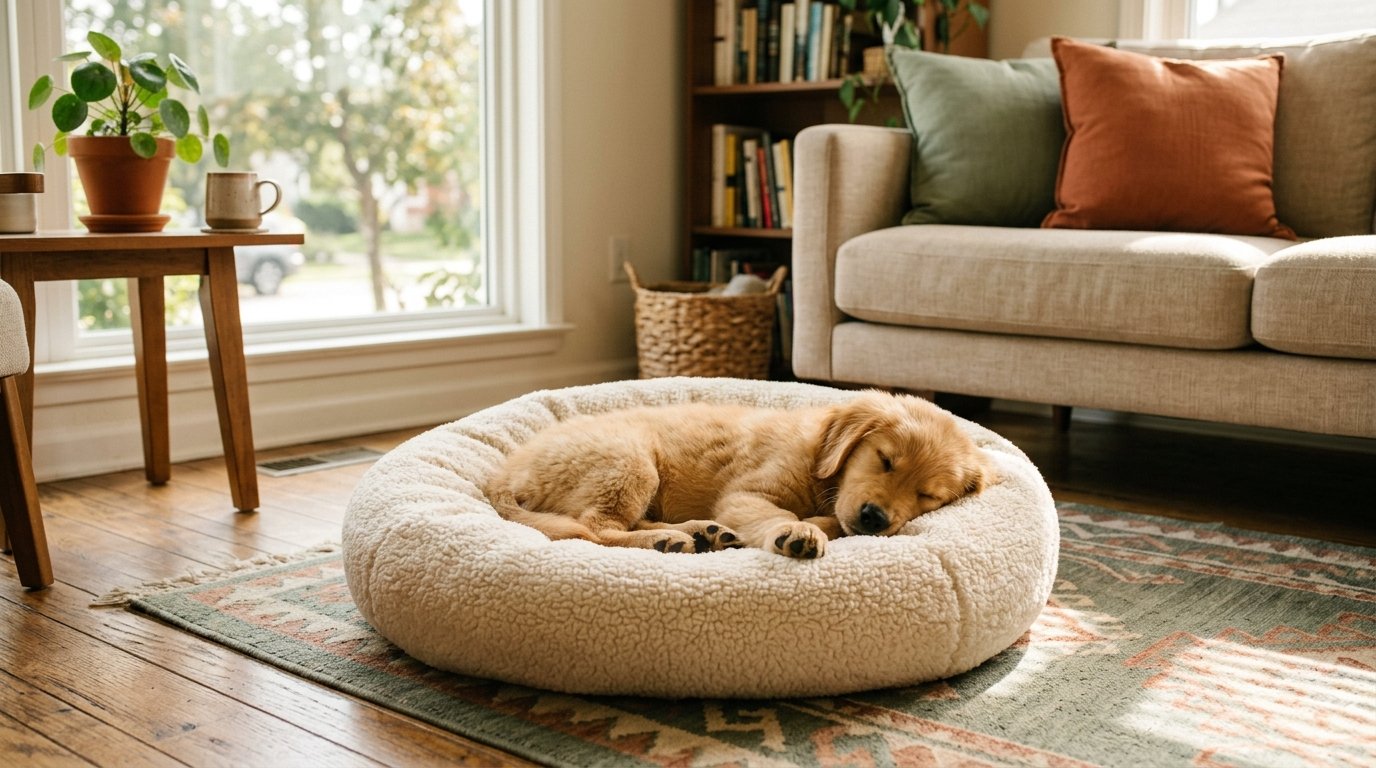
Why Does My Puppy Sleep So Much? Normal Sleep Patterns by Age
If you just brought home an eight-week-old puppy and spent the last six hours wondering why your new furry roommate has done nothing but curl up on the living room rug and doze off, take a deep breath. You are not failing as a pet parent, and your puppy isn’t sick. When you find yourself searching why does my puppy sleep so much, you are usually caught between relief that they are quiet and lingering panic that something might be wrong with their health.
Let’s clear up the mystery right away: puppies need between 15 and 20 hours of sleep every single day, which is significantly more than adult dogs. Their tiny bodies are experiencing explosive physical growth and neural development, making rest an absolute biological necessity. By understanding normal sleep schedules by age, recognizing why they nap in short bursts, and knowing the difference between healthy exhaustion and veterinary lethargy, you can stop worrying and let your puppy rest.
Why Does My Puppy Sleep So Much? The Quick Answer

Puppies need between 15 and 20 hours of sleep every 24-hour cycle to support rapid physical growth, brain development, and immune system maturation.
Unlike adult dogs who typically snooze around 12 to 14 hours a day, newborn and young puppies spend the vast majority of their time asleep. This heavy sleep requirement often catches first-time owners off guard, especially when a puppy wakes up for a frantic thirty-minute burst of play and then collapses back into a deep nap. This alternating cycle of intense activity and heavy slumber is entirely normal and reflects the massive energy demands of a growing canine body.
Why Sleep Matters So Much During Puppyhood

Sleep is not just a passive state of rest for a growing puppy; it is an active biological phase where critical developmental work occurs behind the scenes.
- Tissue repair and muscle growth: During deep slow-wave sleep, a puppy’s pituitary gland releases a surge of growth hormones. These hormones stimulate tissue repair, muscle development, and bone elongation as your puppy rapidly grows out of their puppyhood proportions.
- Brain development and memory consolidation: While your puppy sleeps, their brain processes all the new sights, sounds, smells, and training cues they encountered while awake. This neural consolidation is how they learn rules, remember commands, and transition experiences into long-term memory.
- Immune system fortification: Adequate rest allows a puppy’s developing immune system to build resilience against common environmental pathogens. A sleep-deprived puppy has lowered immune defenses, making them more susceptible to minor illnesses and behavioral meltdowns.
Puppy Sleep Chart by Age

To help you track what is expected as your puppy matures through their first year of life, use this comprehensive age-by-age sleep reference guide.
| Age Stage | Total Hours of Sleep Needed | Key Developmental Focus & Sleep Patterns |
| 0 to 8 Weeks | 18 to 20 Hours Daily | Neonatal phase; sleep is entirely continuous between nursing and warmth from the litter. |
| 9 to 12 Weeks | 16 to 18 Hours Daily | Transition home; heavy napping between short, high-energy play and feeding cycles. |
| 3 to 4 Months | 15 to 18 Hours Daily | Active exploration; developing bladder control; establishing initial nighttime sleep stretches. |
| 4 to 5 Months | 14 to 16 Hours Daily | Teething phase; sleep disruptions common due to gum inflammation and jaw aches. |
| 6 Months | 13 to 15 Hours Daily | Adolescent transition; growing independence; settling into a predictable daily rhythm. |
| 12 Months | 12 to 14 Hours Daily | Young adult maturity; sleep requirements stabilize closer to adult canine baselines. |
Is It Normal for a Puppy to Sleep All Day?

Yes, it is entirely normal for a puppy to sleep nearly all day, provided they are alert, playful, and energetic during their short waking windows.
When owners ask is it normal for a puppy to sleep all day, they are usually picturing an animal that stays awake for hours on end like an adult dog. In reality, a young puppy’s day consists of waking up, eating, eliminating, playing intensely for 20 to 45 minutes, and then crashing back into a heavy sleep. If your puppy wakes up with bright eyes, eats with enthusiasm, and engages happily with toys or training, their all-day sleeping pattern is a sign of healthy development.
Why Puppies Sleep in Short Bursts Instead of One Long Stretch

If you have ever noticed your puppy waking up every hour or two rather than sleeping through the morning, you are observing a natural canine rest pattern known as polyphasic sleep.
- Immature circadian rhythms: Just like human babies, young puppies do not possess fully mature internal biological clocks. Their bodies process energy in short cycles, meaning they burn through calories quickly and need frequent meals followed immediately by naps.
- The play-crash cycle: A puppy’s nervous system easily gets overwhelmed by sensory input. Once they reach their threshold of stimulation, they don’t slowly wind down; they abruptly crash wherever they happen to be standing, whether that is on the kitchen floor or right across your feet.
When Does a Puppy Start Sleeping Through the Night?

Most puppies begin sleeping through the night without needing a bathroom break around 16 weeks of age, once their physical bladder capacity matures.
During their first weeks in your home, puppies wake up every two to four hours at night because their tiny bladders fill up rapidly. As their bladder muscle tissue strengthens and hormone levels stabilize around four months of age, they can comfortably hold their urine for six to eight hours overnight.
Puppy Sleep Regression: Why Sleep Suddenly Gets Disrupted Around 4–5 Months

If your puppy was sleeping soundly through the night and suddenly starts waking up restless, whining, or pacing around four to five months of age, you are likely witnessing a puppy sleep regression.
- The teething discomfort factor: This age coincides with peak adult tooth eruption. Sore, inflamed gums make it difficult for puppies to settle comfortably, leading to nighttime restlessness and a desperate need to chew on soothing surfaces.
- Adolescent brain development and fear periods: Around four to five months, puppies enter developmental milestones where environmental awareness spikes. Strange noises outside your apartment window that never bothered them before suddenly cause alertness and disrupted sleep patterns.
Signs Your Puppy Isn’t Getting Enough Sleep

Just like human toddlers, overtired puppies don’t quietly put themselves to bed; instead, they experience severe behavioral meltdowns.
- Hyperactivity and the “witching hour”: If your puppy turns into a frantic, ankle-biting landshark in the evening, they are almost certainly overtired rather than full of extra energy.
- Increased nipping and mouthing: Overtired puppies lose their self-regulation skills, leading to relentless biting, jumping, and refusal to respond to basic commands.
- Clinginess or inability to settle: Pacing back and forth across the room, whining despite having a full belly and empty bladder, and clinging to your side are classic indicators that your puppy desperately needs enforced nap time.
When Excessive Sleep Is a Red Flag, Not Normal Development

While heavy sleeping is normal, a sudden, dramatic increase in sleep paired with lethargy, weakness, or appetite loss warrants an immediate veterinary call.
It is crucial to distinguish between normal developmental sleep and pathological lethargy. If your puppy is sleeping their normal 18 hours but remains lively when awake, there is no cause for concern. However, if your puppy is too exhausted to lift their head, refuses to eat their meals, misses playtime entirely, or shows signs of vomiting, diarrhea, or a low body temperature, bypass internet research and contact your veterinarian immediately. Neonates and young puppies decline rapidly when ill.
How to Support Healthy Sleep Habits at Every Age
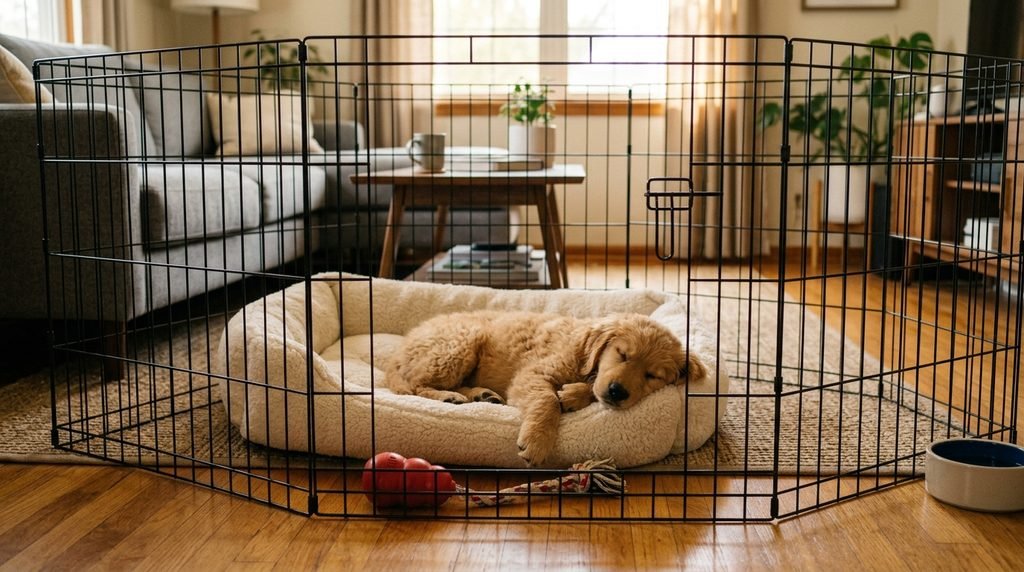
Establishing structured rest routines helps your puppy get the deep, restorative sleep they need without turning into an overtired tyrant.
- Enforced crate or pen naps: Because puppies struggle to self-settle in a busy household, schedule mandatory two-hour nap times inside a quiet, covered crate or secure exercise pen every few hours during the day.
- Maintain a predictable routine: Keep feeding, play, and bedtime schedules consistent so your puppy’s internal clock learns when it is time to wind down.
- Create a calm sleep environment: Dim the lights, turn off loud television screens, and use a white noise machine in your apartment to muffle hallway noises during nap time.
Frequently Asked Questions (FAQ)

Why does my puppy sleep so much?
Puppies sleep between 15 and 20 hours a day because their bodies and brains are growing at an explosive rate, requiring massive amounts of rest for tissue repair and neurological development.
Is it normal for a puppy to sleep all day?
Yes, as long as your puppy is bright-eyed, playful, and engaged during their waking intervals, sleeping most of the day is a completely normal developmental sign.
How much sleep does a puppy need by age?
Young puppies from 8 to 12 weeks need roughly 16 to 18 hours of sleep daily, while older puppies between 4 and 6 months require about 14 to 16 hours of daily rest.
When do puppies start sleeping through the night?
Most puppies can sleep through the night without a bathroom break by approximately 16 weeks of age, once their physical bladder capacity fully matures.
Why did my puppy’s sleep suddenly change around 4–5 months?
Teething pain, incoming adult teeth, and adolescent developmental fear periods frequently disrupt a puppy’s established sleep routine during their fifth month.
When is excessive puppy sleep a cause for concern?
If a sudden increase in sleep is accompanied by lethargy, weakness, vomiting, diarrhea, or a refusal to eat, contact your veterinarian immediately.
Conclusion

Understanding why your puppy sleeps 18 hours a day helps you replace anxiety with appreciation for their rapid growth. By establishing structured nap schedules, recognizing the signs of overtiredness, and watching for true red flags, you can support your puppy’s healthy development every step of the way.


“Alex is the go-to for anything practical — from picking the right harness to knowing when a puppy’s upset stomach needs a vet visit versus a little patience. Before joining Puppy Settled, she spent years working at a small-animal vet clinic and running a pet supply review blog on the side, which means every gear recommendation here has been tested (and every health tip double-checked). Alex owns a rescue mutt named Otis, who has personally ‘reviewed’ more chew toys and dog beds than any dog should probably need.”