
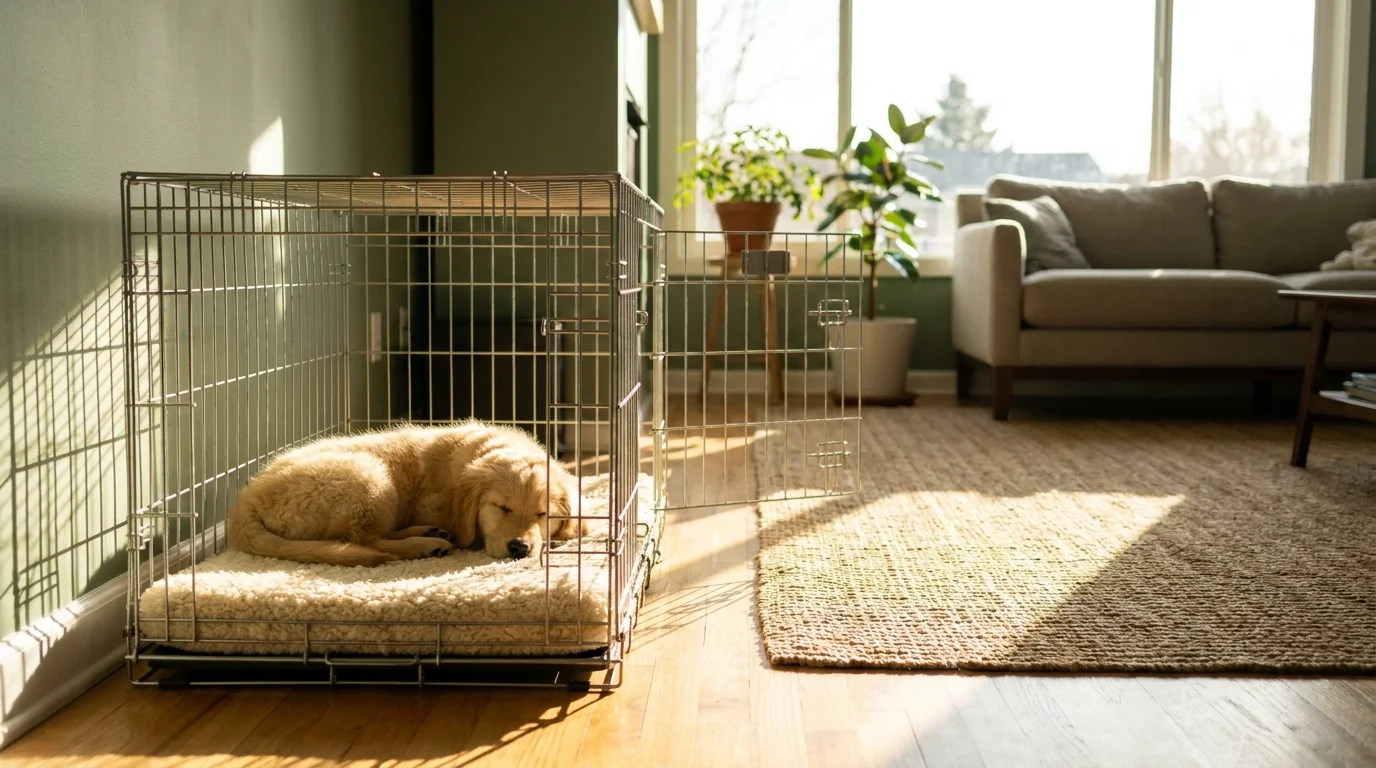
The Ultimate Guide to Puppy Crate Training
Bringing a new puppy home is a whirlwind of excitement, sudden messes, and late-night whines, especially if you are trying to navigate everything within the confines of an apartment. When you are staring at a wire crate on your living room floor at midnight, wondering how your tiny dog will ever adjust, it is completely normal to feel a bit overwhelmed. Crate training is a game-changer for safety, house-training, and giving your puppy a safe den space. This guide walks you through the exact steps to turn the crate into a comforting sanctuary for your new companion.
Phase 1: Choosing the Right Crate

Finding the right crate establishes the foundation for successful house-training and safe confinement. When shopping for options, you will typically choose between wire crates and heavy-duty plastic airline models. Wire crates provide maximum airflow and let your puppy see the household activity around them, making them ideal for apartment living where visibility reduces isolation anxiety. Plastic crates offer a dark, cave-like atmosphere that can help nervous puppies feel more secure.
Sizing the crate correctly is critical for success. If the crate is too large, your puppy will divide it into a sleeping area and a bathroom corner, completely ruining your house-training progress. If it is too small, they will feel restricted and uncomfortable. Your puppy should be able to stand up fully, turn around easily in a complete circle, and stretch out comfortably on their side.
Phase 2: Introducing Your Puppy to the Crate

The fastest way to crate train a puppy is to make the crate a positive, happy place from day one instead of a restricted zone. If you only place your puppy inside when you are leaving or when they are in trouble, they will develop an immediate aversion to the space. Keep the door tied open so it cannot swing shut unexpectedly, and place the crate in a lively yet comfortable area of your home.
Toss high-value treats, such as small bits of cooked chicken, just inside the open door to encourage your puppy to explore voluntarily. Let them walk in, grab the treat, and walk right back out without closing the door. Once they are comfortable entering on their own, start feeding their regular meals entirely inside the crate. This positive reinforcement builds an immediate, joyful association with the enclosure.
Throughout the day, randomly drop surprise treats inside when your puppy is not looking so the crate acts like a magical treasure box. Keep sessions light, short, and entirely free of pressure or forced confinement during these initial exploratory days.
Phase 3: The Crate Training Schedule & Age Limits

Puppies have tiny bladders and limited physical control, meaning expectations must align with their developmental milestones. A general rule for daytime limits is that a puppy can hold their bladder for roughly one hour per month of age, plus one hour. However, this is an absolute physiological maximum rather than a comfortable target for active daily training.
Establish a predictable daily routine that alternates between active playtime, outdoor potty trips, training, and structured crate rests. When your puppy wakes up from a nap, take them outside immediately, praise them when they eliminate, and then bring them inside for supervised interaction before their next rest cycle.
Phase 4: Mastering Nighttime Crate Training

Nighttime crate training is often the most challenging hurdle for new owners due to loneliness and overnight bladder needs. Place the crate right next to your bed for the first week or two so your puppy can smell and hear you nearby. Being close helps soothe their nighttime anxiety without requiring you to pull them out of the crate every time they stir.
Expect to handle one or two midnight potty breaks for very young puppies. Keep these trips strictly functional: carry your puppy outside to the bathroom spot, remain quiet and boring while they go, and carry them right back inside to bed without turning it into playtime.
If your puppy cries, try soothing techniques like placing a ticking clock or a heartbeat toy near their bedding. Putting an old t-shirt with your scent inside the crate can also provide immense comfort during those dark hours.
Phase 5: Common Crate Mistakes to Avoid

Avoiding major behavioral traps protects your progress and keeps your puppy feeling secure.
First, never use the crate as a punishment. If you send your puppy to the crate angrily after an accident, you instantly ruin the positive safe-haven association you worked hard to build.
Second, do not rush the process of closing the door and walking away. Build up duration slowly over several days rather than slamming the door on day one.
Frequently Asked Questions

What is the 7 7 7 rule for puppies?
The 7-7-7 rule is a helpful adjustment guideline for newly adopted dogs, suggesting it takes about 7 days for a dog to decompress, 7 weeks to learn household routines, and 7 months to feel fully bonded and secure in their new home environment.
What is the fastest way to crate train a puppy?
The fastest way to crate train a puppy is through high-value positive reinforcement, such as feeding meals inside the crate with the door open, keeping the environment comfortable, and building up closed-door intervals gradually without ever using the space for punishment.
What is the hardest month for a puppy?
For most owners, the third or fourth month—when puppies are between 12 and 16 weeks old—is the most difficult due to peak teething, boundless exploratory energy, and testing behavior.
What are the common mistakes to avoid when crate training a puppy?
Common mistakes include using the crate as a punishment, choosing a crate that is too large, rushing the door-closing stage, leaving puppies confined past their bladder limits, and giving in to every single whine.
How long does it take to crate train a puppy?
Most puppies can learn to accept short intervals inside a crate within one to two weeks, though full overnight sleeping and calm daytime settling usually take three to six weeks depending on the individual puppy.
Should you cover the puppy’s crate at night?
Covering a puppy’s crate with a lightweight, breathable blanket at night can help block visual distractions, mimic a natural den, and encourage settling.
Crate training requires patience, steady routines, and a calm approach during those exhausting early weeks. By treating the crate as a safe den rather than a restriction tool, you give your puppy a wonderful foundation for confidence. Take it one day at a time, celebrate small milestones, and enjoy watching your new companion grow.


Maya is the founder and writer behind PuppySettled, where she shares practical, situation-specific guides for first-time dog owners. After bringing her own puppy home to a small apartment and realizing most advice out there assumed a house and a yard, she started writing the guides she wished had existed — for real budgets, real schedules, and real first-time-owner questions. When she’s not writing, she’s usually on a walk figuring out the next thing worth covering.