
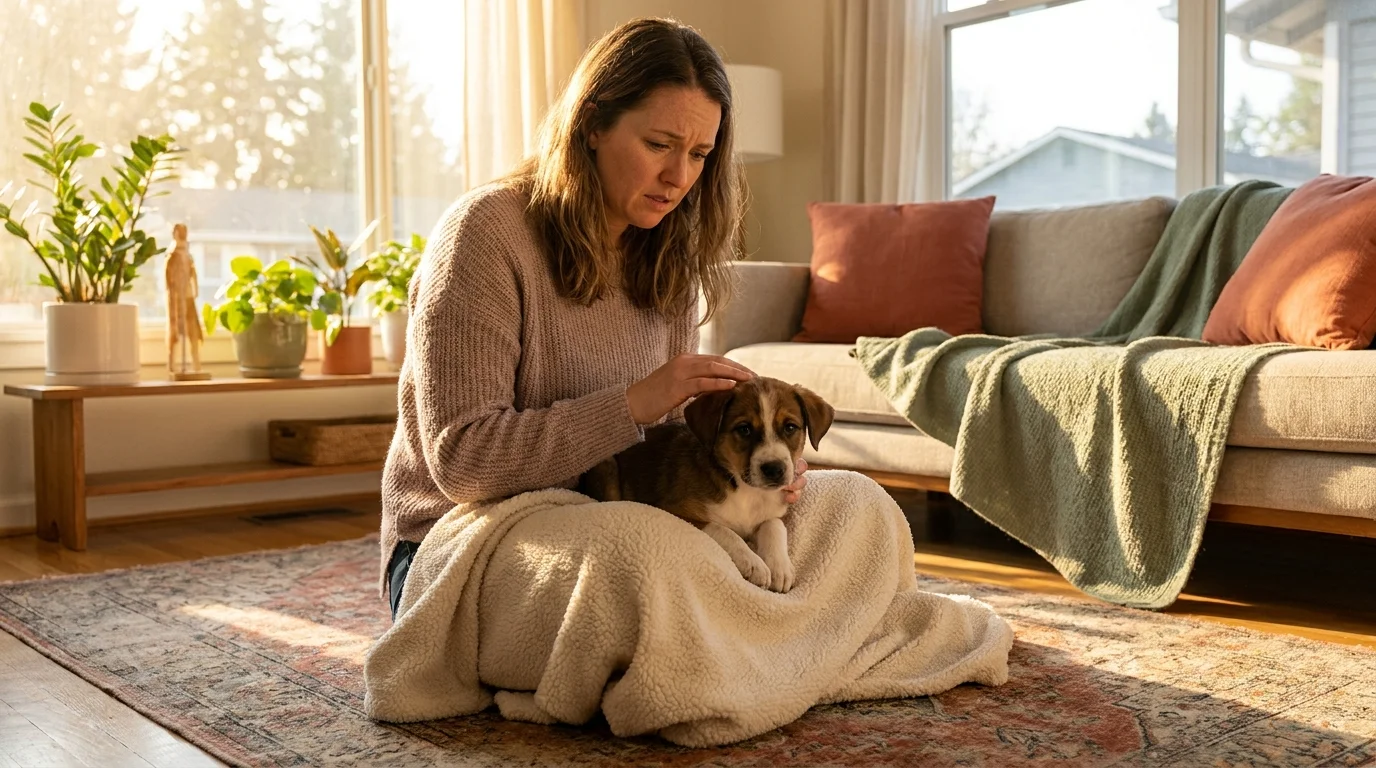
Puppy Vomiting and Diarrhea: When It’s Serious and When It’s Not
This guide is for general informational purposes only and isn’t a substitute for professional veterinary advice. If your puppy is showing signs of illness, contact your veterinarian.
Finding a pile of mess on your living room rug is stressful enough, but discovering both puppy vomiting and diarrhea at the same time can send your heart straight into your throat. If you are reading this with your phone in one hand and a frantically scratching puppy in the other, take a deep breath. We are going to walk through what you need to look for right now to keep your new family member safe.
Puppy vomiting and diarrhea combined is a medical concern that always warrants close attention, and in young or unvaccinated puppies, it requires same-day veterinary evaluation to rule out life-threatening conditions like parvovirus. In this guide, we will break down the crucial difference between a simple upset stomach and a true medical emergency, what red flags demand an immediate car ride to the vet clinic, and how to safely navigate the hours while you wait for professional help.
Puppy Vomiting and Diarrhea: The Quick Answer

Puppy vomiting and diarrhea together always demand careful monitoring because tiny dogs dehydrate rapidly and face severe risks from viral infections. Unlike adult dogs who might bounce back from eating a rogue piece of trash, puppies under six months have delicate immune systems and minimal fat reserves. If your puppy has purged their breakfast and is passing loose stools, do not assume it will pass on its own. Contact your local veterinarian right away, especially if your puppy is under 16 weeks old or has not finished their full series of distemper and parvovirus vaccinations.
What Are the First Signs of Parvo in a Puppy?

The first signs of canine parvovirus in a puppy typically include sudden lethargy, a sharp drop in appetite, high fever, and vomiting, quickly followed by foul-smelling or bloody diarrhea. Parvovirus is a devastating, highly contagious gastrointestinal virus that targets unvaccinated or partially vaccinated puppies. If your puppy falls into this high-risk category, you must act with extreme urgency.
- Lethargy and profound weakness where the puppy refuses to play or lift their head
- Loss of interest in food and water, often refusing even high-value treats
- Vomiting white foam or yellow fluid multiple times within a few hours
- Watery, yellow, gray, or bloody diarrhea with a distinct, intensely foul odor
- A high body temperature or, in advanced shock cases, a dangerously low body temperature
Puppy Vomiting and Diarrhea But Acting Normal: Does That Rule Out Something Serious?

Puppy vomiting and diarrhea but acting normal does not rule out serious conditions like early-stage parvovirus, intestinal blockages, or severe parasites. It is easy to feel a false sense of security when your eight-week-old puppy still wags their tail and chases a toy after having an accident. However, viral infections and systemic illnesses often start quietly.
During the initial phase of an illness, adrenaline or the early stages of a bug might keep your puppy’s spirits up. Do not wait for them to crash completely before seeking help. If the vomiting or diarrhea continues for more than a single round, or if your puppy misses a meal while showing these symptoms, treat it as a red flag. Keep a close eye on their gums—they should be bubblegum pink and moist, not pale, dry, or tacky to the touch.
When to Worry About Puppy Vomiting and Diarrhea

You must take your puppy to an emergency veterinary clinic immediately if you notice blood in their stool or vomit, complete refusal to drink water, or persistent, repeated vomiting. Knowing when to drop everything and drive to the animal hospital can save your puppy’s life.
- Blood in the vomit (which can look bright red or like dark coffee grounds)
- Bloody, tarry, or projectile watery diarrhea that happens every hour
- Total lethargy or unresponsiveness to your voice and touch
- Inability to keep even a tiny teaspoon of water down for more than a few hours
- Your puppy is under four months old or has an incomplete vaccination history
- Signs of severe abdominal pain, such as whining, panting, or a hunched posture
How Long Can a Puppy Go With Vomiting and Diarrhea Before It’s an Emergency?

A puppy can rarely go more than 12 hours with active vomiting and diarrhea before severe dehydration makes it a medical emergency. Adult dogs have the bodily reserves to sleep off a mild stomach bug, but puppies can slip into dangerous dehydration and electrolyte imbalances in a matter of hours.
If your puppy has vomited once, passed a single loose stool, but is otherwise bright, drinking water happily, and eager for their next meal, you can monitor them closely at home for a half-day. The moment those symptoms repeat, or if your puppy begins acting tired and refuses hydration, the clock runs out on a wait-and-see approach. Call your veterinarian or local emergency hospital to report the symptoms and get guidance on whether to bring them in immediately.
What You Can Safely Do While You Arrange Vet Care

While you arrange veterinary care, you can safely help your puppy by removing all food temporarily, offering tiny sips of water, and keeping them warm and quiet. Never attempt to treat a vomiting and diarrhea crisis with over-the-counter human medications like Pepto-Bismol or Imodium unless explicitly instructed by a licensed veterinarian.
- Pull up the food bowl for a short period—usually a few hours—to give an irritated stomach a chance to rest, as directed by your vet over the phone.
- Offer small sips of plain water or unflavored Pedialyte every 15 to 20 minutes instead of letting them gulp down a whole bowl at once.
- Set up a quiet, warm crate or pen away from other household pets to monitor their output and keep them from eating more debris.
- Collect a fresh stool sample in a plastic baggie if possible, as your vet may need it for a parasite or parvo test upon arrival.
Other Common (Less Serious) Causes

Other common, less serious causes of mild digestive upset include abrupt diet transitions, scavenging trash, or mild reactions to new treats. While we always prioritize safety first, not every episode of an upset stomach is a catastrophic emergency.
If your puppy recently stole a piece of rich table food, chewed up a cardboard box, or transitioned to a new brand of kibble too fast, their digestive tract may simply be staging a protest. These puppies usually maintain their normal energy levels, experience only isolated episodes of mild loose stool, and show no signs of fever or lethargy. However, if dietary indiscretion results in persistent symptoms lasting past a single afternoon, a veterinary check is still required to rule out an intestinal obstruction.
Frequently Asked Questions

What to do if my puppy is vomiting and has diarrhea?
If your puppy is vomiting and has diarrhea, remove their food bowl temporarily, contact your veterinarian immediately for guidance, and monitor them closely for red flags like lethargy, fever, or blood in their stool.
What are the first signs of parvo in a puppy?
The earliest signs of canine parvovirus include sudden lethargy, loss of appetite, vomiting, high fever, and foul-smelling or bloody diarrhea, particularly in puppies under four months old.
How long can a puppy go with vomiting and diarrhea before it’s an emergency?
A puppy should generally not go more than 12 hours with active vomiting and diarrhea, and any persistent symptoms combined with lethargy or dehydration require immediate veterinary care.
Is it still a concern if my puppy is vomiting and has diarrhea but acting normal?
Yes, it is still a concern because early-stage viral infections, parasites, and systemic illnesses often begin while a puppy maintains normal energy levels for the first few hours.
When should I worry about puppy vomiting and diarrhea?
You should worry and seek immediate care if your puppy vomits repeatedly, passes bloody stools, shows extreme lethargy, cannot keep water down, or is under four months old with unknown vaccination history.
What can I safely do at home while I get my puppy to a vet?
You can safely withhold food for a short period per vet instructions, offer tiny sips of water or Pedialyte, keep your puppy warm and quiet, and gather a stool sample for your clinic visit.
Conclusion

Puppy vomiting and diarrhea together always warrant close attention, and in young or unvaccinated puppies, this combination should never be treated with a wait-and-see approach given the real risk of parvovirus. By watching closely for red flags, prioritizing hydration, and calling your veterinarian at the first sign of trouble, you give your puppy the best possible defense. Keep a level head, trust your instincts as a pet parent, and let your veterinarian handle the heavy lifting when your puppy needs medical support.
A note on your puppy’s health: This article is intended to help you recognize patterns and know when to seek care — it is not a diagnosis and does not replace an exam by a licensed veterinarian. If your puppy is lethargic, refusing food or water, vomiting repeatedly, or showing any of the emergency signs described above, contact your vet or the nearest emergency animal hospital right away rather than waiting to see if symptoms improve.


“Alex is the go-to for anything practical — from picking the right harness to knowing when a puppy’s upset stomach needs a vet visit versus a little patience. Before joining Puppy Settled, she spent years working at a small-animal vet clinic and running a pet supply review blog on the side, which means every gear recommendation here has been tested (and every health tip double-checked). Alex owns a rescue mutt named Otis, who has personally ‘reviewed’ more chew toys and dog beds than any dog should probably need.”