
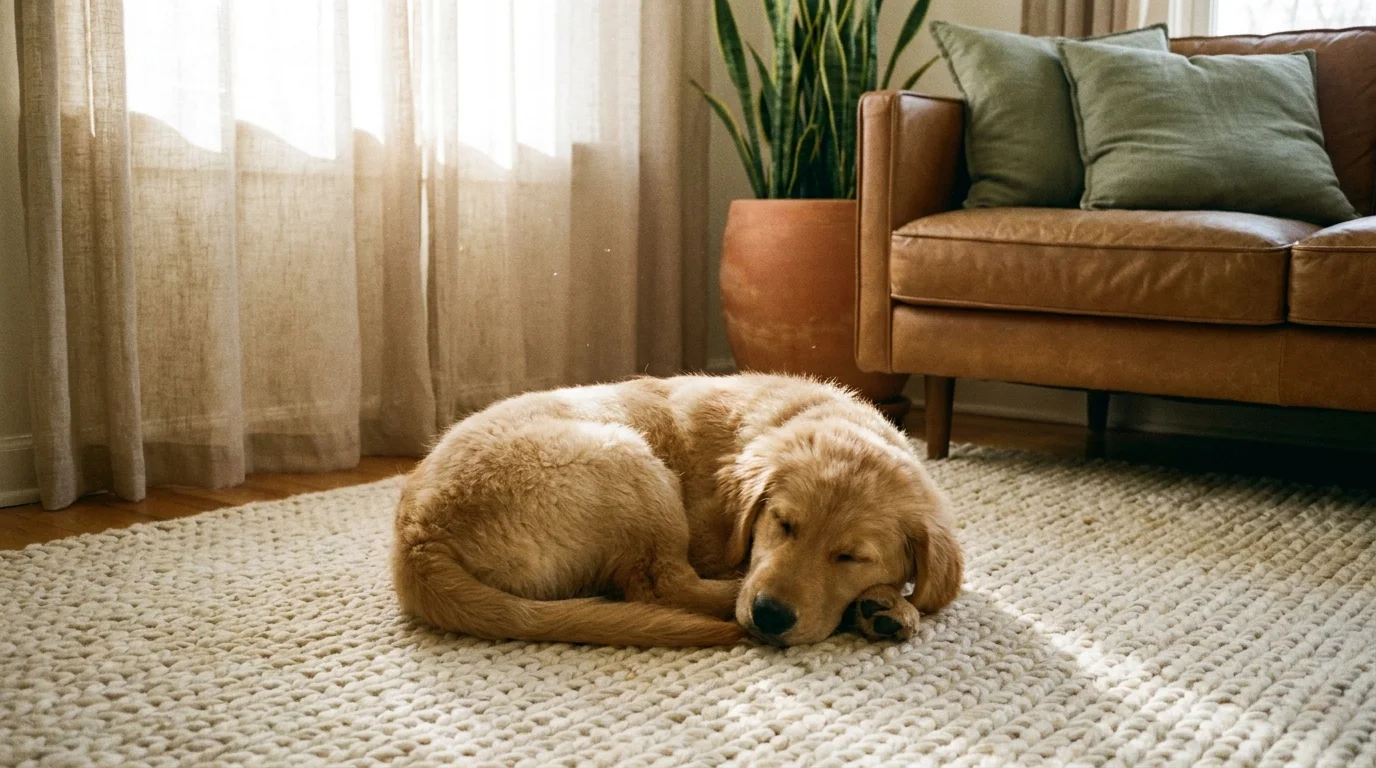
How to Calm a Dog or Puppy Naturally: Techniques That Actually Work
Puppy bouncing off your living room walls, panting through sudden evening anxiety — take a deep breath. You do not need to reach for medication right away to help your dog settle down. To calm your puppy naturally, combine physical decompression with mental enrichment by using structured sniffing, slow decompression touch, and predictable environmental changes. This guide walks you through the exact in-the-moment steps, home remedies, and long-term routines you need to restore peace in your American home today.
How to Calm a Dog or Puppy Naturally: The Quick Answer

Calming a dog or puppy naturally starts with less sensory input. Dim the lights. Cut the chaotic background noise. Redirect their nervous energy into a low-impact task. A heavy-duty chew toy works well. A scent-based sniffing game works too. Most everyday hyperactivity settles fast. Mild situational anxiety settles fast, too. Shift focus away from excitement. Move toward decompression instead. Physical touch, environmental changes, and proper outlet channels form the foundation of natural canine settling.
How to Naturally Calm a Puppy: Techniques for Hyper Energy

You can naturally calm a hyper puppy by replacing frantic physical exercise with mental enrichment that targets their olfactory and foraging instincts. Merely tossing a ball in the backyard often winds an over-aroused puppy up further by spiking their adrenaline levels.
Instead, tap into natural biological calming loops:
- The Sniff Safari: Scatter a handful of kibble across a low-pile rug or grass patch and let your puppy forage. Sniffing lowers a dog’s heart rate significantly faster than running.
- The Lick Mat Ritual: Slather a textured silicone mat with plain, xylitol-free Greek yogurt or pumpkin puree and freeze it. Repetitive licking releases soothing endorphins in the canine brain.
- Structured Chew Time: Give them a durable chew appropriate for their size to satisfy the physiological need to gnare and decompress.
How Do I Calm a Hyper Puppy in the Moment?

When a puppy is in the middle of a frantic hyperactive episode, you can calm them instantly by breaking the cycle of stimulation, guiding them into a quiet space, and deploying a predictable settle sequence. Do not yell, chase, or wrestle your puppy, as they will interpret your high energy as an invitation to play harder.
Follow this step-by-step in-the-moment sequence:
- Remove immediate triggers: Step away from the toy, drop any high-value play items, and stand completely still like a tree to make yourself uninteresting.
- Lower your center of gravity: Sit quietly on the floor or step into a low-stimulation zone like a laundry room or designated pen.
- Initiate a quiet down: Guide your puppy gently into a resting position without speaking commands loudly.
- Anchor with a long-lasting item: Hand them a stuffed frozen Kong or place them right next to a lick mat to give their brain a concrete task to focus on.
Where Do You Touch a Dog to Calm Them Down?

You can calm a dog down through touch by applying gentle, steady pressure or slow, rhythmic strokes to areas with high concentrations of nerve endings, such as the base of the ears, the chest, and long sweeps down the spine. This tactile feedback triggers the release of oxytocin and slows down a racing respiratory rate.
Use these specific touch techniques carefully:
- The Ear Base Massage: Use your thumb and index finger to make slow, gentle circles right where the ear leather meets the skull.
- Chest and Sternum Strokes: Slowly stroke downward along your puppy’s chest in a slow, unidirectional motion. Avoid patting rapidly, which excites them.
- Long Back Sweeps: Rest a warm hand flat against the nape of their neck and slowly glide it down to the base of their tail in a long, unbroken motion.
Natural Calming Remedies for Dogs at Home

Natural calming remedies at home include environmental adjustments like white noise machines, calming pheromone diffusers, pressure-swaddling wraps, and over-the-counter natural supplements containing chamomile, L-theanine, or hemp extracts. Choosing the right tool depends entirely on whether your puppy is dealing with physical excess energy, situational noise anxiety, or generalized restlessness.
| Remedy Type | What It Does | Best For |
| Pheromone Diffusers | Emulates maternal calming canine pheromones | General home restlessness and crate adjustment |
| Pressure Wraps | Applies gentle, constant hugging pressure to the torso | Thunderstorms, fireworks, and sudden startles |
| White Noise Machines | Masks sudden outdoor noises like traffic or neighbors | Alert barking and environmental hyper-vigilance |
| Natural Calming Chews | Utilizes L-theanine or chamomile to support relaxation | Mild vet visits, grooming, or travel stress |
How to Calm an Anxious Dog: Longer-Term Techniques

To calm an anxious dog over the long term, you must build predictable daily routines, systematically desensitize them to environmental triggers, and establish a bulletproof safe space. Unlike sudden bursts of puppy hyperactivity, chronic anxiety requires steady conditioning so your dog learns that their environment is fundamentally safe.
Incorporate these long-term pillars into your daily schedule:
- Create a Predictable Rhythm: Feed, walk, and settle your puppy at the exact same times every day so their internal clock knows what to expect.
- Desensitization Protocols: Slowly expose your puppy to scary sounds (like sirens or vacuums) at extremely low volume while pairing the noise with high-value treats.
- Devalue the Crate or Pen: Never use their safe confinement space as a punishment; instead, feed meals inside it and let them choose to go in for quiet naps.
When Natural Methods Aren’t Enough

If your puppy’s anxiety or hyperactivity is severe, dangerous to themselves, or completely unresponsive to environmental management and natural techniques, it is time to consult a veterinarian or a certified veterinary behaviorist. While behavioral training and natural changes handle the vast majority of settling issues, some dogs experience chemical imbalances or intense phobias that require professional medical support.
Veterinarians can evaluate whether short-term or long-term pharmaceutical options, alongside targeted over-the-counter support, are necessary to give your puppy relief. Never guess dosages or administer human medications without explicit veterinary guidance.
Frequently Asked Questions
How to naturally calm a puppy?
You can naturally calm a puppy by combining olfactory enrichment like sniffing games, long-lasting lick mats, rhythmic chest and ear base massages, and creating a low-stimulation environment free of chaotic noise.
What will calm a dog down naturally?
Natural calming options include diffusing synthetic appeasing pheromones, using pressure wraps for body swaddling, playing ambient white noise, and utilizing natural herbal supplements containing L-theanine or chamomile.
Where do you touch a dog to calm them down?
The most effective calming touch points are the base of the ears, the center of the chest, and long, slow, unidirectional strokes running from the neck down the spine.
How do I calm a hyper puppy?
To calm a hyper puppy in the moment, stop all interactive play, lower your body to the floor, remove sensory distractions, and give them a structured mental task like a frozen food toy.
How can I calm my dog down instantly?
You can calm a dog instantly by shifting them out of an over-aroused state into a quiet, dim room and interrupting their adrenaline spike with a grounding, low-intensity licking activity.
What can I give my dog to calm him down him naturally?
You can offer natural calming chews formulated with ingredients like chamomile, ginger, or L-theanine, provided you consult your veterinarian to ensure the formulation and serving size match your puppy’s exact weight.
Helping your puppy settle into a calmer routine takes patience, observation, and consistency. Most everyday hyperactivity and mild situational stress melt away once you replace chaotic excitement with intentional routines, tactile comfort, and environmental peace. If your puppy’s stress remains unmanageable despite your best efforts, lean on your veterinarian to build a tailored support plan.


“Alex is the go-to for anything practical — from picking the right harness to knowing when a puppy’s upset stomach needs a vet visit versus a little patience. Before joining Puppy Settled, she spent years working at a small-animal vet clinic and running a pet supply review blog on the side, which means every gear recommendation here has been tested (and every health tip double-checked). Alex owns a rescue mutt named Otis, who has personally ‘reviewed’ more chew toys and dog beds than any dog should probably need.”