
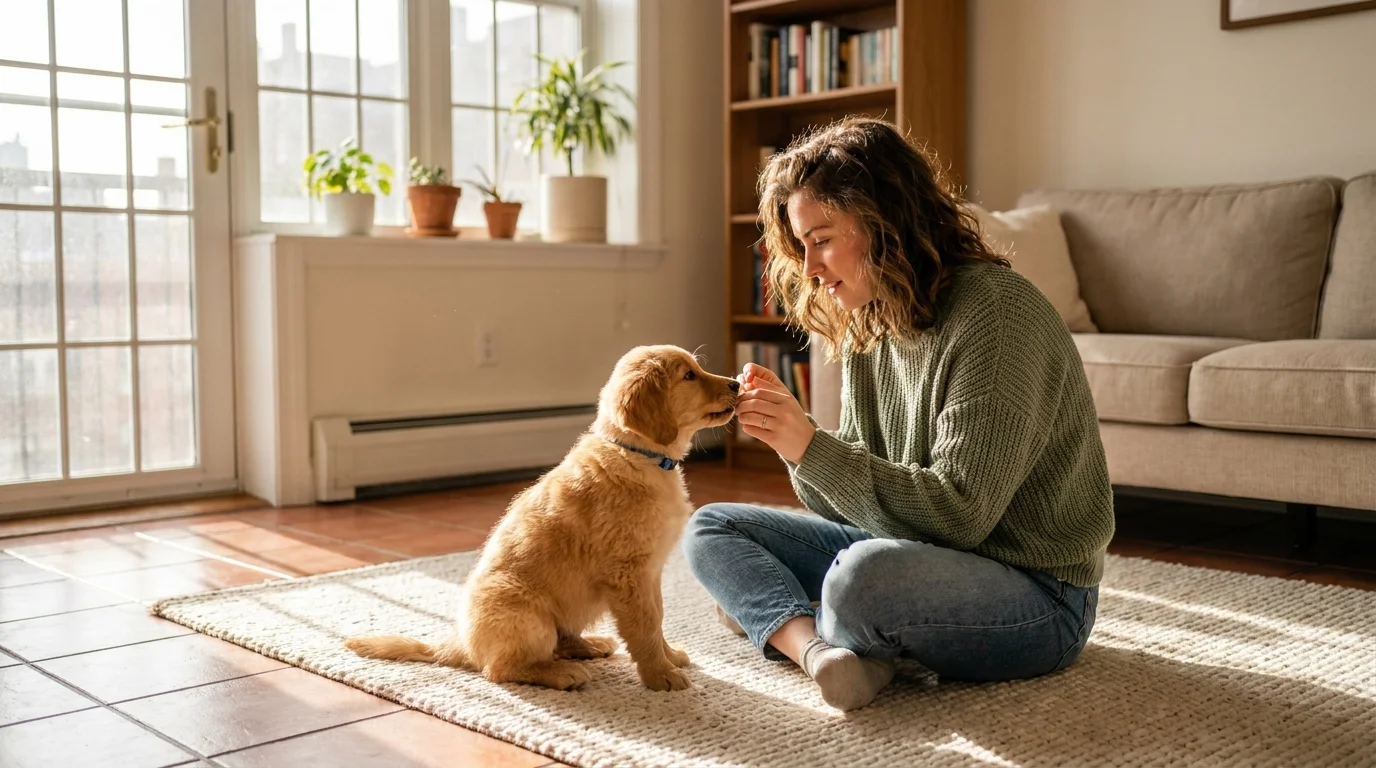
A Day in the Life: The Realistic Puppy Schedule for Apartment and City Living
Bringing a tiny puppy home to a third-floor walk-up or a high-rise with a buzzing elevator brings a special kind of panic. You realize in about five minutes that a suburban advice guide telling you to “just step out the back door” won’t cut it when your bladder-challenged puppy needs to pee right now. A realistic puppy schedule for apartment living replaces that impossible back-door fantasy with a predictable, hour-by-hour routine built around elevators, hallway walks, and indoor potty patches. Let’s look at how to structure your day so you aren’t sprinting for the building lobby in your pajamas twenty times a day.
A Realistic Puppy Schedule for Apartment Living: The Quick Answer

An apartment puppy schedule requires a tighter, more deliberate routine than traditional house training because every potty break involves a logistical trip through a hallway, elevator, and lobby. You will need to take your puppy out every 60 to 90 minutes during the day, using an indoor potty patch or balcony setup as an emergency backup for those critical moments when the elevator is stuck on the fifth floor. Build your day around predictable windows for feeding, structured indoor play, crate naps, and swift outdoor trips to keep accidents in your small space to a minimum.
Why Apartment Puppies Need a Tighter, More Predictable Routine

Living in close quarters means you notice every little accident immediately, but it also means you can control your environment much better than someone with a sprawling suburban house. Without a private yard to just fling the door open, every single trip outside requires shoes, keys, an elevator ride, and a leash.
When you anticipate your puppy’s needs rather than reacting after the fact, you save yourself hours of pacing the hallway. A reliable routine prevents the frantic guessing game of wondering if they are crying because they are bored, hungry, or about to christen your living room rug.
Morning Routine: Elevator Timing and the First Potty Break

Your morning starts the second your puppy wakes up, usually around 6:00 AM, and timing is everything when your bladder control is measured in minutes. Scoop your puppy up immediately—do not let them walk across the apartment floor, as motion stimulates the bladder—and head straight for the elevator.
Keep your apartment puppy elevator routine streamlined by having your shoes and jacket staged right by the door the night before. Once outside on your designated morning spot, give them five minutes to do their business, reward heavily with high-value treats the second they finish, and head back inside for breakfast.
| Time | Activity | Notes |
| 6:00 AM | Wake Up & Immediate Potty | Scoop up and head straight out; no free roaming. |
| 6:15 AM | Breakfast & Fresh Water | Feed in crate or pen to establish predictable digestion. |
| 6:35 AM | Quick Post-Meal Potty | A second short trip outside to catch post-eating elimination. |
| 7:00 AM | Quiet Play & Training | 15 minutes of basic commands or gentle indoor tug. |
| 7:30 AM | Morning Nap | Crated or in a secure pen to build independence. |
Mid-Day: Managing Alone Time Without a Yard to Let Them Into

Mid-morning and early afternoon are prime working hours, which means your puppy needs to learn how to occupy themselves while you tackle your to-do list. After their late-morning potty break and a short play session, set them up with a puzzle toy or a safe chew in a designated pen or crate.
Because you don’t have a yard to let them wander around safely outside, you have to create mental stimulation indoors so they don’t chew your baseboards.
Afternoon: Indoor Potty Patch Windows and Enrichment Breaks

The afternoon slump hits hard for both you and your puppy, making this the ideal time to rely on your indoor setup if you live in a high-rise where quick trips take ten minutes. Set up a designated balcony patch or an indoor dog litter box so you aren’t forced into thirty elevator trips a day during peak work hours.
Use this block for short training sessions, social exposure sounds played quietly on your phone, and a hearty lunch feeding that keeps their digestive clock ticking smoothly.
| Time | Activity | Notes |
| 12:00 PM | Mid-Day Potty & Lunch | Outdoor walk or indoor patch visit, followed by meal two. |
| 12:30 PM | Enrichment & Chew Time | Stuff a Kong with kibble or pumpkin to keep them busy. |
| 1:00 PM | Afternoon Nap | Essential for preventing overtired, bitey puppy behavior. |
| 3:30 PM | Potty Break & Short Walk | Burn off afternoon energy with a quick block stroll. |
| 4:15 PM | Free Play / Supervised Exploring | Keep them in sight while you prep dinner. |
Evening: Winding Down in a Small Space Without Overstimulation

As evening rolls around, apartment puppies often experience the witching hours—sudden bursts of frantic energy where they zoom around your coffee table like tiny furry missiles. Contain this chaos by shifting from high-energy play to calming activities like scent games or gentle obedience work.
Feed their final meal several hours before bedtime to give their digestive system time to process everything before your final late-night bathroom run.
Building Your Apartment Potty Training Checklist Around This Schedule

An apartment dog ownership checklist looks a bit different than a suburban one, requiring gear specifically tailored for vertical living and indoor management. Keep these essentials handy to make your schedule run like clockwork:
- A designated house line: A light leash left dragging indoors so you can safely guide them away from forbidden corners without chasing them.
- Enzymatic cleaner: Absolute non-negotiable for apartment carpets when accidents inevitably happen near doorways.
- High-value training treats: Small, smelly bits of chicken or cheese reserved exclusively for outdoor bathroom successes.
- Portable waste bag dispenser: Clipped directly to your keys so you never get caught empty-handed in the lobby.
- Indoor potty solution: A patch of real grass or a washable turf mat placed near the door or balcony for emergency use.
| Time | Activity | Notes |
| 6:00 PM | Dinner Time | Final main meal of the day; pick up water bowl by 8 PM. |
| 6:30 PM | Evening Potty Trip | Crucial post-dinner elimination window. |
| 7:00 PM | Calm Indoor Socialization | Gentle petting, brushing, and light obedience training. |
| 9:00 PM | Final Potty Walk | The last outdoor trip before locking down for the night. |
| 10:00 PM | Bedtime Crate Routine | Lights out, white noise machine on, and quiet settling. |
Adjusting the Schedule as Your Puppy Grows

Your puppy’s biological clock changes fast, meaning this exact hour-by-hour layout has a short shelf life before it needs tweaking. Every month older adds roughly one hour to their physical bladder control capacity, allowing you to gradually space out your daytime potty trips.
Keep an eye on their cues: if they stop whining at the door and start pacing quietly, it is time to stretch that interval out by fifteen minutes. Shift your focus from rigid clock-watching to reading their natural rhythm as they transition from a tiny baby to a confident adolescent dog.
When Your Work Schedule Doesn’t Fit the Routine — What to Do

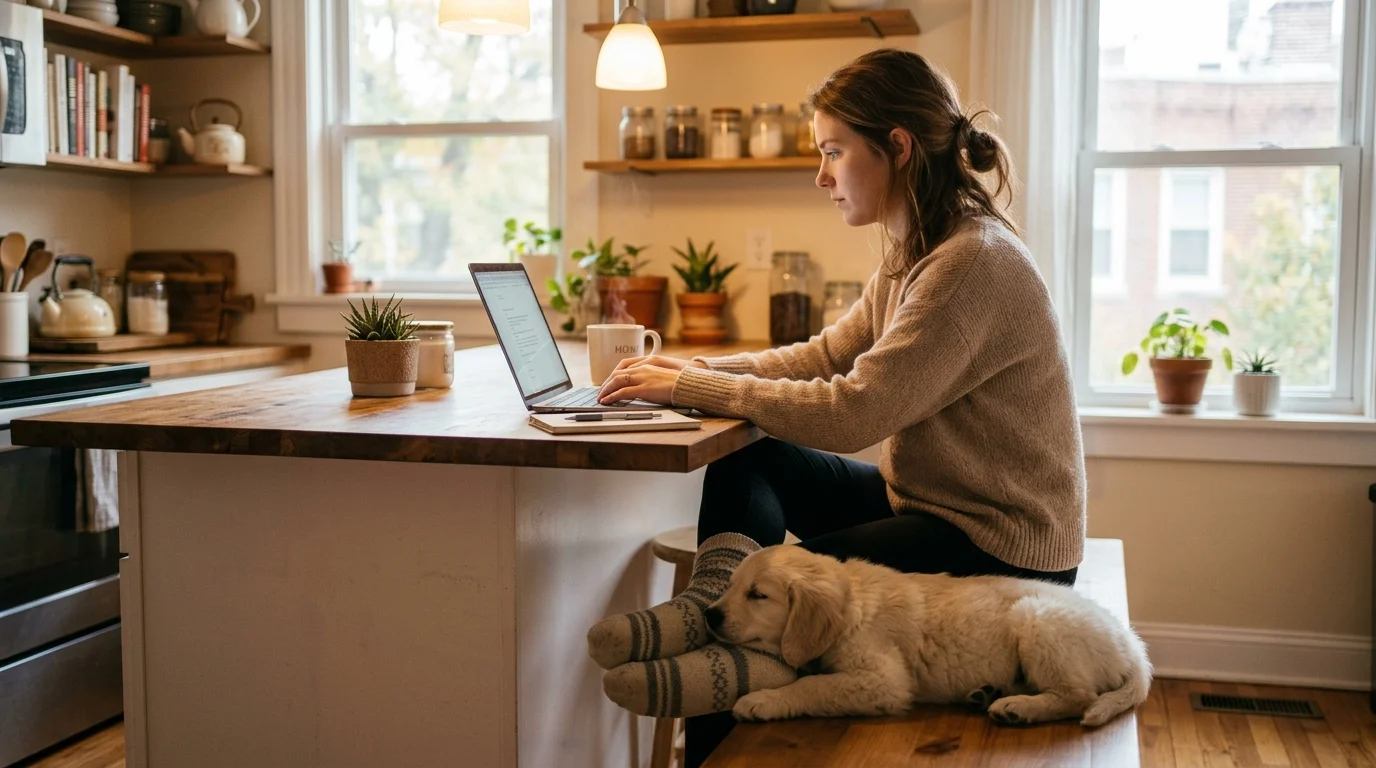
Real life doesn’t pause just because you brought home a tiny canine dependent. Furthermore, working a full-time job in an apartment adds a complex layer of juggling. Therefore, if you are away from home for long stretches, relying solely on your own schedule will inevitably lead to regression and accidents.
Bridge the gap by hiring a trusted local dog walker for a mid-day relief break, utilizing a nearby doggy daycare for socialization, or setting up a secure exercise pen with an indoor grass system. Never expect an eight-week-old puppy to hold their bladder for an eight-hour workday—it is physically impossible and unfair to their developing system.
Frequently Asked Questions
What’s a realistic puppy schedule for apartment living?
A realistic apartment puppy schedule relies on consistent 60 to 90-minute potty intervals, structured crate naps, and planned feeding times tailored around elevator trips and hallway walks. It replaces the convenience of a backyard door with a deliberate, repeatable daily timeline that helps your puppy learn the rules of small-space living.
How do I manage potty breaks in an apartment with no yard?
You manage no-yard potty breaks by keeping your shoes, keys, and leash staged right by the door for instant exits during urgent moments. Using an indoor grass patch or balcony setup as a backup prevents frantic elevator dashes when your puppy signals an emergency.
How long can an apartment puppy be left alone during the workday?
An apartment puppy should generally not be left alone for longer than their age in months plus one hour—meaning an eight-week-old puppy can only manage about two hours max. For full-time workers, hiring a midday dog walker or setting up a secure indoor pen with a designated potty area is essential.
Do indoor potty patches actually work for full-time potty training?
Indoor potty patches work wonderfully in apartments when used as a transitional tool or emergency backup during bad weather or late-night hours. The key is consistency, ensuring your puppy eventually learns to associate outdoor surfaces with their ultimate bathroom destination.
How does the schedule change as my puppy gets older?
As your puppy matures, their bladder capacity increases by roughly one hour for each month of age, allowing you to slowly space out your daytime potty breaks. You can also lengthen their independent play windows and gradually reduce the number of middle-of-the-night wakeups.
What should I do if my work hours don’t fit my puppy’s schedule?
If your work hours clash with your puppy’s bathroom needs, you should invest in a professional dog walker, arrange for a neighbor check-in, or utilize a reputable local doggy daycare. Building a reliable support network ensures your puppy’s physical needs are met without compromising your employment.
Conclusion

Juggling elevator rides and tiny bladders in an apartment takes patience, but establishing a predictable daily rhythm turns chaos into second nature. Stick to your timing, embrace indoor backups when you need them, and remember that this intense phase of puppyhood passes much faster than it feels right now.


Maya is the founder and writer behind PuppySettled, where she shares practical, situation-specific guides for first-time dog owners. After bringing her own puppy home to a small apartment and realizing most advice out there assumed a house and a yard, she started writing the guides she wished had existed — for real budgets, real schedules, and real first-time-owner questions. When she’s not writing, she’s usually on a walk figuring out the next thing worth covering.