
Moving Into an Apartment With a Puppy: The Ultimate Relocation and Settling Checklist
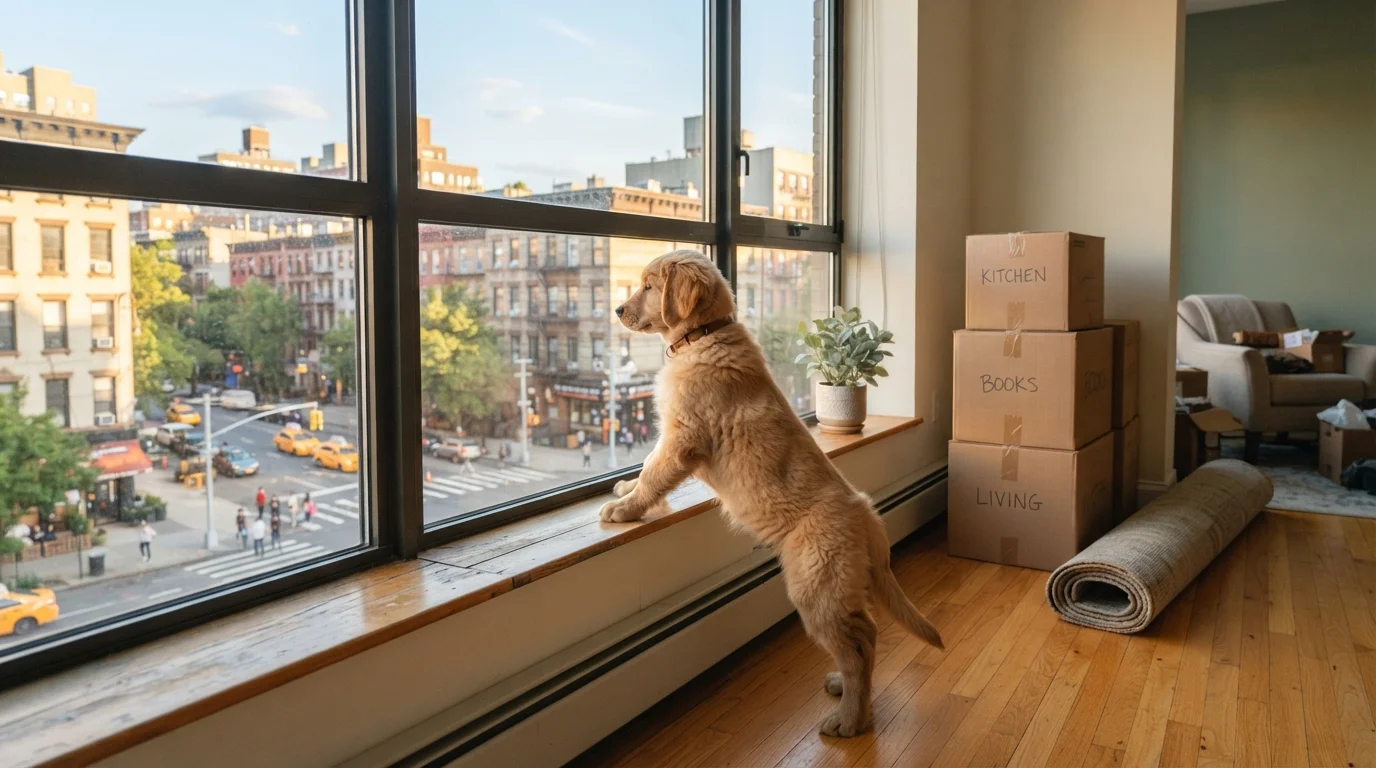
If you are standing in the middle of a half-packed living room surrounded by cardboard boxes while your puppy nervously tracks your every move, take a deep breath. Moving into an apartment with a dog brings a unique set of logistical challenges that homeowners never face. From managing freight elevators and echoing hallways to rushing down three flights of stairs for a midnight potty emergency in your pajamas, relocation is stressful for both ends of the leash.
Right now, your puppy’s entire world is turning upside down. Without a structured plan, the sudden disappearance of familiar furniture and the chaos of packing tape can trigger intense anxiety. This apartment-specific guide walks you through every phase of the move, helping you maintain a safe den space, manage elevator stress, and establish an immediate routine so your puppy settles into your new building smoothly.
The Executive Strategy: Why Moving Disrupts Canine Security

Before diving into the moving timeline, it helps to understand why a relocation shakes up a puppy so deeply. Dogs are creatures of spatial habit; they map their sense of safety and confidence directly onto their physical environment. When you tear down familiar walls, pack up their bedding, and replace quiet suburban sounds with the echoing hum of an apartment complex hallway, their baseline coping mechanisms get shattered.
- The psychological impact: Packing up your home causes dogs to experience anticipatory stress. They notice furniture disappearing and boxes accumulating long before the moving truck arrives. If you neglect their routine during this transition, they may regress in house training or develop sudden separation anxiety.
- The foolproof correction: Never disrupt your puppy’s feeding, walking, and nap schedule until the very day of the move. Keep their primary crate and favorite toys accessible until the final hour so they maintain a secure anchor amidst the packing chaos.
Phase 1: Two Weeks Before the Move (Preparation and Acclimation)

The weeks leading up to moving day set the emotional tone for your puppy. Instead of scrambling at the last minute, use this window to introduce apartment-specific environmental factors and prepare your paperwork.
- Secure pet policies and paperwork: Review your new lease agreement to ensure your puppy’s breed, weight, and vaccination records are fully registered with apartment management. Keep digital copies of rabies certificates handy on your phone for building onboarding.
- Practice elevator and hallway desensitization: If your new building features elevators, automatic security doors, or echoing stairwells, take your puppy to a similar building beforehand for short, positive exposure sessions. Reward calm behavior with high-value treats every time the elevator doors open or close.
- Map out immediate relief routes: Visit your new apartment neighborhood before moving day to locate the closest green spaces, designated pet relief areas, and quiet walking paths away from heavy street traffic.
Phase 2: Packing Day (Maintaining a Safe Den Space)

Packing day is usually the most chaotic part of any relocation. Piles of cardboard boxes, rolling dollies, and the constant sound of packing tape tearing can send a sensitive puppy into a tailspin of nervous energy.
- Establish a restricted safe zone: Choose one quiet room—such as a bathroom or a bedroom—to keep completely free of boxes on packing day. Set up your puppy’s crate, water bowl, and a familiar blanket inside this closed-off space.
- Use ambient white noise: Turn on a white noise machine or a fan inside their secure room to mask the sudden, startling sounds of furniture being dragged across floors and boxes being taped shut.
- Enlist trusted pet-sitting help: If possible, arrange for a friend, family member, or local pet sitter to take your puppy on a long hike or watch them at a quiet location away from your home during the peak hours of heavy lifting and truck loading.

Moving day itself is a high-stakes obstacle course of propped-open apartment doors, bustling movers, and shared elevators. Keeping your puppy secure prevents accidental escapes in unfamiliar common areas.
- The secure containment rule: Keep your puppy securely crated or confined in a closed room in your old home until the movers load everything out. Do the same at your new apartment: set up their secure pen or closed room first before any furniture enters the unit.
- Mastering building elevators safely: Never let a stressed puppy ride loose in a busy moving elevator where they might bolt when doors open to a strange hallway. Always pick up small puppies or keep larger puppies on a very short leash held tightly against your leg.
- Handling shared hallway noises: Apartment hallways echo every footstep and closing door. If your puppy startles at hallway sounds outside your new front door, place a rolled-up towel under the door crack to dampen outside noise while they settle.
Phase 4: The First 48 Hours in the New Apartment

The first two days in your new apartment dictate how quickly your puppy adjusts to their new vertical living environment. Resist the urge to unpack every box immediately; your primary focus is establishing immediate operational routines.
- Set up the designated potty route first: The absolute moment you arrive at your new apartment, take your puppy directly down your planned exit route to your designated outdoor relief spot. Let them sniff and eliminate before you bring a single box inside.
- Recreate a familiar layout: Set up your puppy’s crate and sleeping area in a quiet corner of your new bedroom or living room, using the exact same bedding and unwashed blankets they used in your old home. Familiar scents provide instant neurological comfort.
- Keep human presence constant: Try to avoid leaving your puppy alone in the new apartment during their first 48 hours. Having you nearby while boxes surround them builds positive associations with the new space.
Actionable Troubleshooting: Overcoming Common Apartment Relocation Roadblocks

Even with meticulous planning, apartment living presents specific hurdles that catch new owners off guard. Here is how to handle the most common roadblocks during your first week.
- What to do when your puppy refuses to eliminate outside due to lobby sensory overload: Busy apartment lobbies filled with echoing tile, sliding glass doors, and strange human smells can overwhelm a puppy’s nervous system, causing them to freeze or hold their bladder until they get back upstairs. The correction: Carry your puppy past the lobby directly to the grass, or feed them high-value treats the second they step foot outside to build a positive association with the building exit.
- Handling midnight bathroom trips in an apartment complex: Walking down three flights of stairs or waiting for a slow elevator at 3 a.m. when your puppy needs to pee can test anyone’s patience. The correction: Dress warmly in advance, keep a designated leash and flashlight hanging right by the door, and carry your puppy down the stairs to bypass distractions during urgent night trips.
Frequently Asked Questions (FAQ)

How do I help my puppy adjust to apartment elevator rides without fear?
Start slowly by treating the elevator like a game. Step inside with your puppy, feed them continuous high-value treats while the doors are closed, and step right back out without even moving floors. Gradually build up to short one-floor rides, ensuring the experience is paired with delicious rewards.
Hallway noises—like neighbors walking past or doors slamming—frequently trigger territorial barking in new apartments. Counter-condition this by tossing a tasty treat to your puppy the second they hear a hallway sound, teaching them that outside noises predict good things happening indoors rather than threats.
Should I use pee pads inside my high-rise apartment balcony?
While balcony pee pads or indoor patch systems are tempting for high-rise living, they often blur house-training boundaries by teaching puppies that indoor surfaces are acceptable toilets. If you must use an indoor porch potty, transition it closer to the front door every week until you are walking outside.
How do I manage apartment pet weight limits and lease rules?
Always verify your building’s exact weight limits and breed restrictions in writing before moving day. Keep your puppy up to date on all local vaccination tags, and ensure they wear a well-fitted collar with ID tags whenever navigating shared apartment property.
Can I leave my puppy alone in the new apartment during the first week?
Leaving a puppy alone in a brand-new environment during their first week can trigger severe separation anxiety. Build up alone time gradually starting on day three by practicing short 5-minute departures inside their crate while you step into the hallway.
How do I handle barking complaints from apartment neighbors?
If your puppy whines or barks when left alone in a new apartment, communicate proactively with your immediate neighbors, leave a polite note with your phone number, and use a secure crate covered with a breathable blanket to muffle noise while you work on crate training.
Conclusion

Relocating into an apartment with a puppy requires patience, logistical planning, and a calm, phase-based approach. By managing elevator desensitization, establishing your potty route before unpacking boxes, and protecting a familiar den space amidst the chaos, you transform a stressful move into a smooth transition. Keep your routines steady, celebrate small daily victories, and enjoy your new home together.


Jordan writes PuppySettled’s training and behavior guides, drawing on years of hands-on experience fostering and training rescue puppies through local shelters in Denver, Colorado. Jordan focuses on practical, force-free training methods — crate training, potty training, and the tough early behavior challenges that come with a new puppy. When not writing, Jordan’s usually out on a walk with a foster dog in training.