
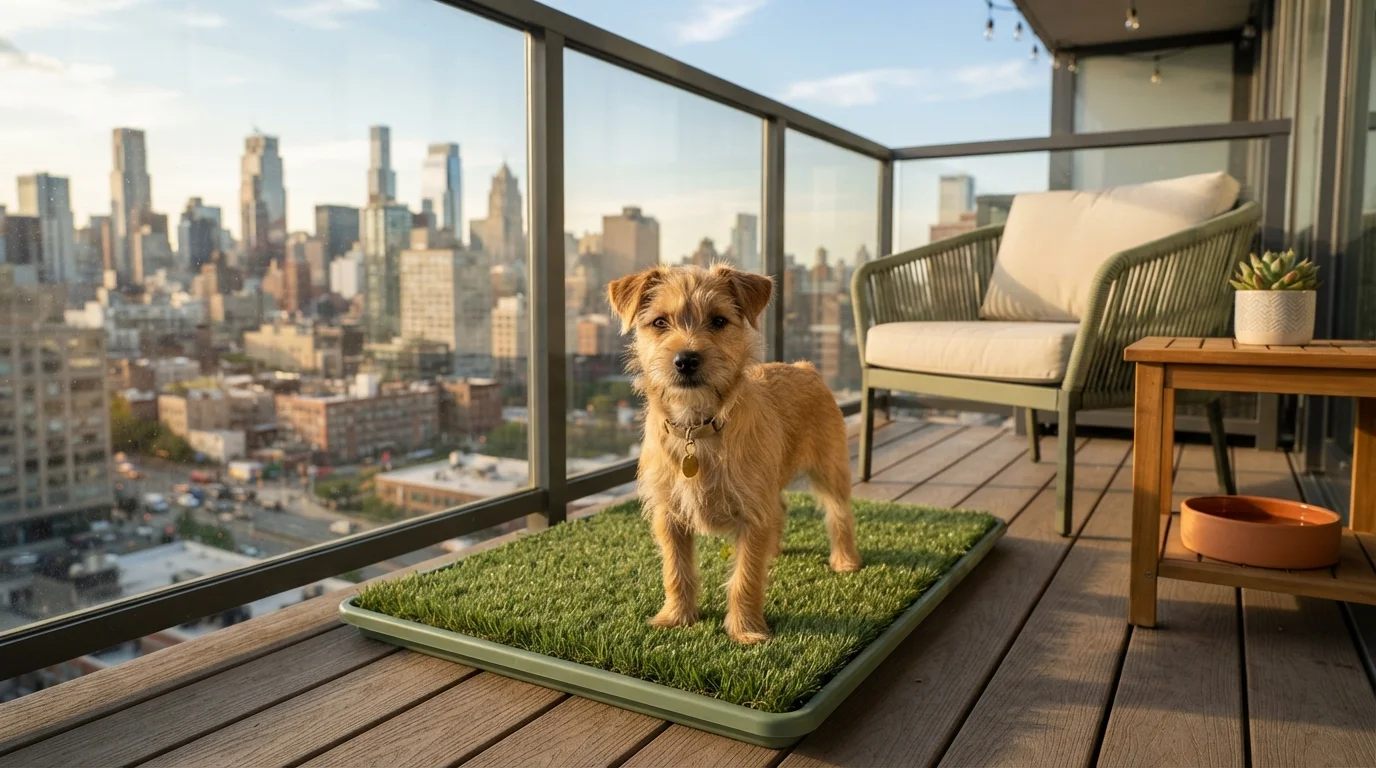
Indoor Potty Options for High-Rise Apartment Puppies
Living on the tenth floor of a high-rise apartment with an 8-week-old puppy turns every midnight bathroom break into an athletic event. While single-family homeowners simply open a back door to a grassy yard, high-rise and apartment dwellers have to navigate elevators, long echoing hallways, secure lobby doors, and winter wind chills just to help their puppy empty a thimble-sized bladder. That is where indoor potty systems come in. Choosing the right indoor setup—whether real grass, synthetic turf, or a mesh-grid pad holder—can make or break your sanity during the first few months. Let’s compare the top indoor potty options for high-rise living, tackle apartment hygiene realities, and map out a clean exit strategy for when your puppy is finally ready to take their business outside.
The Four Core Indoor Potty Systems: Real Grass, Synthetic Turf, Mesh Grids, and Pads

Not all indoor potty options are created equal, and what works for a 4-pound Chihuahua mix will quickly fail a 45-pound golden retriever puppy. Understanding how each system behaves in a compact living space is the first step toward a clean home.
- Real Grass Patches (e.g., Fresh Patch, Bark Potty): These deliver genuine hydroponically grown grass or soil-based bark delivered in a disposable tray or cardboard frame. They smell authentic to a dog, require zero washing, and mimic outdoor grass so naturally that future outdoor transition is virtually seamless. The downside is ongoing monthly subscription costs and natural decomposition if left too long.
- Synthetic Turf Systems with Drainage Trays: These feature a antimicrobial artificial grass mat sitting over a plastic grid and a lower collection tray. They are reusable, durable, and economical over the long haul. However, plastic trays trap urine odor rapidly unless you rinse them daily and scrub them weekly with pet-safe enzymatic washes.
- Mesh Grids with Pee Pads Underneath: A rigid plastic grid snaps over a standard disposable pee pad, holding the pad flat and preventing sharp puppy teeth from shredding the paper or tracking polymer gel across your hardwood floors. It keeps paws clean and dry, though sizing limits mean they are mostly practical for small-to-medium breeds.
- Standard Disposable Pee Pads: Unsecured absorbent plastic-backed pads placed directly on the floor. While convenient and cheap upfront, they carry a major behavioral warning: they teach puppies that soft, absorbent indoor textiles (like living room rugs, bathmats, and bedroom carpets) are acceptable places to pee.
Comparative Breakdown: Cost, Maintenance, and Dog Acceptance

To help you weigh which system matches your floor plan, budget, and breed size, use this side-by-side comparison table.
| Indoor Potty System | Upfront Cost | Maintenance Effort | Dog Acceptance | Best For (Breed Size) |
| Real Grass Patch | Moderate ($20–$40 per box/subscription) | Low (throw away/replace weekly) | Very High (instinctive attraction) | All sizes (small to large options available) |
| Synthetic Turf & Tray | Low-Moderate ($30–$70 one-time) | High (daily rinsing, weekly enzyme scrub) | Moderate-High | Small and Medium breeds |
| Mesh Grid & Pad | Low ($15–$35 one-time) | Moderate (swap pad daily, wash grid weekly) | High | Toy and Small breeds (under 15 lbs) |
| Disposable Pads | Very Low ($10 for a bulk pack) | Very Low (toss and replace) | High (sometimes too high) | Toy breeds only (short-term bridge) |
Apartment Logistics: Where and How to Place an Indoor Potty System

In a high-rise apartment where every square foot counts, location dictates success. If you tuck your puppy’s potty tray behind the living room sofa out of sight, your puppy will either lose track of it or treat the hidden corner as a free-for-all zone.
- The utility nook or balcony threshold: Place the system in a low-traffic, easily accessible spot with hard-surface flooring—such as a laundry closet threshold, a bathroom corner, or a covered balcony. Avoid carpeted bedrooms or tight hallways where footsteps startle the puppy mid-squat.
- Check building and lease rules: If you plan to use a balcony potty patch, verify your apartment management’s rules regarding exterior drainage, odor controls, and pet waste disposal on common balconies.
- Create a visual boundary: Surround the potty tray with a small, low-profile rubber boot tray or a washable silicone mat. High-rise puppies often miss the edge of the turf during frantic morning circles, and protecting your baseboards saves your security deposit.
Odor Control and High-Rise Hygiene Without Toxic Chemicals

Single-family homes enjoy cross-ventilation that whisks away odors within minutes. High-rise apartments are often sealed tight with central HVAC systems, meaning a neglected puppy tray can make a 700-square-foot studio apartment smell like a public restroom.
- The daily rinsing rule: If you use synthetic turf, take the grass mat to your shower or utility sink every single day, rinse it thoroughly with warm water, and spray it down with a veterinary-approved enzymatic cleaner.
- Avoid harsh household chemicals: Never use bleach, ammonia, pine oils, or baking soda scrubs on or around your puppy’s indoor potty area. Ammonia smells chemically identical to urine degradation products to a dog’s nose, actively encouraging them to re-soil the spot. Furthermore, baking soda or harsh chemical residues can irritate sensitive paw pads when tracked across your floors.
- Disposal cadence: Seal used disposable pads or soiled organic grass in small scented waste disposal bags immediately after removal, rather than letting them sit in an open kitchen trash can until trash day.
The Danger of Pee Pads: Why They Should Be a Short-Term Bridge

Using disposable pee pads as a permanent indoor toilet is one of the most common pitfalls for apartment owners. While they seem convenient during freezing winter months or before your puppy is fully vaccinated against canine parvovirus, they create a confusing psychological loop.
To a puppy’s developing brain, surface texture equals location. If you teach an 8-week-old puppy that white quilted paper on the living room floor is the correct place to eliminate, they generalize that rule to your plush area rugs, bathmats, yoga mats, and even couch cushions.
- Treat pads as a temporary bridge: If you must use pee pads because you live on the 25th floor and your veterinarian advised against grass contact prior to full vaccinations, use them strictly as an enclosed containment tool inside an exercise pen or porch potty tray—never scattered loose across your living room floor.
Bridging the Gap: How to Transition Your High-Rise Puppy to Outdoor Grass

The moment your veterinarian gives you the green light after your puppy’s final round of vaccines (usually around 16 weeks of age), you need to transition your high-rise dog from their indoor potty patch to real outdoor pavement and grass. Waiting too long makes the habit hard to break.
- Step 1: Move the patch closer to the exit: Over the course of 5 to 7 days, inch your indoor grass patch or tray a few feet closer to your apartment front door every 48 hours until it sits directly by the entryway.
- Step 2: Collect an outdoor scent anchor: Cut a tiny snippet of real grass from your building’s designated pet relief area and tuck it underneath or beside your indoor turf to introduce the outdoor smell indoors.
- Step 3: Direct transport outside: Carry your puppy down the elevator directly to the outdoor grass patch the moment they wake up or finish a meal. The second they eliminate on real outdoor grass, throw an enthusiastic “potty party” with high-value treats (like tiny pieces of plain roast chicken) so outdoor elimination becomes their favorite new game.
Frequently Asked Questions (FAQ)

Will an indoor grass patch confuse my puppy about where potty time happens later?
No. Real grass patches (hydroponic sod or real soil bark) actually reinforce the natural texture and scent that dogs instinctively associate with elimination. Transitioning from a real grass porch patch to outdoor grass is remarkably smooth compared to transitioning from synthetic carpet or paper pee pads.
How often should I replace a real grass subscription box?
Most fresh grass subscription services ship a new live grass tray every 7 to 10 days. In warmer high-rise apartments or during summer months, organic grass starts breaking down faster, so weekly replacement is ideal to prevent gnats or mild damp-earth odors.
Can I train a medium or large-breed puppy to use an indoor potty?
Yes, though physical space becomes a limiting factor. Large-breed puppies grow rapidly past 20 or 30 pounds within their first four months, meaning standard indoor plastic trays or small mesh holders become too cramped. If you have a large-breed puppy in a high-rise, a larger subscription real grass patch or dedicated balcony turf section works best.
What should I do if my puppy plays with or chews on the synthetic turf?
Chewing on artificial grass fibers or tearing up pee pads is dangerous because swallowed plastic or gel crystals can cause intestinal blockages. If your puppy chews the turf, switch immediately to a real grass tray enclosed in a sturdy cardboard frame or use a secure mesh grid tray that locks the material out of reach.
How do I stop my puppy from having accidents on the rug next to their potty tray?
Accidents right beside the tray usually happen because the target area is too small for their spinning and circling ritual. Place a large, waterproof silicone splat mat or washable rug under the entire setup so any miscalculated squat lands on an easy-to-wipe surface.
Conclusion

Finding the right indoor potty system for your high-rise apartment comes down to balancing your budget, your clean-up tolerance, and your breed’s adult size. Whether you opt for a subscription real grass box or a washable turf tray, consistency and daily hygiene turn a high-rise inconvenience into a smooth daily routine. Pair your indoor setup with proactive supervision, and you will breeze through the puppy months with your floors—and your peace of mind—fully intact.


Jordan writes PuppySettled’s training and behavior guides, drawing on years of hands-on experience fostering and training rescue puppies through local shelters in Denver, Colorado. Jordan focuses on practical, force-free training methods — crate training, potty training, and the tough early behavior challenges that come with a new puppy. When not writing, Jordan’s usually out on a walk with a foster dog in training.