
How to Stop a Puppy From Biting: Age-by-Age Guide
There is a specific kind of exhaustion that comes with bringing home a new puppy, usually hitting around 8 PM when the witching hour kicks in, your favorite jeans are shredded at the ankles, and your hands look like you’ve been wrestling a briar patch. If you are sitting on the couch right now wondering how to stop a puppy from biting before another piece of clothing gets ruined, take a deep breath. Puppy biting is an entirely normal, biologically driven phase of development, but it requires a structured, consistent response so it does not turn into a lifelong habit. This guide breaks down exactly what to do at every developmental stage, how to handle specific triggers like hands and feet, and how to tell normal puppy play from genuine red flags.
How to Stop a Puppy From Biting: The Quick Answer

To stop a puppy from biting, instantly remove your attention by freezing or turning away the moment teeth touch skin or clothes, redirect them to an appropriate chew toy, and reward calm behavior once they settle. Consistency is everything during this phase; letting a puppy mouth your hands just once resets their learning progress.
Why Puppies Bite: Teething, Play, and Overtiredness

Puppies explore the world primarily through their mouths, much like human infants use their hands. Understanding why your puppy is turning your limbs into chew toys is the first step in stopping the behavior without resorting to frustration.
Teething is a major biological driver. Around 12 weeks of age, sharp deciduous teeth begin to loosen as adult teeth push through, making their gums genuinely sore and itchy. Providing cold, wet washcloths or safe chew toys directly relieves this physical discomfort.
Beyond teething, puppies naturally wrestle and mouth their littermates to learn bite inhibition—how hard is too hard. When you become their primary playmate, you have to teach them those same boundaries. Finally, overtired puppies are notorious biters. Just like a toddler throwing a tantrum, an overtired puppy loses impulse control and bites harder and more frequently. If your puppy suddenly turns into a land shark out of nowhere, they usually do not need training; they need a nap in their crate or a quiet pen.
Age-by-Age Guide to Stopping Puppy Biting

Your strategy needs to evolve as your puppy grows, matching their developmental capacity and changing teeth.
8–12 Weeks: Redirect and Bite Inhibition
At this stage, your primary goal is teaching bite inhibition. When your puppy clamps down on your skin, do not yell or pull away quickly, as high-pitched noises and fast movements mimic fleeing prey and trigger their predatory chase instincts.
What to do:
- The Freeze: Stand completely still like a statue and tuck your hands into your armpits or make fists.
- The Cue: Say a calm, neutral word like “Oops” or “Time-out.”
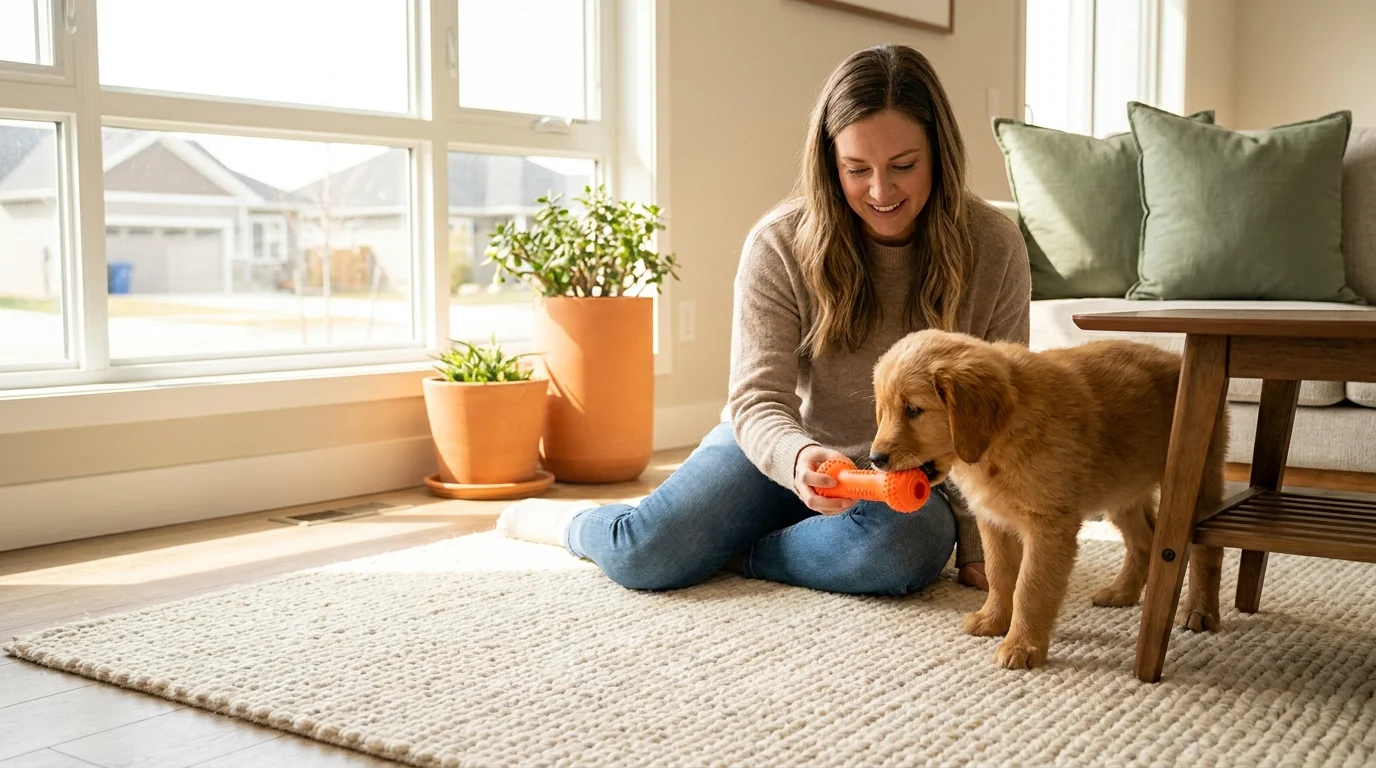
- The Redirect: Once they pause and look confused, immediately hand them an approved chew toy or durable rubber toy.
- The Reward: Praise them the second their teeth touch the toy instead of you.
3–4 Months: Consistency and Structured Play
By three months, your puppy’s needle-sharp baby teeth are sharper than ever, and they are testing boundaries with boundless energy. This is where inconsistency will derail your progress.
Keep play sessions structured rather than chaotic. If you are playing tug-of-war and your puppy’s teeth slide up the toy and graze your hand, immediately drop the toy, stand up, and turn your back for 30 seconds. This teaches them a strict cause-and-effect rule: biting skin makes all the fun disappear instantly.
5–6 Months and Beyond: When Biting Should Be Mostly Gone
By five to six months, most of the adult teeth have erupted, and the frantic teething phase subsides. If you have been consistent, random nipping should drop off significantly, replaced by occasional adolescent testing.
During this window, reinforce impulse control exercises. Ask your puppy to sit and wait before getting their food bowl, opening the back door, or receiving a toy. A puppy who learns impulse control in everyday routines naturally exercises better control over their mouth during play.
How Do You Discipline a Puppy Who Is Biting?

Discipline in modern puppy training relies on removing rewards and reinforcing alternative behaviors rather than applying physical or verbal punishment. Punishing a puppy by yelling, holding their muzzle closed, or alpha-rolling them creates fear, damages trust, and often makes them bite more out of defense or heightened arousal.
Instead, view discipline as management and redirection. If your puppy is in a biting frenzy that redirection won’t fix, use a brief “reverse time-out.” Step completely out of the room or behind a baby gate for 10 to 15 seconds. This abrupt removal of human interaction is far more effective than any scolding because it speaks the natural language of social withdrawal.
Should I Tap My Puppy on the Nose When He Bites?

Tapping or flicking a puppy on the nose when they bite is strongly discouraged by modern professional trainers and veterinary behaviorists. While it might startle the puppy into stopping momentarily, it teaches them to hand-shy away from human touch, which can escalate into defensive snapping or fear-based aggression as they grow.
Hands should always be associated with food, gentle petting, and safety. If you teach your puppy that a hand near their face brings a physical correction, you risk breaking their trust. Stick to freezing, turning your body away, or redirecting to a toy instead; it achieves the same boundary without teaching your puppy to fear your hands.
Stopping Biting in Specific Situations

How to Stop a Puppy From Biting Your Feet and Hands
Feet moving under bedsheets or loose pant legs are irresistible moving targets for a puppy’s prey drive.
- Wear indoor house shoes or boots during the peak puppy months to protect your ankles and minimize your physical reaction.
- Carry a decoy toy in your pocket whenever you walk across the room. If you see your puppy lock eyes on your ankles, intercept them by placing the toy directly in front of their mouth before they can latch on.
- Avoid floppy, flowing clothing or long skirts while your puppy is loose in the living space, as the trailing fabric acts as a constant invitation to bite and pull.
How to Stop a Puppy From Biting Strangers
Puppies often jump and nip at guests because they are over-excited or lack socialization around new people.
- Manage the greeting: Do not let enthusiastic strangers lean directly over your puppy, which can trigger defensive mouthiness. Instead, ask guests to stand still with their hands down by their sides.
- Pre-load treats: Hand your guest a handful of high-value kibble or treats before they enter. Instruct the guest to drop treats on the floor around the puppy to reward all four paws remaining on the floor, shifting the puppy’s focus away from jumping and biting.
- Use a tether or playpen: If you are hosting a busy gathering, set your puppy up in a secure pen with a long-lasting chew so they can observe the action without getting overwhelmed and over-nipsy.
What Are Red Flag Behaviors in/Puppies?

| Normal Puppy Mouthiness | Concerning Aggression / Red Flags |
| Soft, exploratory nips during play that decrease when ignored | Stiffening body, hard eye contact, or freezing when approached |
| Wiggles, loose body language, and quick recovery when redirected | Low, muffled growls accompanied by snapping or biting over resources |
| Biting driven by high energy, overtiredness, or teething | Biting triggered by normal handling (like touching paws or collar) |
If your puppy displays the behaviors in the right-hand column, consult a certified professional dog trainer (CPDT-KA) or a veterinary behaviorist immediately. True aggression is rare in young puppies, but early professional guidance ensures it is addressed safely and effectively.
Frequently Asked Questions (FAQ)

How do you discipline a puppy who is biting?
Discipline a biting puppy by removing your attention entirely—such as turning your back or stepping behind a baby gate for 15 seconds—rather than using physical corrections. This teaches them that biting makes playtime and attention vanish immediately.
At what age do puppies stop biting?
Most puppies significantly reduce their biting behavior around 5 to 6 months of age once their adult teeth have fully erupted and teething discomfort subsides, provided consistent redirection and training have been applied.
Should I tap my puppy on the nose when he bites?
No, tapping a puppy on the nose is discouraged because it can cause them to fear human hands, potentially turning playful mouthiness into defensive snapping or fear-based aggression over time.
What are red flag behaviors in puppies?
Red flag behaviors include stiffening up, freezing, hard staring, guarding food or toys with hard growls, and snapping during normal, gentle handling like touching paws. These require intervention from a professional trainer.
Why is my puppy biting me aggressively and growling?
Aggressive-sounding growling during play is often just vocal high-energy game-playing, but if it is paired with a stiff body and hard eyes, it usually stems from over-arousal, fear, or resource guarding. Give the puppy space to decompress immediately.
How do I stop a puppy from biting strangers?
Prevent stranger biting by managing initial greetings, keeping guests calm, and tossing treats on the floor to reward your puppy for keeping all four paws on the ground instead of jumping up.
My puppy won’t stop biting me — what am I doing wrong?
If your current approach isn’t working, you may be accidentally reinforcing the behavior by making high-pitched sounds, running away, or giving them attention (even negative attention like scolding) right when they bite. Ensure everyone in the household responds with the exact same zero-tolerance “freeze and ignore” rule.
Conclusion
Getting your puppy through the land-shark phase requires immense patience, consistency, and a willingness to manage your environment just as much as your puppy’s behavior. By sticking to force-free redirection and understanding what is developmentally normal, you will lay the groundwork for a gentle, well-mannered adult dog.


“Alex is the go-to for anything practical — from picking the right harness to knowing when a puppy’s upset stomach needs a vet visit versus a little patience. Before joining Puppy Settled, she spent years working at a small-animal vet clinic and running a pet supply review blog on the side, which means every gear recommendation here has been tested (and every health tip double-checked). Alex owns a rescue mutt named Otis, who has personally ‘reviewed’ more chew toys and dog beds than any dog should probably need.”