
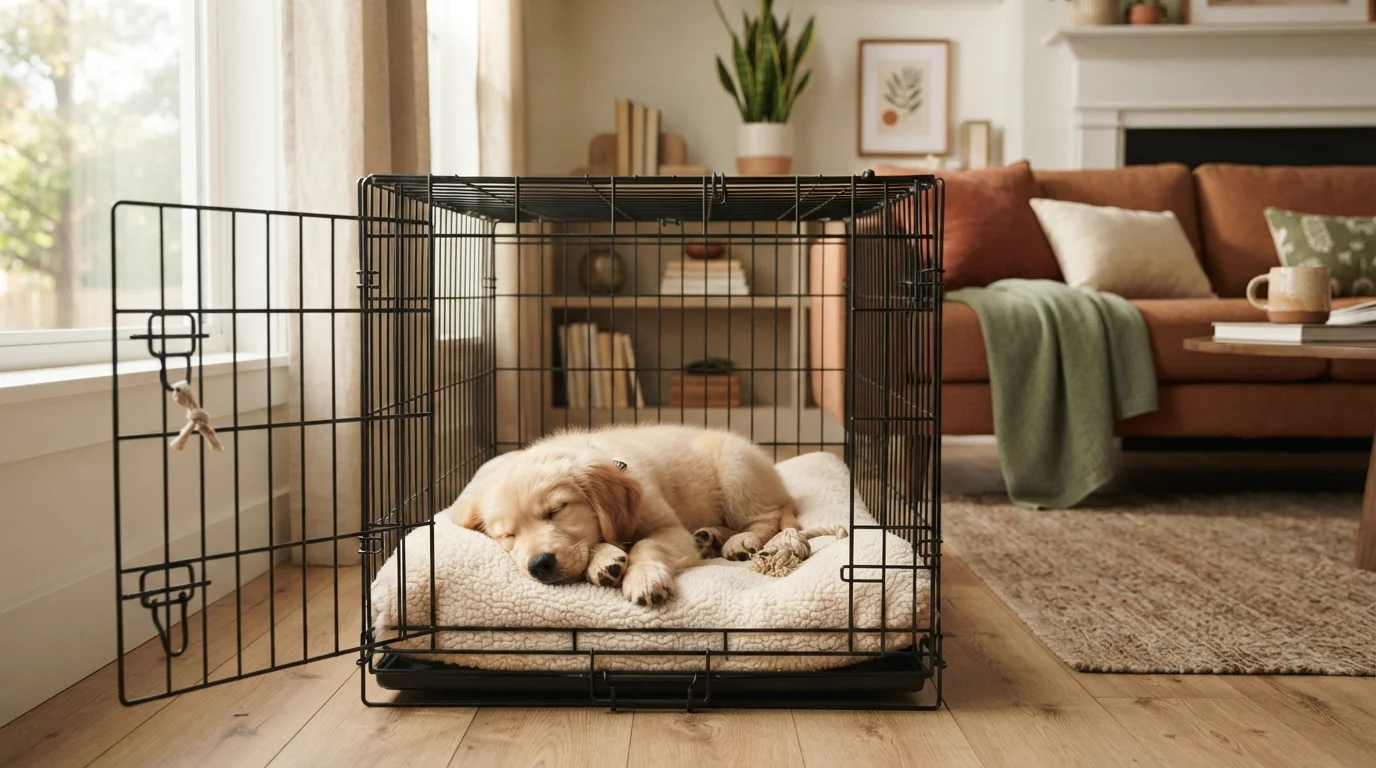
The Ultimate Puppy Crate Training Schedule: Hour-by-Hour Routine for New Owners
Bringing a new puppy home throws your entire daily routine into a tailspin. One minute you are charmed by their tiny sleeping face, and the next you are staring at a puddle on the living room rug, wondering how a creature that small can generate so much chaos. If you are reading this mid-crisis, take a deep breath. You do not need to guess your way through the day or keep your eyes glued to your puppy for 16 hours straight. A structured puppy crate training schedule is the single most effective tool to protect your sanity, accelerate house-training, and teach your puppy how to settle independently.
Why a Crate Schedule is Your Sanity Saver (And What Everyone Gets Wrong)

The biggest mistake new puppy owners make is treating the crate as a punishment box or an overnight holding cell. When a crate is only used when you leave the house or when you are frustrated, your puppy learns to associate it with isolation and panic. Instead, a successful routine treats the crate as a predictable, comforting den woven seamlessly into a balanced daily cycle.
Puppies need roughly 18 to 20 hours of sleep every single day. When they do not get this rest, they become overtired, land-sharking bundles of teeth who bite at ankles and throw tantrums. A solid schedule alternates between active engagement and enforced crate naps. This ensures they get the rest they desperately need while giving you uninterrupted time to work, cook, or simply breathe.
The Golden Rule of Bladder Control and Crate Intervals

Before mapping out your hours, you have to understand the biological clock ticking inside your puppy. A general rule of thumb is that a puppy can hold their bladder for roughly one hour per month of age, plus one.
- An 8-week-old puppy can manage about 2 to 3 hours max during the day—and often less if they are actively drinking water or running around.
- A 12-week-old puppy can stretch to roughly 3 to 4 hours.
Trying to force an 8-week-old puppy to stay in a crate for five hours straight guarantees an accident, which ruins their instinct to keep their sleeping area clean and derails your house-training progress. Your schedule must respect these hard biological limits.
Morning Routine: Kicking Off the Day Without Chaos

Your morning starts the second your puppy wakes up, usually around 6:00 AM. Timing here is everything because bladder control in a young puppy is measured in minutes.
- 6:00 AM — Immediate Wake-Up & Potty: Scoop your puppy up straight out of the crate—do not let them walk across the floor, as motion stimulates the bladder. Carry them directly to your designated outdoor yard spot. Give a calm “go potty” cue and reward heavily with a high-value treat the second they finish.
- 6:15 AM — Breakfast & Training Session: Instead of handing over a bowl of food, use their morning kibble for a 10-minute basic training session (working on “sit,” tracking your hand, or practicing name recognition).
- 6:45 AM — Post-Meal Potty & Short Play: Puppies almost always need a second bowel movement shortly after eating. Head back outside for a quick yard trip, followed by 15 minutes of gentle indoor play.
- 7:15 AM — First Morning Crate Nap: Guide your puppy into their crate with a stuffed chew toy. Expect some minor whining; if they just eliminated outside, this is scheduled rest, not a bathroom emergency. Let them sleep until 9:00 AM.
Mid-Day Management: Balancing Work and Rest Windows

Late morning and early afternoon are prime working hours, meaning your puppy needs to learn how to occupy themselves while you tackle your remote job or household responsibilities.
- 9:00 AM — Potty Break & Exploration: Take them straight out of the crate for a yard trip. Follow this with a slightly longer play session or supervised exploration in a secure puppy playpen.
- 9:45 AM — Mid-Morning Nap: Back into the crate for another solid 1.5 to 2 hours of enforced rest.
- 11:30 AM — Lunchtime Routine: Out of the crate for a midday potty trip. Feed meal number two, again utilizing puzzle toys or a snuffle mat to engage their brain.
- 12:15 PM — Afternoon Crate Rest: After a brief post-meal potty walk, tuck them back into the crate. This stretch is crucial if you work a full-time schedule; if you are away from home during the day, this is the exact window where a neighbor or dog walker should drop in for a midday relief break.
Evening Wind-Down: Surviving the Witching Hour

As the sun sets, puppies often enter their notorious “witching hour”—a surge of hyperactive, bitey energy driven by overtiredness. Your evening schedule must shift from high-octane play to calming routines.
- 3:30 PM — Afternoon Wake-Up & Yard Play: Potty break, followed by outdoor fetch or a short neighborhood walk if they are fully vaccinated.
- 4:30 PM — Late Afternoon Rest: A shorter crate nap or downtime in a gated kitchen area while you prep dinner.
- 6:00 PM — Dinner & Decompression: Feed their final main meal of the day. Pick up their primary water bowl around 7:30 PM or 8:00 PM to minimize middle-of-the-night fluid emergencies.
- 7:00 PM — Calm Indoor Socialization: Keep activity low-key. Practice gentle handling, brushing, or letting them chew on a safe bully stick near the sofa.
Bedtime and Overnight Crate Protocol

Bedtime should signal an absolute shift in environment—lights low, house quiet, and zero ambiguity about what happens next.
- 9:00 PM — Final Outdoor Trip: Take your puppy out for a final, strictly business bathroom run. Keep tone low, lights dim, and do not engage in play.
- 9:30 PM — Lights Out in the Crate: Place your puppy into their nighttime crate. For the first few weeks, keeping the crate in your bedroom—or right next to your mattress—helps them smell your presence and drastically reduces panic.
- The Overnight Alarm Strategy: If you have an 8-week-old puppy, set a silent phone alarm for 2:00 AM or 3:00 AM for a quick, boring bathroom trip. Carry them out, let them go, and carry them right back to bed without fuss.
Frequently Asked Questions About Puppy Crate Schedules

What should I do if my puppy screams bloody murder the second I close the crate door?
First, ensure they don’t genuinely need a bathroom break. If they just went outside, wait for a micro-second of silence before opening the door or acknowledging them. If you let them out while they are actively howling, you teach them that screaming is the magic remote control to escape. Build positive association during the day by feeding meals inside with the door open.
How do I maintain this schedule if I work a 9-to-5 job outside the home?
An 8-week-old puppy cannot be left alone in a crate for eight hours. If you work outside the home, you must arrange for a professional pet sitter, neighbor, or family member to drop in midway through the morning and afternoon. Alternatively, use a secure puppy playpen with an attached indoor potty patch for daytime hours, reserving the smaller crate strictly for times you are home or overnight.
Is it cruel to put a puppy in a crate during the day when I am home?
Not at all! Think of it like putting a toddler down for a mandatory afternoon nap. Puppies lack the self-control to put themselves to sleep when they are exhausted, leading to frantic, destructive behavior. Enforced crate naps protect them from chewing electrical cords or swallowing dangerous household items while teaching them how to self-soothe.
Should I cover the crate with a blanket at night?
Yes, in most cases. A breathable, lightweight blanket or custom crate cover blocks out visual stimulation, shadows, and the shifting light of passing car headlights. This creates a dark, cave-like den environment that signals to your puppy’s brain that it is time to sleep. Always leave one side open or unblocked for adequate airflow.
How many weeks should I stick rigidly to this hourly schedule?
Puppy development moves at lightning speed. As your puppy grows from 8 weeks to 16 weeks, their bladder capacity increases and their ability to settle improves. You can typically begin expanding their out-of-crate freedom windows by 15 to 30 minutes every couple of weeks, provided they show consistent house-training reliability and don’t chew household items.
What if my puppy refuses to eat their meals inside the crate?
If your puppy panics at the threshold, scale back. Stop closing the door entirely. Feed them right at the outer edge of the door for a few days, then slowly inch the bowl further back across multiple meals. Never force them physically inside, as rough handling destroys the safe-haven feeling required for long-term crate success.
Conclusion

A successful puppy crate training schedule isn’t about running a rigid military operation; it is about creating predictable rhythms that give your puppy security and give you peace of mind. By honoring their tiny bladder limits, enforcing necessary daytime rest, and keeping nighttime outings strictly business, you will turn a scary transition into a peaceful routine. Stick with the consistency, and remember that this intense phase is temporary.


Jordan writes PuppySettled’s training and behavior guides, drawing on years of hands-on experience fostering and training rescue puppies through local shelters in Denver, Colorado. Jordan focuses on practical, force-free training methods — crate training, potty training, and the tough early behavior challenges that come with a new puppy. When not writing, Jordan’s usually out on a walk with a foster dog in training.