
The Minimalist Puppy Checklist: 10 Essentials You Actually Need (And What to Skip)
Bringing home a new companion is supposed to be one of the happiest moments of your life, but if you are currently sitting on your living room rug staring at a shopping cart containing forty-two different plastic gadgets, organic chew sticks, and designer water bowls, you are probably feeling completely overwhelmed. Pet store marketing preys on that initial wave of panic, convincing you that your puppy will perish without a matching raincoat, a smart-tracking collar, and an orthopedic bed they will likely shred in three days.
If you want to skip the buyer’s remorse and the clutter, a minimalist puppy checklist focuses strictly on the ten items you actually need to survive the first few weeks. By stripping away the non-essential fluff, you can save hundreds of dollars and keep your focus where it belongs: bonding with your new puppy instead of tripping over unused gear.
What Is a Minimalist Puppy Checklist?

A minimalist puppy checklist is a carefully curated shopping list containing only the critical gear required to safely feed, house, housebreak, and comfort a new puppy. Unlike the exhaustive corporate checklists designed to max out your credit card, it strips away non-essential items to save you money, reduce household clutter, and keep your life simple.
A minimalist puppy checklist cuts through the noise of big-box pet marketing by focusing strictly on safety, health, and basic household integration. You only need a secure crate, appropriate food, a simple leash and collar, waste bags, basic grooming tools, and a few safe chew toys to successfully bring your puppy home.
Bringing home a new dog is stressful enough without tripping over twenty different types of brushes and three unused beds. Focusing only on high-utility items makes the transition smoother for both you and your puppy. Let us look at the ten items that earn their keep from day one.
1. A Properly Sized Wire Crate

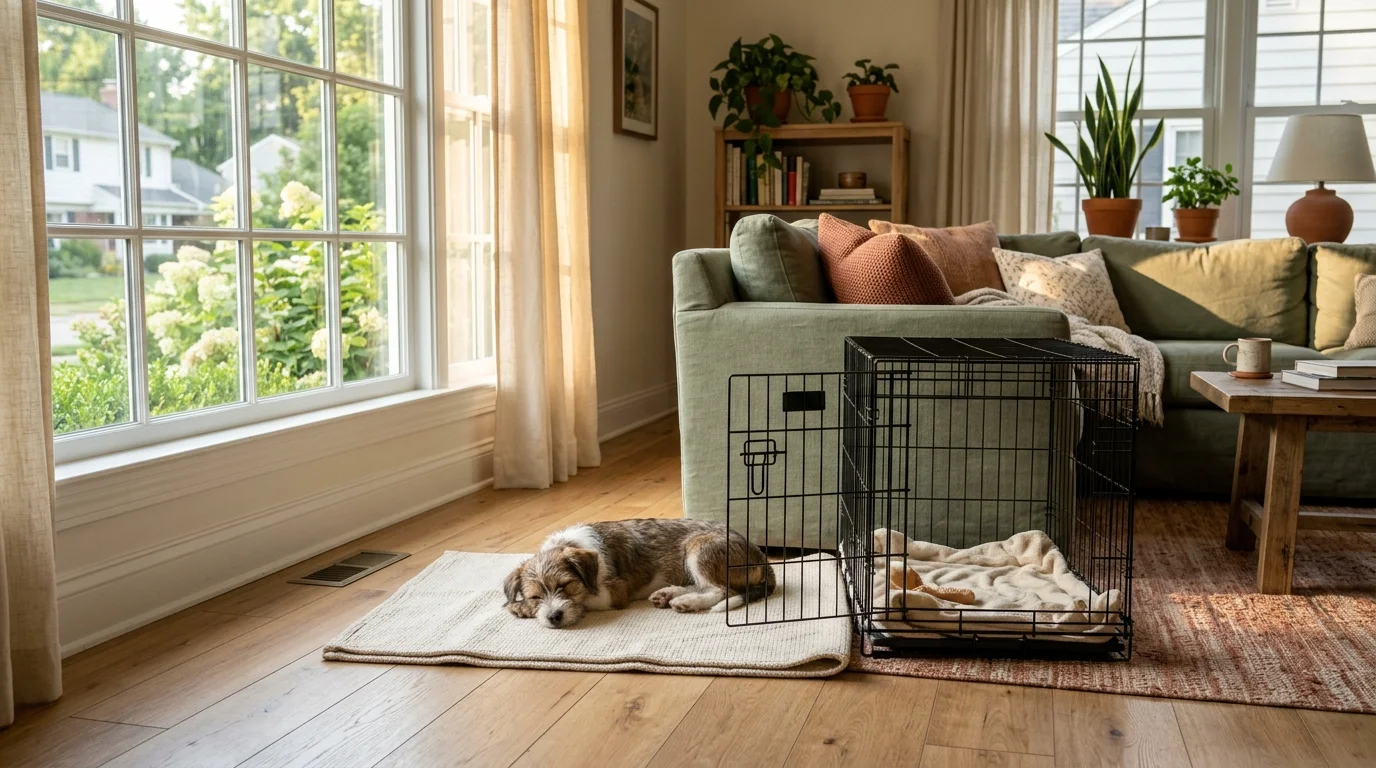
Your crate is the cornerstone of housebreaking and safe containment when you cannot watch your puppy every second. Skip the fabric carriers or elaborate furniture-style crates for now, as teething puppies will chew through mesh and ruin expensive wood.
Choose a sturdy wire crate featuring a divider panel so it can grow with your puppy. The crate should only be large enough for your puppy to stand up, turn around, and lie down comfortably.
2. Appropriate Puppy Food and Two Stainless Steel Bowls

Do not experiment with trendy raw diets or expensive boutique brands right away because abrupt diet changes lead to midnight diarrhea cleanups. Stick to the exact kibble your breeder or shelter was feeding to prevent upset stomachs, or consult your veterinarian for a balanced growth formula.
Pair your food with two simple, weighted stainless steel bowls. Avoid plastic bowls, which harbor bacteria and scratch easily, and skip elevated bowls unless specifically recommended by your vet for large-breed health concerns.
3. A Lightweight Nylon Leash and Flat Collar

You do not need a retractable leash during the crucial settling-in phase; in fact, they teach puppies to pull and offer zero control near roads or sidewalks. Buy a standard six-foot nylon or leather leash and a lightweight flat collar.
Make sure the collar has a secure metal D-ring for your ID tags. You can add a properly fitted harness later once your puppy is comfortable walking outside and past your apartment building or front yard.
4. Heavy-Duty Enzymatic Cleaner

Accidents will happen on your rugs, hardwood, or laminate flooring during the first month, no matter how vigilant you are. Standard household cleaners or bleach will not eliminate the pheromones that tell a puppy to pee in the exact same spot again.
Keep a gallon jug of a pet-safe enzymatic cleaner on hand. It breaks down uric acid crystals completely, which is your secret weapon for fast indoor potty training.
5. Unscented Poop Bags and a Holder

You will go through more poop bags than you can possibly imagine over the next year, making durability non-negotiable. Buy a bulk box of unscented, thick poop bags and a simple dispenser that clips onto your leash.
Skip the fancy scented or novelty printed bags because thin bags tear at the worst possible moments. Function and durability matter far more when you are standing outside in the cold at 6 AM trying to clean up quickly.
6. Three Durable Chew Toys (No Stuffing)

Teething puppies need to chew to relieve gum pain, but cheap plastic toys crack and become choking hazards. Invest in three high-quality rubber chew toys, such as a small puppy-formula KONG and two textured rubber rings.
Skip plush stuffed animals for the first few weeks unless you want stuffing shredded across your living room floor. Keep these toys rotated so your puppy stays interested in them.
7. A Basic Slicker Brush and Nail Clippers

Get your puppy used to grooming early by keeping the routine simple and positive. A basic slicker brush and a pair of human nail clippers or small pet scissors are all you need for short-coated breeds, while a metal greyhound comb helps prevent mats in longer coats.
Skip the professional-grade grooming arm, expensive shampoos with artificial fragrances, and blow dryers for now. A gentle, unscented puppy shampoo is plenty for emergency muddy paws.
8. A Secure ID Tag and Microchip Registration

Safety is non-negotiable, even if your puppy stays indoors most of the day while adjusting to their new surroundings. Have a metal ID tag engraved with your current phone number and attach it to their collar immediately.
Ensure your puppy’s microchip is registered online with your current contact information. This is your primary safety net if your puppy slips out an apartment door or backyard gate during a moment of sudden excitement.
9. A Single Washable Pet Bed
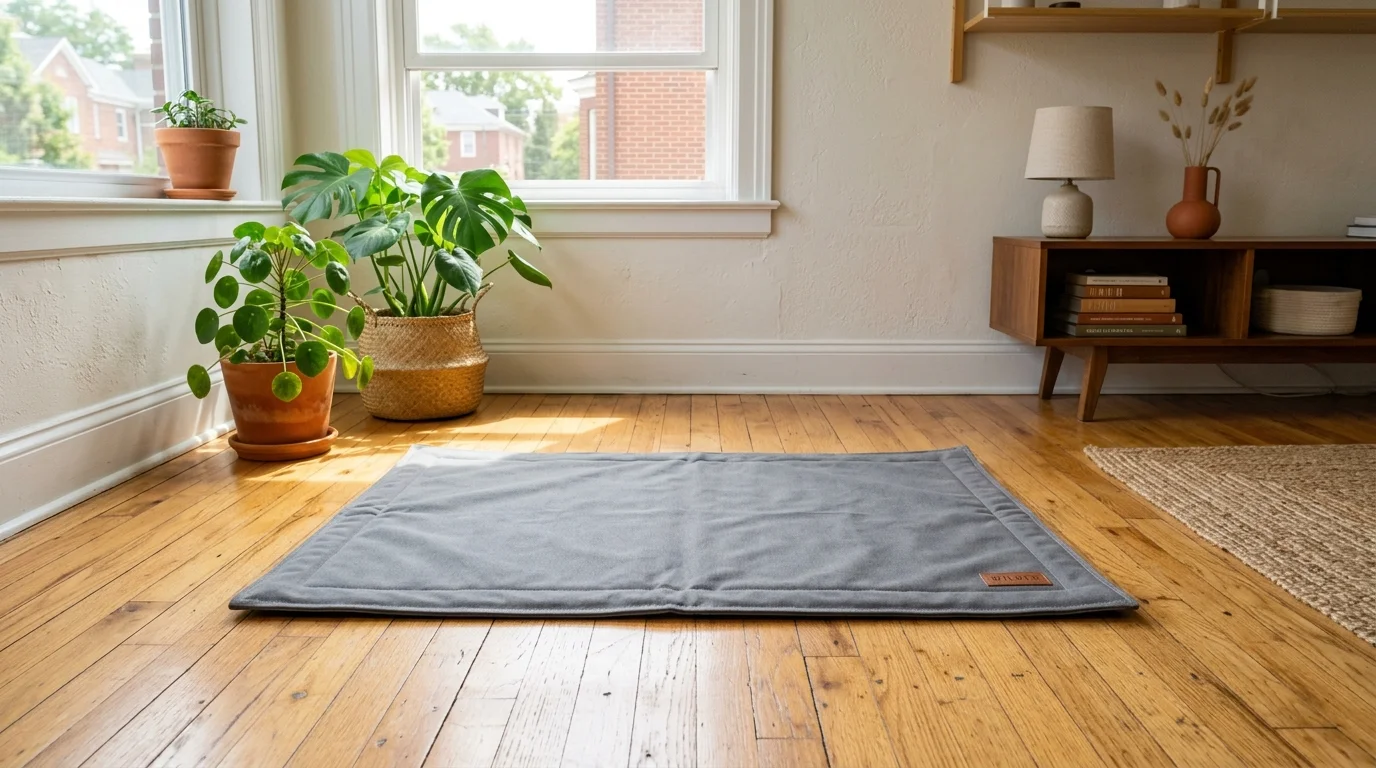
Puppies chew beds, vomit on beds, and track mud onto beds during the messy housebreaking stage. Do not buy an expensive orthopedic mattress until your puppy has outgrown the chewing and housebreaking phase.
Choose a flat, machine-washable crate pad or a durable canvas mat that fits inside their crate. Washability and chew-resistance trump plush luxury every single time during puppyhood.
10. High-Value Training Treats

Positive reinforcement requires immediate rewards that your puppy actually wants to work for. Skip the giant bags of hard biscuit treats and buy soft, chewy training treats that can be broken into tiny pieces.
You can also use plain boiled chicken or string cheese cut into pea-sized bits for high-distraction situations.
What Puppy Supplies to Safely Skip

Retailers love to convince new owners that puppies require specialized wardrobes and smart gadgets to thrive. You can safely save your money by skipping the following items entirely:
- Puppy outfits and sweaters: Unless your dog is a tiny hairless breed in freezing winter weather, clothes restrict movement and cause unnecessary stress.
- Puppy pee pads: Unless you live in a high-rise apartment and cannot go outside for medical reasons, pads often confuse puppies and delay outdoor housebreaking.
- Dog shoes and boots: Most puppies will spend their first weeks freezing or walking funny in them; wait until paw protection is medically necessary.
- Electronic barking deterrents: Training and routine solve vocalization issues far better than automated gadgets.
Frequently Asked Questions About Puppy Essentials

What should I buy before bringing my puppy home?
Focus strictly on survival essentials: food, bowls, a crate, a leash, a collar, an ID tag, and enzymatic cleaner. Everything else can be purchased during your first week together after you understand your puppy’s specific personality and size.
Do I really need a crate for a new puppy?
A crate is not mandatory for every household, but it is widely considered the most effective tool for safe containment and accelerated housebreaking. If you choose not to crate, you will need a securely puppy-proofed pen or small room.
Are pee pads necessary for apartment puppies?
Pee pads are optional and often discouraged if your goal is outdoor housebreaking. They teach a puppy that indoor elimination on soft fabric textures is acceptable, which can complicate long-term training.
How much should I budget for basic puppy supplies?
A minimalist startup setup typically costs between $100 and $250, depending on the size of your puppy and the quality of the crate and food you choose. Buying fewer items allows you to spend money on higher-quality, safer gear.
Can I use human shampoo on my puppy?
Human shampoo has a different pH balance than canine skin and can cause severe dryness, itching, and irritation. Always use a mild, vet-approved puppy shampoo for baths.
When can I start taking my puppy for walks outside?

Consult your veterinarian regarding local parvo risks and your puppy’s specific vaccination schedule. Many puppies need to complete their core series around 16 weeks before walking in public parks, though brief backyard or carried socialization is safe earlier. Setting up your home does not require a shopping spree or a garage full of unused plastic bins. By sticking to this minimalist puppy checklist, you save money, reduce household clutter, and keep your focus where it belongs: bonding with your new companion.


Jordan writes PuppySettled’s training and behavior guides, drawing on years of hands-on experience fostering and training rescue puppies through local shelters in Denver, Colorado. Jordan focuses on practical, force-free training methods — crate training, potty training, and the tough early behavior challenges that come with a new puppy. When not writing, Jordan’s usually out on a walk with a foster dog in training.