
Puppy Gear Mistakes New Owners Make (And What to Buy Instead)
You are standing in the middle of a massive pet store aisle, or maybe you are staring at an online shopping cart that somehow totals $450. Between the matching collar-and-leash sets, the mountain of squeaky toys, and that adorable miniature dog sofa, it is incredibly easy to lose your mind—and your budget—preparing for a new arrival. Making puppy gear mistakes is practically a rite of passage for new owners, but the reality is that many heavily marketed puppy products are actually a waste of money, and some are downright unsafe. Let’s clear out your cart. We are going to walk through the most common new puppy shopping mistakes, what you should completely avoid, and the safe, durable items you actually need to survive the first few months.
Executive Strategy Section

Here is the approach, at a glance: When shopping for a brand new puppy, you are buying for a highly destructive, rapidly growing, easily distracted phase of life—not the mature adult dog they will eventually become. The biggest trap new owners fall into is prioritizing aesthetics over safety and utility. A gorgeous leather collar will be outgrown in three weeks; a fluffy orthopedic bed will be shredded and swallowed on night two.
To shop smart, we need to shift your focus to durability, containment, and mental enrichment. Your initial budget should prioritize heavy-duty management tools (like chew-proof playpens and adjustable crates) and safe puzzle toys that keep sharp teeth occupied. Everything soft, expensive, or easily chewed should be delayed until they are past the teething phase. By sticking to this utilitarian approach, you will save hundreds of dollars, prevent midnight emergency vet visits for swallowed stuffing, and set your home up for a much smoother transition.
Buying a Crate Without a Divider Panel

It makes total financial sense to buy the large crate your Golden Retriever or Shepherd will need as an adult. But putting an eight-week-old puppy in a massive crate is a guaranteed potty training disaster. If they have enough room to sleep comfortably on one side and pee on the other, they will.
- What to buy instead: Buy the adult-sized wire crate, but make absolutely sure it comes with a sturdy metal divider panel.
- You want to shrink the usable space so your puppy only has enough room to stand up, turn around, and lie down.
- As they grow week by week, simply move the divider back an inch or two. This prevents you from buying three different crates over six months.
Stocking Up on Expensive, Fluffy Dog Beds

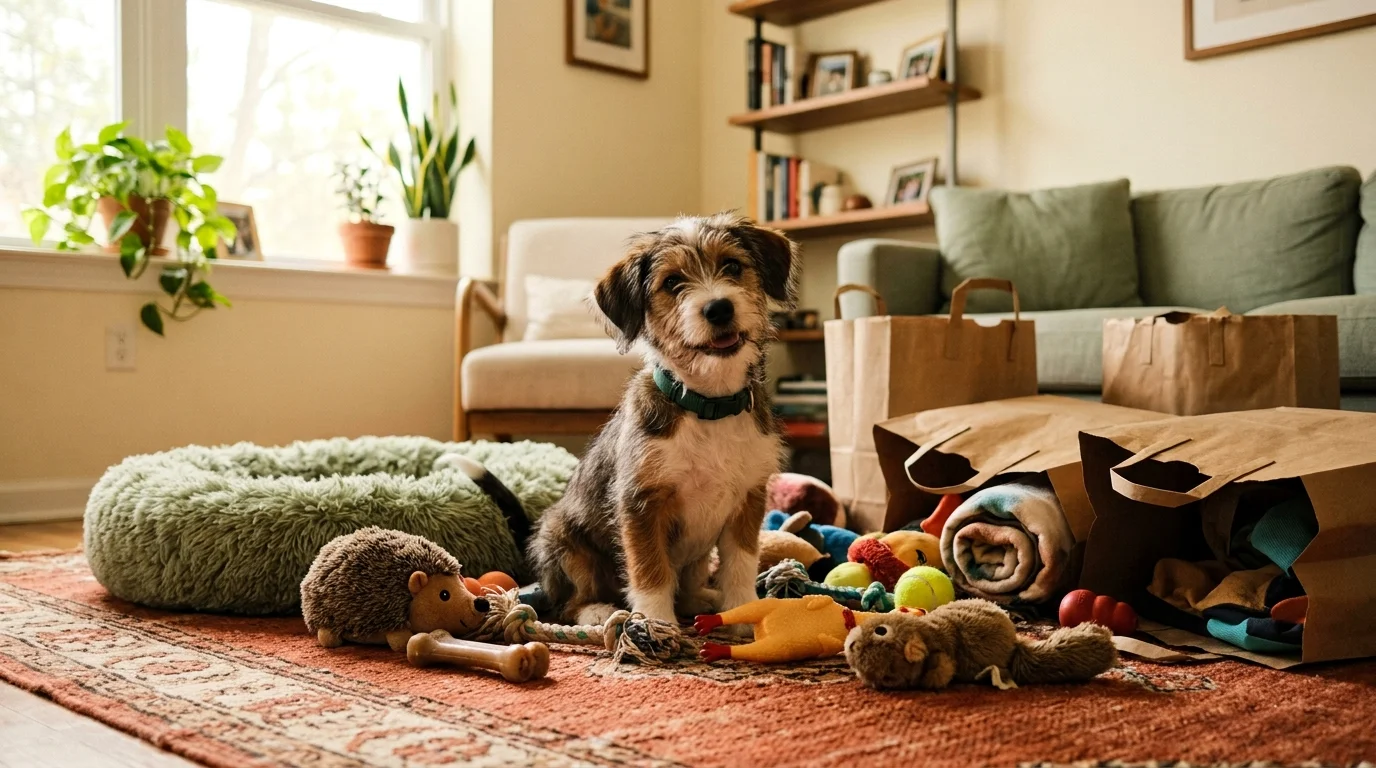
Those plush, faux-fur donut beds look incredibly cozy, but they are one of the biggest things not to buy for a new puppy. To a teething puppy, a soft bed with zippers, seams, and stuffing is just a giant, expensive chew toy. Swallowing synthetic poly-fill is a massive bowel obstruction risk.
- What to buy instead: Stick to a heavy-duty, chew-resistant mat for the crate, or simply use old, cheap towels that you don’t mind throwing away if they get ripped.
- Wait until your dog is at least a year old and past the destructive teething phase before investing in a high-quality orthopedic living room bed.
Using Retractable Leashes for a New Puppy

Retractable leashes are everywhere, but they are a terrible tool for an untrained puppy. Not only do they teach your puppy that pulling on the leash gets them exactly where they want to go, but the thin cord can cause severe rope burn if it wraps around your legs or your puppy’s limbs.
- What to buy instead: A standard, flat 6-foot nylon or biothane leash.
- A fixed-length leash forces you to teach your puppy how to walk nicely at your side.
- If you drop a retractable leash, the heavy plastic handle retracts toward the puppy, terrifying them and often causing them to bolt into the street. A standard leash simply falls to the ground.
Filling the Toy Box with Cheap Squeaky Plushies

It is incredibly tempting to grab five or six cheap plush toys from the bargain bin. But flimsy stuffed animals quickly become puppy toys that are dangerous. Sharp puppy teeth can rip through cheap fabric in minutes, exposing the plastic squeaker inside, which is a perfect, bite-sized choking hazard.
- What to buy instead: Look for toys specifically designed for aggressive teething, made from durable rubber or thick, reinforced canvas without small plastic parts.
- If you do buy plush toys, they should only be used during highly supervised, interactive play (like a game of tug with you), never left alone in the pen for solo chewing.
Investing in Expensive Leather Collars Right Away

You want your new puppy to look sharp for their first walk, so you splurge on a beautifully stitched, $40 leather collar. The problem? Your puppy is going to double in size over the next two months. That expensive leather collar will be useless before you even break it in.
- What to buy instead: Buy a cheap, highly adjustable nylon snap collar for the first few months.
- Puppies play hard, roll in the mud, and constantly outgrow their gear. Save the premium leather or customized hardware for their first birthday present when their neck size has permanently stabilized.
- Make sure the collar has a quick-release buckle for safety during rough puppy playdates.
Purchasing Standard Ceramic Bowls Instead of Slow Feeders

A matching set of cute ceramic bowls looks great in your kitchen, but most puppies eat like they have never seen food before. Inhaling dry kibble in ten seconds flat leads to hiccups, vomiting, and in deep-chested breeds, a life-threatening condition called bloat.
- What to buy instead: Skip the standard bowl entirely and buy a puzzle bowl or slow feeder right from the start.
- These bowls have physical ridges and obstacles that force your puppy to lick and forage for their kibble, slowing down their eating pace from seconds to several minutes.
- As a bonus, the mental effort tires them out, giving you a calmer puppy after breakfast.
Relying on Generic Household Cleaners for Accidents

When your puppy inevitably pees on the living room rug, your first instinct is to grab the standard carpet spray or a mix of vinegar and water. This is a massive mistake. Regular cleaners mask the smell to human noses, but they leave behind uric acid crystals. Your puppy’s powerful nose will still smell the bathroom spot and return to pee there again.
- What to buy instead: You absolutely must use an enzymatic cleaner specifically formulated for dog urine.
- Enzymes actually break down and destroy the biological proteins in the urine, completely neutralizing the scent.
- Always blot the stain dry with paper towels first, then soak the area heavily with the enzymatic cleaner and let it air dry.
Stocking Up on Hard Bones, Antlers, or Hooves

When looking for teething relief, many owners head straight for the natural bone aisle. However, raw bones, baked bones, antlers, and cow hooves are incredibly rigid. A young puppy’s teeth are fragile, and chewing on items this hard frequently leads to painful, expensive slab fractures of their teeth.
- What to buy instead: The general rule of thumb from veterinarians is the “kneecap test.” If a chew is too hard to comfortably smack against your own kneecap, it is too hard for your puppy’s teeth.
- Opt for softer, puppy-specific teething rings, durable rubber chews, or edible dental sticks designed specifically for young dogs.
Buying Massive Bags of Premium Kibble Upfront

You’ve done your research, found the highest-rated, most expensive puppy kibble on the market, and bought the giant 30-pound bag to save money. Then you bring the puppy home, and the sudden diet change gives them three days of explosive diarrhea, or they simply refuse to eat it.
- What to buy instead: Buy the smallest bag possible of whatever food the breeder or shelter was currently feeding them.
- You must transition a puppy’s diet incredibly slowly over a 7 to 10 day period, mixing the old food with the new food.
- Once you know their stomach tolerates the new brand, then you can commit to the bulk bags.
Slipping on the Wrong Type of Harness
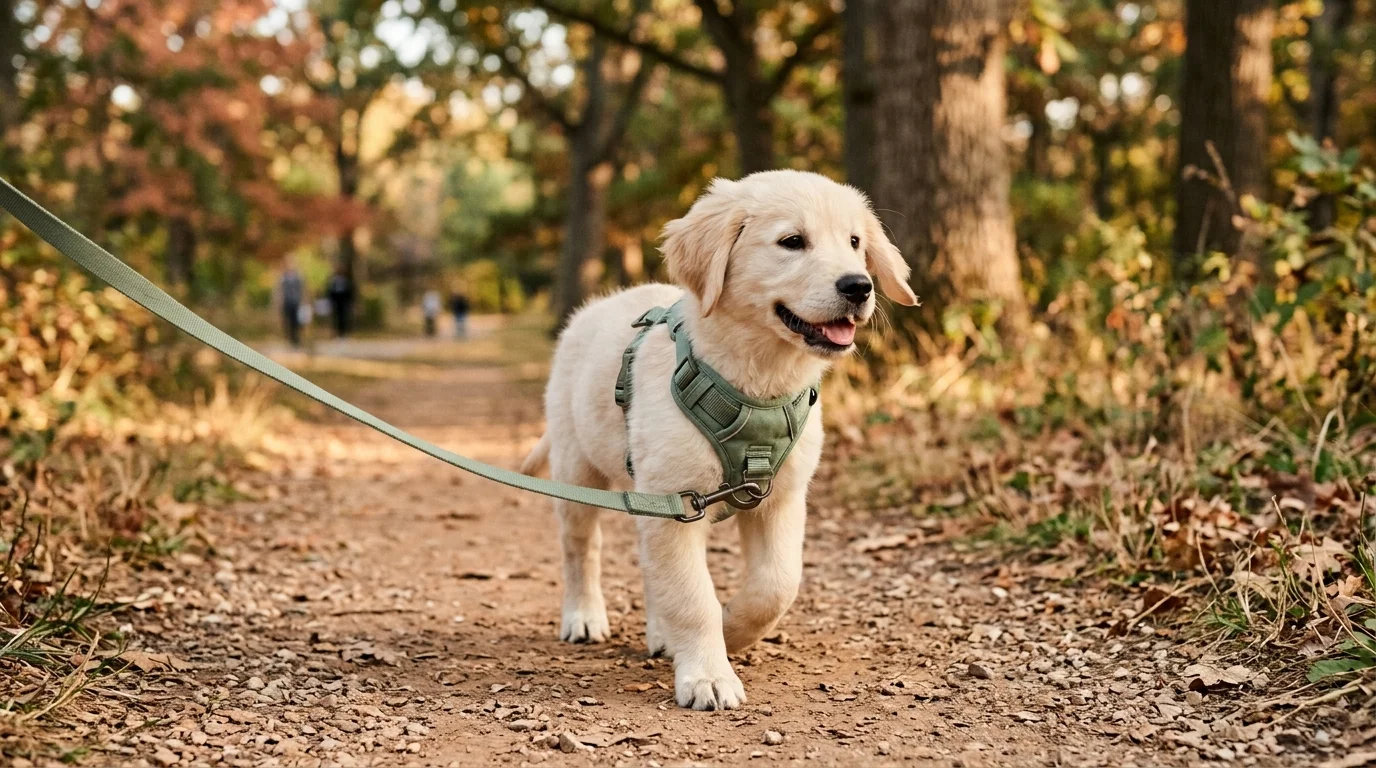
A standard step-in harness that clips on the puppy’s back is a sled-dog design. When a puppy feels tension on their back, their natural opposition reflex triggers, causing them to dig in and pull you down the sidewalk with surprising force.
- What to buy instead: A front-clip harness.
- When the leash attaches to the D-ring on the puppy’s chest, any forward pulling gently redirects their shoulders back toward you.
- This physical mechanic prevents them from gaining forward momentum and makes leash training significantly easier on your arms while they learn basic manners.
Wasting Money on Puppy Pads If You Have a Yard

If you live in a suburban house with a fenced yard, buying a giant box of disposable puppy pads is actively sabotaging your potty training. Pads teach a puppy that it is perfectly acceptable to eliminate indoors on soft, square surfaces (which closely resemble your expensive rugs).
- What to buy instead: Ditch the pads and invest that money into a great heavy-duty flashlight and a warm jacket for yourself for middle-of-the-night yard trips.
- The Apartment Exception: If you live on the 10th floor of a high-rise, pads might be a temporary necessity. In that case, buy a fresh grass patch subscription instead of paper pads to teach them to seek out a natural texture.
Getting Flimsy, Plastic Baby Gates

You need to block off the kitchen or the stairs, so you buy a cheap, wooden or plastic pressure-mounted baby gate. Within two weeks, a bored, teething puppy will chew straight through the plastic lattice, or a sturdy breed will simply barrel through it because the pressure mounts slipped.
- What to buy instead: Invest in a tall, heavy-duty metal pet gate with a walk-through swinging door.
- Metal cannot be chewed through, and the walk-through door saves you from constantly tripping over a solid gate while carrying laundry or groceries.
- Make sure to measure your baseboards before buying to ensure a secure fit against the wall.
Buying Tiny, Ineffective Grooming Brushes

Those generic, soft-bristle brushes look gentle and sweet in the puppy aisle, but for a dog with a double coat (like a Golden Retriever or Husky) or a curly coat (like a Doodle or Poodle mix), a soft brush only glosses over the top layer of fur. Underneath, agonizing mats are forming close to the skin.
- What to buy instead: Buy the specific grooming tools required for your dog’s unique coat type right from the start.
- For Doodles and Poodles, you need a high-quality slicker brush and a metal greyhound comb to check your work.
- For double-coated breeds, an undercoat rake is essential to pull out loose fur before it gets trapped.
Overlooking Durable, Stuffable Chew Toys

Many new owners focus entirely on fetch toys and completely forget about independent pacifiers. If you don’t provide your puppy with something they can safely work on for 30 minutes by themselves, they will find something to chew—like your baseboards or shoes.
- What to buy instead: Hollow, stuffable rubber toys are non-negotiable puppy survival gear.
- Buy at least three hollow rubber cones or puzzle cups.
- Stuff them with plain yogurt, wet puppy food, or mashed banana, and freeze them solid. Keep a rotation in your freezer at all times. When the puppy gets bitey and overtired, hand them a frozen toy in their playpen to forcibly calm their nervous system.
Skipping the Long Line for Outdoor Recall Training

You take your puppy to an empty park to practice coming when called. If you only have your standard 6-foot leash, they don’t have enough room to actually practice running back to you. If you take them completely off-leash, you risk them bolting after a squirrel and getting lost.
- What to buy instead: A 15 to 30-foot lightweight training long line.
- A long line gives your puppy the illusion of freedom to sniff and explore the grass, while giving you a physical emergency brake if they decide to ignore your recall command.
Buying Cheap, Heavily Scented Dog Shampoo

That “sugar cookie” scented dog shampoo at the grocery store might smell great to you, but heavy artificial fragrances are notorious for irritating a puppy’s highly sensitive, developing skin. Shampoos formulated for adult dogs can also strip a puppy’s coat of its natural, protective oils.
- What to buy instead: A hypoallergenic, tearless puppy-specific shampoo with minimal ingredients.
- Look for soothing, natural ingredients like oatmeal or aloe vera.
- Remember, you actually shouldn’t bathe your puppy very often—usually only when they roll in something smelly or get visibly muddy. Over-bathing causes severe dry skin and itching.
Frequent Puppy Gear FAQs

How many toys does a new puppy actually need?
You do not need a massive toy box. You need a strategic rotation. Aim for 2-3 durable stuffable chew toys (for crate time), 2 soft tug toys (for interactive play with you), and 1-2 puzzle feeders (for meals). Put half the toys in a closet and swap them out weekly so they always feel “new” to the puppy.
What are the most dangerous toys for puppies?
The most common puppy toys that are dangerous include cheap plushies with plastic eyes or squeakers that can be swallowed, raw rawhide (which expands in the stomach and causes blockages), and natural bones or antlers that are hard enough to crack fragile puppy teeth.
Should I buy a dog bed for the crate?
No, not at first. Most puppies will view a soft crate bed as a chew toy or a bathroom mat. Start with a bare plastic pan or a very thin, chew-resistant mat until they are reliably potty trained and past the teething phase.
Conclusion
Prepping for a new puppy doesn’t require draining your savings account on luxury items that will be destroyed in a week. By avoiding these common puppy gear mistakes and focusing your budget on durable management tools—like strong metal gates, adjustable crates, and heavy-duty chew toys—you will keep your puppy safe and your home intact. Skip the fluff, buy for the phase they are in right now, and save the luxury leather collars for their first birthday.


Maya is the founder and writer behind PuppySettled, where she shares practical, situation-specific guides for first-time dog owners. After bringing her own puppy home to a small apartment and realizing most advice out there assumed a house and a yard, she started writing the guides she wished had existed — for real budgets, real schedules, and real first-time-owner questions. When she’s not writing, she’s usually on a walk figuring out the next thing worth covering.