
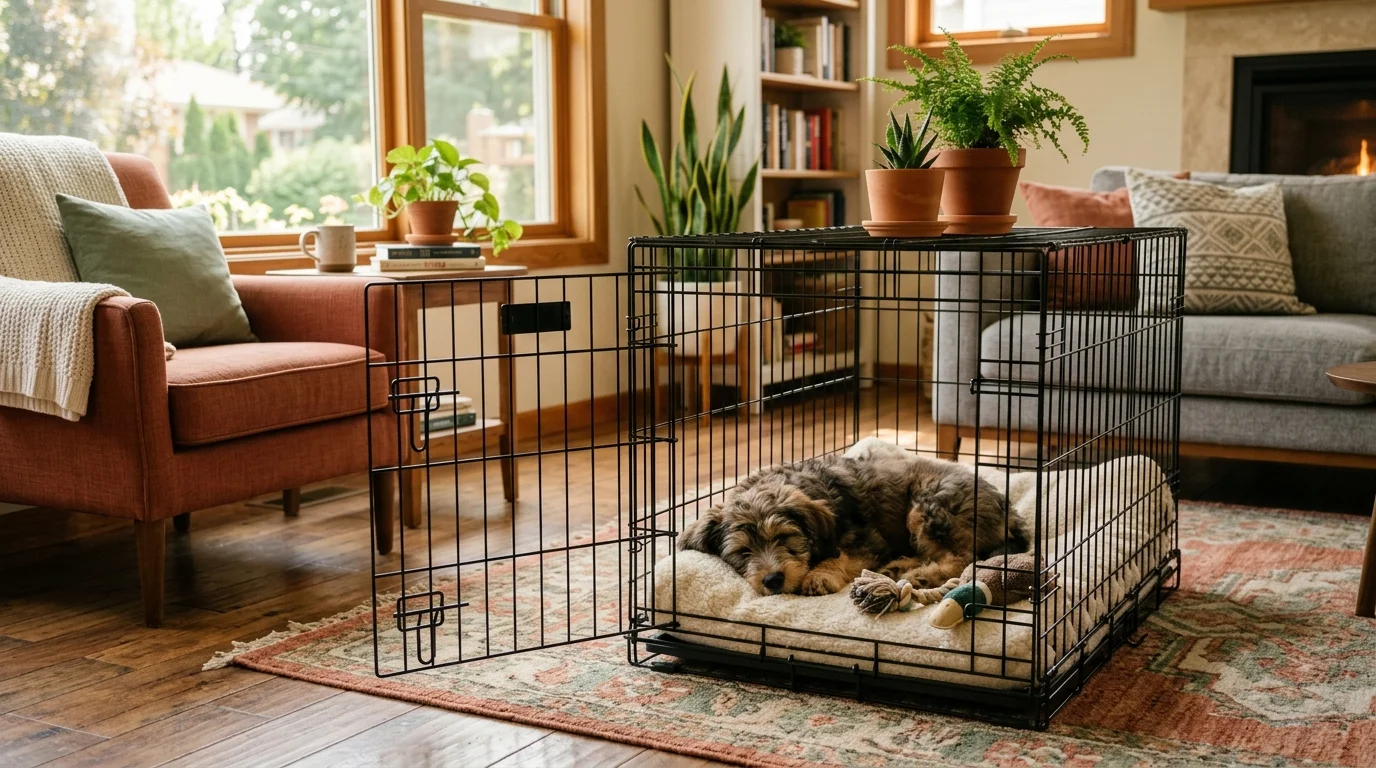
Common Crate Training Mistakes New Puppy Owners Make (And How to Fix Them)
It’s 2 AM, your puppy is whining endlessly, and you are staring at the ceiling wondering where it all went wrong. If you are reading this through sleep-deprived eyes, take a deep breath. Making crate training mistakes is incredibly common for new puppy owners, especially when you’re just trying to get through those first few exhausting nights. You aren’t failing, and your puppy doesn’t hate you. Transitioning away from their littermates into a wire or plastic box is a massive adjustment, not an overnight miracle. Let’s look at the most common puppy crate mistakes and exactly how to fix them, step-by-step, so you both can finally get some real sleep.
Executive Strategy Section

Here is the approach, at a glance: Crate training should never feel like a punishment or a battle of wills. The core philosophy of fixing a crate training strategy gone wrong is shifting the crate from a scary “time-out box” to a highly valuable, secure den. Most nighttime crying and daytime panic stem from rushing the introduction, using the wrong size crate, or accidentally rewarding the wrong behaviors with your attention.
To fix these issues, we need to reset your puppy’s association with the space. This means taking a major step back, slowing down your timeline, and tightly controlling the environment around the crate. Whether you live in a quiet suburban house or a noisy city apartment, the goal is to make the crate the best, safest room in your home. We will adjust the physical setup, change exactly how you react to their whining, and build a daily routine that makes sense for your specific living situation. It takes patience, but by addressing these common missteps systematically, you can create a calm, quiet sanctuary for your puppy.
Buying a Crate That Is Way Too Big

It is completely understandable to want to buy a massive crate so your Golden Retriever or Lab puppy can “grow into it.” But this is a major potty-training trap. A puppy only needs enough room to stand up, turn around, and lie down comfortably. If they have a sprawling floor plan, they will gladly sleep in one clean corner and pee in the other.
- The Fix: Use a heavy-duty crate divider.
- Move the divider back an inch or two at a time as they grow.
- Make sure you measure your puppy’s current length from nose to the base of their tail before locking the divider in place.
- If you’re in an apartment, a wire crate is much easier to collapse, size, and move than a bulky plastic travel kennel.
Using the Crate as a Punishment Zone

When your puppy is biting your ankles and acting like a little land shark, your first frustrated instinct is to toss them in the crate for a “time-out.” This is a fast track to crate training gone wrong. If the crate becomes the bad-dog box, they will fight you tooth and nail every time you try to put them in for bed.
- The Fix: If you need a break from the biting, use a puppy playpen or baby gates instead.
- Always keep the crate door open during the day. Randomly drop high-value treats inside for them to discover on their own.
- The crate must remain a place of utter safety and relaxation, never frustration or anger.
Rushing the Introduction Process

Many new owners bring their puppy home, drop them in the crate on night one, lock the door, and just expect them to sleep. For a puppy who just left the warmth of their litter, this is terrifying. Rushing this step guarantees panic.
- The Fix: Spend your first few days playing confidence-building crate games.
- Feed all their daily meals inside the crate with the door wide open.
- Throw their favorite squeaky toy inside and let them eagerly run in to grab it.
- Close the door for just three seconds while they eat a treat, then immediately pop it open. Build duration in tiny increments.
Giving In to Demand Barking and Whining

It is physically agonizing to listen to a puppy cry. But if you open the crate door while they are throwing a tantrum, you just taught them that screaming is the magic key to freedom. This creates a deeply ingrained cycle of worsening behavior.
- The Fix: Wait for just three seconds of total silence before you touch the latch.
- You don’t need them to be perfectly calm, just quiet for a brief, fleeting moment.
- Exception: If it’s the middle of the night and they suddenly wake up crying after being asleep, it is likely a bathroom emergency. Take them out on a leash, keep it boring, and put them straight back.
Leaving the Crate Bare and Uninviting

A cold, slippery plastic pan is not an appealing place to sleep. If you wouldn’t want to sleep on a hard, empty floor, your puppy definitely doesn’t either. They need comfort to settle their nervous system properly.
- The Fix: Add a soft, heavily padded crate mat.
- Include an article of clothing that smells heavily like you, such as a worn gym t-shirt.
- For extra comfort, especially for eight-week-old puppies, try a soothing stuffed toy. [Affiliate opportunity: heartbeat puppy cuddle toy with warming pack].
Forgetting to Create a Dark, Den-Like Environment

Dogs are natural den animals. A wide-open wire crate sitting in a brightly lit living room leaves them feeling exposed and highly vulnerable. Every shadow, TV flicker, or movement will keep them on high alert instead of sleeping.
- The Fix: Use a crate cover to block visual stimulation.
- You can buy a tailored cover [Affiliate opportunity: breathable canvas crate cover] or simply drape a dark, breathable bed sheet over the top and three sides.
- Always leave one side partially open for safe airflow.
- This simple step instantly signals that it is nighttime and time to shut down.
Placing the Crate in an Isolated Room

Puppies are highly social creatures who rely on you for survival. If you banish their crate to the laundry room or a distant basement on the first night, they will feel abandoned and panic immediately. They need to know you are nearby.
- The Fix: Keep the crate in a high-traffic area during the day, like the living room, so they can watch you while they rest.
- At night, physically move the crate into your bedroom right next to you, or use a second, smaller nighttime crate.
- Hearing your breathing and seeing you close by helps them settle dramatically faster.
Expecting a Hyper Puppy to Just Go to Sleep

Trying to crate a puppy who has the “zoomies” is like trying to put a toddler to bed right after they drank a soda. If their physical and mental energy isn’t completely drained, the crate will feel like a prison.
- The Fix: Implement a strict pre-crate routine of play, train, and potty.
- Engage in 10-15 minutes of structured play in the yard or your living room.
- Do a quick 5-minute obedience training session to tire out their brain.
- Always end with a successful potty trip outside before guiding them into their den.
Ignoring Their Tiny Bladder Capacity

A wildly common puppy crate mistake is assuming they can hold it all night. A general rule of thumb is that a puppy can hold their bladder for one hour per month of age, plus one. An 8-week-old puppy physically cannot wait eight hours, no matter how tired you are.
- The Fix: Set alarms on your phone for middle-of-the-night potty breaks.
- If they are two months old, expect to take them out every 2 to 3 hours.
- Keep these trips strictly business. No playing, no sweet talk, and keep the lights low. Take them to their potty spot, wait for them to go, praise quietly, and put them straight back into the crate.
Making a Huge Fuss When Leaving or Returning
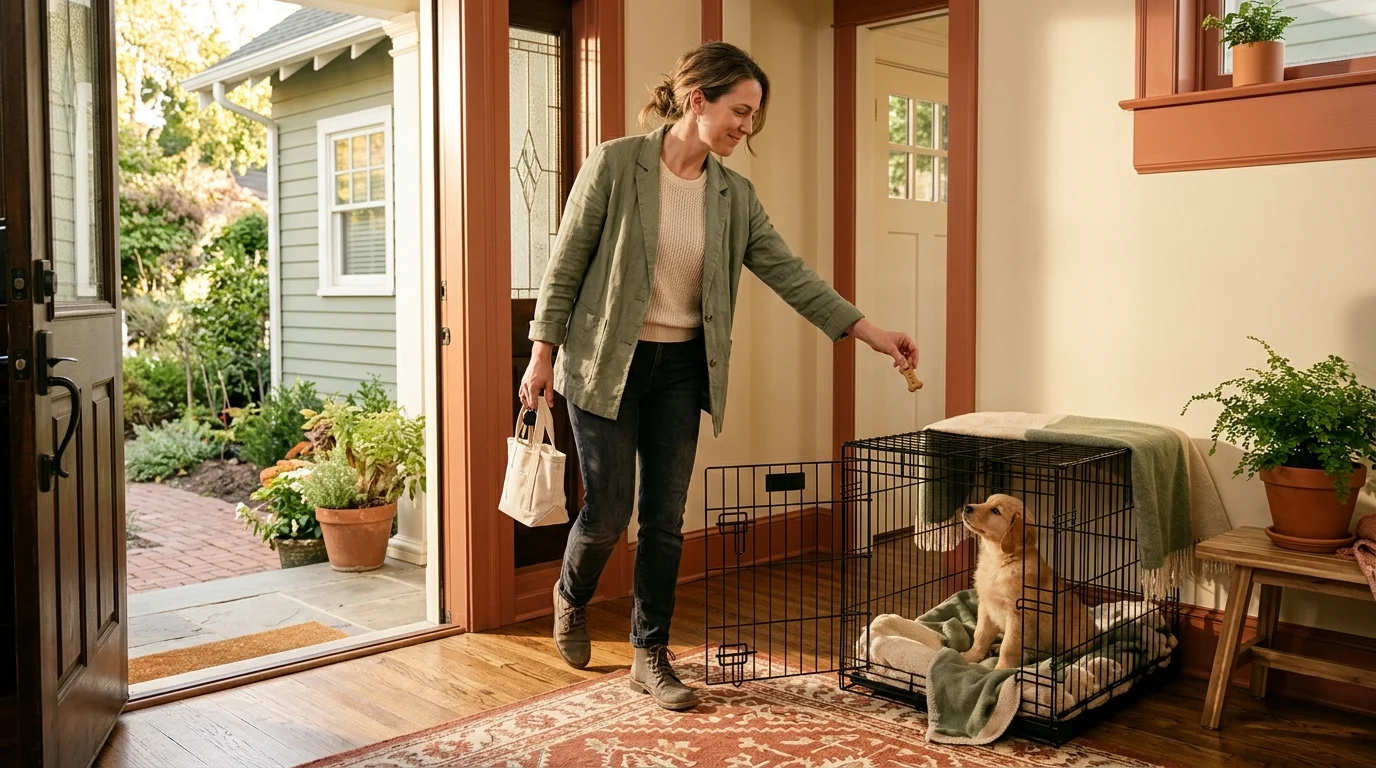
If you act like you are leaving for a years-long voyage every time you run to the grocery store, your puppy will think your departure is a terrifying event. Similarly, throwing a massive celebration when you unlatch the crate makes the outside world seem vastly superior to the crate.
- The Fix: Keep all departures and arrivals incredibly boring and neutral.
- When you leave, just drop a treat in the back of the crate and walk out the door without a word.
- When you return, ignore the puppy entirely for a few minutes until they are quiet and sitting.
- Then, calmly open the door without any high-pitched, excited greetings.
Using Dangerously Chewable Bedding

While you want your puppy to be comfortable, fluffy beds with zippers, buttons, or loose poly-fill stuffing are a massive hazard for a bored or anxious puppy. Ingesting these synthetic materials can quickly lead to an emergency vet visit.
- The Fix: Heavily monitor what your puppy does with soft bedding during the day.
- If they are a known chewer, remove plush beds entirely.
- Swap them for a heavy-duty, chew-resistant mat.
- Safety always trumps luxury. Some thick-coated breeds actually prefer the cool plastic pan to cool down.
Forcing or Shoving the Puppy Inside

Physically pushing a resistant puppy into their crate creates a deep, lasting negative association. If they have to be manhandled to go in, they will quickly learn to run away and hide the moment you even touch the crate door.
- The Fix: Always lure, never force.
- Toss a high-value treat, like a tiny piece of plain boiled chicken or hot dog, all the way to the back of the crate.
- Let them walk in confidently on their own four paws.
- Once they are inside, hand them a secondary reward through the wires to reinforce that choosing to go in yields incredible things.
Only Using the Crate at Night or When You Leave

If the crate door only opens when you disappear for an eight-hour workday or when it’s time for a long, dark night, your puppy will quickly predict that the crate means extreme isolation. This is a primary driver of separation anxiety.
- The Fix: Enforce mandatory daytime naps in the crate while you are home and visible.
- Puppies need 18-20 hours of sleep a day. When they get bitey and cranky, lure them into the crate for a nap.
- Walk around the house, fold laundry, and let them hear you existing normally while they rest.
- This teaches them that crate time is just regular, boring downtime.
Using the Wrong Type of Crate Treat

Tossing a dry piece of daily kibble into the crate might work for a hungry dog, but it won’t distract a stressed puppy for more than two seconds. A common mistake is using low-value treats that vanish instantly, leaving the puppy alone with their anxious thoughts.
- The Fix: Use long-lasting, interactive pacifiers to build crate endurance.
- Stuff a durable rubber chew toy [Affiliate opportunity: Kong or similar durable stuffable toy] with wet food, plain yogurt, or dog-safe peanut butter, and freeze it solid.
- Give this heavy-duty treat exclusively in the crate. Licking releases endorphins and naturally soothes an anxious puppy, easily buying you 20 to 30 minutes of quiet, focused time.
Failing to Adjust for Apartment Living vs. A House

If you live in an apartment, you simply can’t just “let them cry it out” without getting an angry noise complaint from your neighbors by 3 AM. Crate training in shared housing requires a modified, much quieter approach.
- The Fix: Preempt the crying by sitting right next to the crate until they fall asleep.
- If you are in an apartment, slide the crate right up against the side of your mattress. Let your fingers rest through the wire so they know you are physically there.
- Communicate with your neighbors proactively. A quick note on their door explaining you have a new puppy and are actively training them buys a lot of grace.
Frequent Crate Training FAQs

How long should I let my puppy cry in the crate?
Never let a puppy cry in sheer panic. If they are just mildly fussing or whining for attention, give them 5 to 10 minutes to settle down. If the crying rapidly escalates to frantic digging at the door, heavy panting, or panicked howling, they are truly distressed, and you need to take a step back in your training.
Should I put water in the crate at night?
For nighttime sleeping, it is best to pull the water bowl about two hours before bedtime to help set them up for potty training success. During the day, if they are crated for a few hours, a clip-on stainless steel water bowl is a great idea to keep them hydrated without causing massive puddles.
What if my puppy pees in the crate anyway?
First, double-check that the crate isn’t too large. Second, clean the mess thoroughly with a specific enzymatic cleaner [Affiliate opportunity: enzymatic pet stain and odor remover] to actually destroy the urine pheromones. Standard household soap won’t work; if they smell their previous accidents, they will continue to go in that exact spot.
Conclusion
Crate training is rarely a smooth, straight line. There will be nights where you feel like you’ve completely mastered it, followed immediately by a frustrating regression where they cry at 4 AM. That is entirely normal. By addressing these common crate training mistakes, scaling back your expectations, and prioritizing your puppy’s sense of safety, you are building a lifelong foundation of trust. Stick to your routine, be kind to yourself and your pup, and those quiet, restful nights will arrive sooner than you think.


Maya is the founder and writer behind PuppySettled, where she shares practical, situation-specific guides for first-time dog owners. After bringing her own puppy home to a small apartment and realizing most advice out there assumed a house and a yard, she started writing the guides she wished had existed — for real budgets, real schedules, and real first-time-owner questions. When she’s not writing, she’s usually on a walk figuring out the next thing worth covering.