
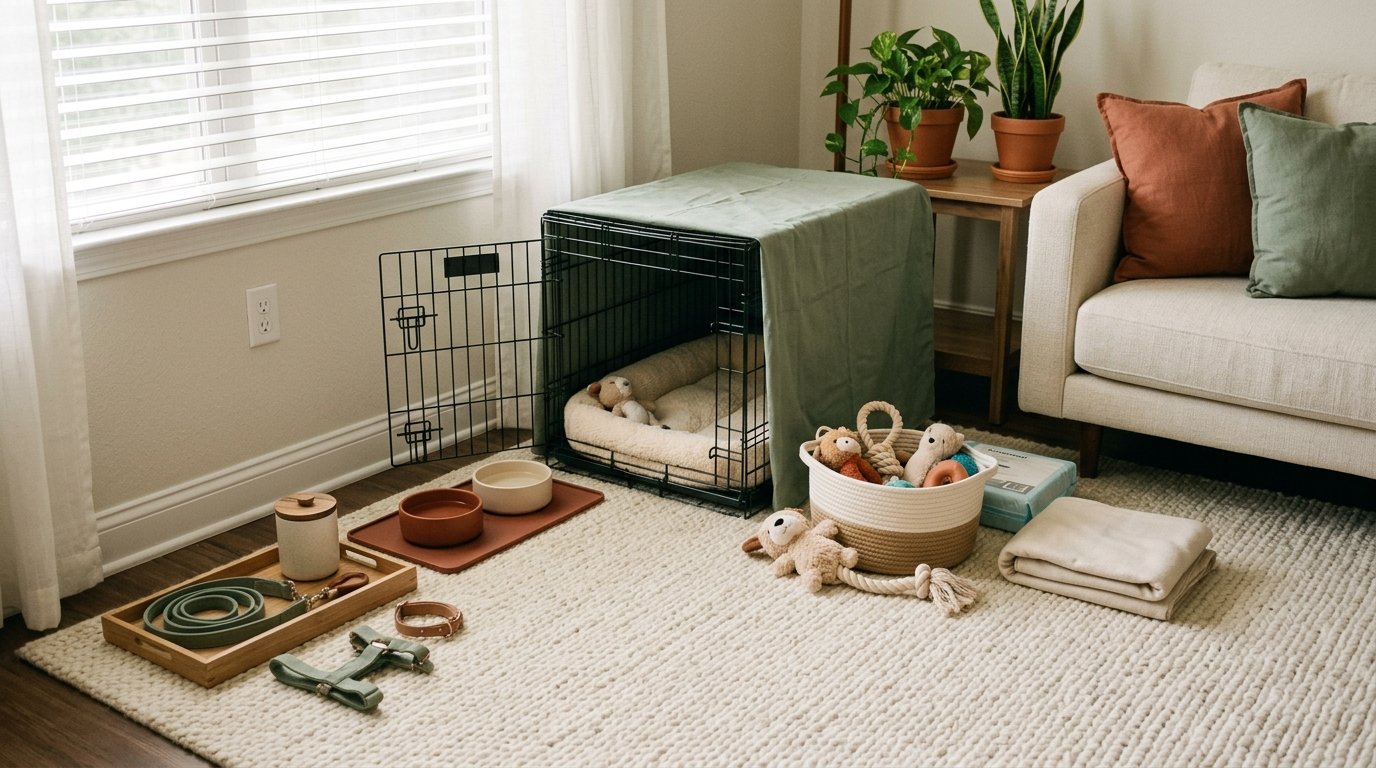
The Ultimate New Puppy Essentials Checklist: Apartment & Home Setup Guide
It is your puppy’s very first week home, and you are staring at a chaotic pile of shipping boxes, wondering if you forgot something crucial while your new puppy explores every corner of your living room. Bringing home a new puppy is an exhilarating milestone, but shopping for supplies without a clear plan often leads to buying unnecessary gadgets while missing vital safety items.
Many new owners treat puppy shopping like a generic retail spree, rather than focusing on the specific transition period your puppy is experiencing. The truth is that setting up your home successfully comes down to distinguishing between absolute day-one necessities, optional comfort items, and space-saving gear tailored to your living environment. Let’s break down the ultimate puppy essentials checklist, separate absolute needs from nice-to-haves, and help you prepare your home without the guesswork.
Day-One Necessities: What You Must Have Before Your Puppy Arrives

When your puppy steps through your door for the first time, having immediate access to essential survival items prevents panic and ensures a smooth, stress-free transition. These items cannot wait until a mid-week shopping trip.
- The Puppy’s Existing Food: Always secure a small bag or portion of the exact food your puppy was eating at their breeder or rescue organization. Maintaining dietary consistency during the first week protects their sensitive digestive system from sudden upset [needs source].
- Safe Transport Crate or Carrier: A secure, well-ventilated travel crate or crash-tested harness ensures your puppy is safe and secure during the car ride home.
- ID Tag and Properly Fitted Collar: A lightweight nylon collar paired with an ID tag containing your current phone number provides immediate identification safety from the moment they arrive.
- Basic Cleaning Supplies: A specialized pet-safe bio-enzymatic cleaner is essential for breaking down uric acid crystals and eliminating residual odors from any inevitable indoor accidents.
Sizing Up Your Crate, Bedding, and Containment Gear

Managing your puppy’s physical space during the first few weeks requires balancing comfort with housebreaking success. Choosing the right containment gear prevents unsafe wandering while establishing healthy resting habits.
- Adjustable Wire Crate: Buy an adult-sized wire crate equipped with a moveable metal divider panel. This allows you to restrict the living space as your puppy grows from 8 weeks to adulthood without purchasing multiple crates.
- Comfortable Washable Bedding: Provide a low-profile, chew-resistant fleece pad or crate mat that is easy to machine wash. Avoid expensive, thick plush beds during the initial teething phase.
- Exercise Pen (Playpen): An interlocking metal or plastic playpen gives your puppy a safe daytime containment zone where they can play and chew without roaming unmonitored across your apartment.
Feeding and Hydration Essentials

Establishing a predictable feeding station helps regulate digestion and sets the foundation for structured daily routines.
- Stainless Steel Bowls: Heavy, non-tip stainless steel food and water bowls are durable, hygienic, and resistant to bacteria buildup compared to lightweight plastic alternatives.
- Measured Food Scoop: A dedicated measuring cup or digital kitchen scale ensures you feed precise, veterinarian-recommended portions rather than guessing.
- Interactive Slow Feeder or Puzzle Toy: For puppies who inhale their meals too fast, a slow-feeder bowl or rubber treat-dispensing toy prevents bloating and provides mental stimulation during mealtime.
Grooming, Hygiene, and Health Maintenance Tools

Introducing your puppy to grooming tools early builds positive associations and keeps their coat, teeth, and nails healthy.
Selecting the right grooming tools depends heavily on your puppy’s coat type and adult size. For short-coated breeds, a rubber curry brush easily sweeps away loose dander, while double-coated or long-haired puppies require a slicker brush and metal comb to prevent painful matting in compact apartment settings.
- Appropriate Brushes: Depending on your puppy’s coat type, select a slicker brush, rubber curry brush, or metal comb to prevent matting and remove loose dander.
- Dog-Safe Toothpaste and Soft Toothbrush: Never use human toothpaste on a dog, as the FDA explicitly warns that some human toothpastes contain xylitol, which is highly toxic to dogs. Use poultry- or malt-flavored pet toothpaste instead [needs source].
- Sturdy Nail Clippers: A pair of guillotine- or scissors-style nail clippers with a safety guard helps you maintain short, neat nails.
Leashes, Harnesses, and Walking Gear

Outfitting your puppy for safe outdoor exploration requires equipment designed for comfort, control, and early leash training.
When navigating apartment hallways, elevators, and busy urban or suburban sidewalks, your choice of walking gear directly impacts how successfully your puppy learns polite leash manners.
- Lightweight Nylon Leash: A standard 4-to-6-foot non-retractable flat leash gives you optimal control during early outdoor bathroom breaks and walking practice, creating a predictable connection between you and your puppy.
- H-Style or Step-In Harness: A well-fitted puppy harness distributes pressure evenly across your puppy’s chest rather than pulling directly on their developing neck, protecting them during sudden pulls [Affiliate opportunity: adjustable step-in puppy harness].
- Treat Pouch: A waist-worn treat pouch keeps high-value rewards instantly accessible during outdoor house-training and positive reinforcement sessions, ensuring you can reward good behavior within three seconds.
Comfort, Teething, and Enrichment Toys

Young puppies experience intense curiosity and growing needs. Supplying appropriate enrichment items protects your furniture and shoes from destructive chewing.
- Durable Chew Toys: Provide flexible rubber chew toys designed specifically for teething puppies to soothe sore gums [needs source]. Permanent teeth generally begin erupting around 12 weeks of age and are typically in by six months, so supervise your puppy closely with any chew items during these early weeks.
- Heartbeat Comfort Toy: A plush toy featuring a simulated heartbeat can be an option that helps soothe puppies during their first few nights away from their littermates, potentially easing transition stress.
- Interactive Foraging Mats: Snuffle mats and puzzle feeders engage your puppy’s brain and tire them out mentally inside small apartments, burning energy without high-impact running.
Frequently Asked Questions

Q: What is the single most important item to have ready on day one?
Having the exact puppy food your breeder or rescue provided, a safe crate, a leash, and an enzymatic cleaner are the absolute top priorities for day-one success.
Q: When should I start brushing my puppy’s teeth?
You can introduce a soft pet toothbrush and flavored enzymatic toothpaste during your puppy’s very first week home by letting them lick the paste off your finger to build a positive association.
Q: Are retractable leashes recommended for a new puppy?
Retractable leashes are generally discouraged for young puppies because they teach the dog that pulling creates more slack, making leash-walking training much harder to establish.
Q: How do I know if a puppy harness fits correctly?
A properly fitted harness should allow you to slip two fingers comfortably underneath the straps without pinching, and it should not slide around or restrict your puppy’s front leg movement.
Q: What kind of indoor flooring protection do I need for an apartment?
Rubber-backed runner rugs or interlocking foam mats protect hardwood flooring from scratches and accidents while providing your puppy with secure traction.
Q: Should I buy expensive designer dog beds right away?
No. Young puppies frequently chew, dig at, and soil their bedding during the house-training phase, so durable, washable, low-cost mats are much better suited for the first few months.
Q: How many toys should I buy for a new puppy?
Four to six diverse items—including a rubber chew toy, a plush comfort toy, a tug rope, and an interactive puzzle feeder—provide plenty of variety without cluttering your living space.
Conclusion

Assembling your new puppy essentials checklist is about prioritizing safety, digestive health, and practical settling gear over unnecessary retail splurges. By securing your day-one necessities, investing in adjustable containment equipment, and focusing on mental enrichment, you can set the stage for a smooth transition.


Jordan writes PuppySettled’s training and behavior guides, drawing on years of hands-on experience fostering and training rescue puppies through local shelters in Denver, Colorado. Jordan focuses on practical, force-free training methods — crate training, potty training, and the tough early behavior challenges that come with a new puppy. When not writing, Jordan’s usually out on a walk with a foster dog in training.