
The Ultimate Small Apartment Dog Care Guide: Space-Saving Hacks & Routine Tips for Urban Owners
If you are standing in the middle of a compact studio apartment, dodging a stray chew toy while stepping over a crate that seems to swallow half your living room floor space, take a deep breath. You are not failing as a pet owner, and your living situation is not unfair to your dog. When you search for small apartment dog care, you are usually dealing with a very specific, mid-crisis urban reality: balancing square-footage limits, shared hallway noise complaints, and the relentless guilt of wondering if your dog is getting enough exercise without a private backyard.
Raising a dog in a small space doesn’t require a sprawling suburban lawn; it requires intentional organization, vertical space-saving hacks, and smart daily routines. By mastering multifunctional furniture, maximizing vertical square footage, and keeping your dog mentally exhausted rather than physically restless, you can create a clean, peaceful urban home for both of you.
1. Maximizing Vertical Space: Moving Storage Up and Out

Maximizing vertical space in a small apartment involves using wall-mounted storage, vertical pet perches, and stackable organizational units to keep floor square footage completely open for your dog.
When floor space is measured in inches rather than acres, every square foot counts. If your dog’s crates, toy baskets, food bins, and grooming supplies are scattered across the floor, your apartment will instantly feel cramped and chaotic.
- Wall-mounted command centers: Install vertical floating shelves near your entryway to store leashes, waste bag rolls, harness sets, and grooming wipes. Keeping these daily essentials off the floor and away from curious puppy teeth prevents clutter and speeds up chaotic potty-run departures.
- Elevated dog perches and window views: Dogs love observing the world outside. Instead of placing a bulky dog bed in the center of your narrow walkway, install a sturdy, window-mounted perch or a low-profile elevated frame next to a living room window. This gives your dog a front-row seat to outdoor bird life without blocking walking paths.
2. Multifunctional Dog Furniture Ideas for Compact Living

Multifunctional dog furniture integrates pet containment and sleeping spaces into everyday apartment decor, replacing bulky plastic crates with stylish side tables and storage benches.
Traditional wire dog crates look industrial and take up valuable aesthetic space in a small living room. Modern urban pet owners rely on dual-purpose furniture that serves human and canine needs simultaneously.
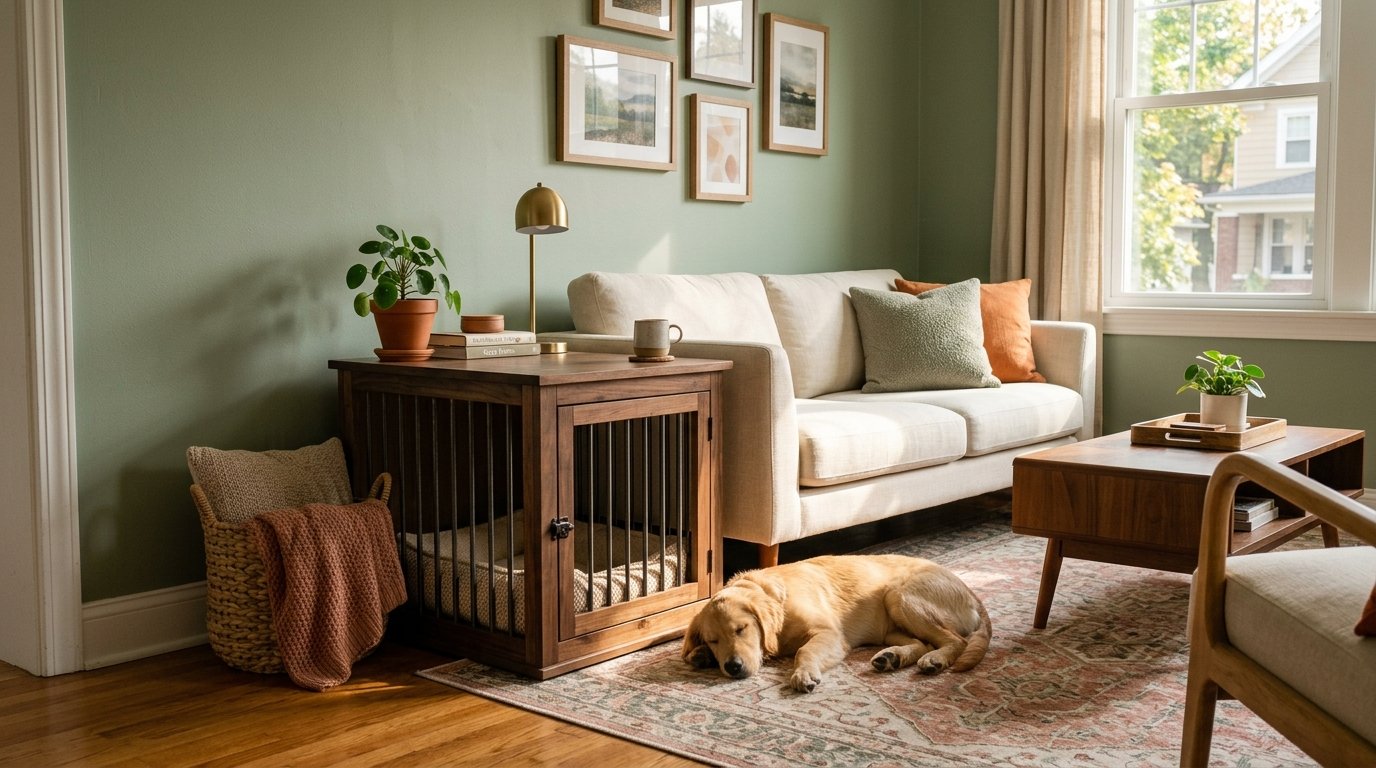
- The crate end table: Invest in a sturdy wooden crate enclosure that doubles as a living room end table or bedside nightstand. It provides your dog with a cozy, den-like sleeping cave while giving you a functional surface for lamps, books, or coffee mugs.
- Storage ottomans for toy management: Keep a plush upholstered storage bench in your living room. During the day, it serves as a comfortable seat for you or a resting spot for your dog; at night, it swallows up dozens of squeaky toys, puzzle boards, and grooming supplies, hiding urban clutter instantly.
3. How to Exercise an Apartment Dog Without a Yard

Exercising an apartment dog without a yard relies on combining brisk neighborhood sniff-walks with high-intensity indoor brain games and structured mental enrichment.
Many urban owners panic, believing that a lack of a private fenced yard means their dog is suffering. In reality, physical exercise is only half the battle; cognitive fatigue burns mental energy exponentially faster than physical sprinting.
- The power of purposeful sniff-walks: When walking around an apartment block, don’t rush your dog along a concrete sidewalk. Allow them a dedicated “sniff-ari” where they can investigate tree bases, fire hydrants, and grassy corners. Sniffing lowers a dog’s heart rate and engages their brain far more deeply than a hurried jog.
- Indoor agility and flat-work games: Utilize your apartment hallway for controlled impulse-control games, such as short-distance recalls, indoor fetch with soft toys, or practicing place-commands on a designated mat.
4. Keeping an Apartment Clean, Fresh, and Hair-Free

Keeping a small apartment clean with a dog requires establishing a strict wipe-down station at the entryway, using washable area rugs, and investing in high-efficiency air filtration.
In a compact living space, pet odors, dander, and tracked-in mud concentrate rapidly, making proactive hygiene maintenance non-negotiable.
- The entryway paw-cleaning station: Keep a shallow mat, a pack of dog-safe cleaning wipes, and a microfiber towel right inside your front door. Wipe your dog’s paws and underbelly every single time you return from a muddy walk before they track debris across your floors.
- Washable textiles and rugs: Ditch expensive dry-clean-only wool rugs in favor of low-pile, machine-washable area rugs designed specifically for pet households. They can be stripped off the floor and tossed into the washing machine the moment an accident or muddy paw print strikes.
5. Soundproofing and Managing Noise in Multi-Family Buildings

Managing noise in an apartment complex requires sealing air gaps under doors, placing white noise machines near entryways, and using heavy wall textiles to absorb barking echoes.
Sharing walls with close neighbors means your dog’s vocalizations or pacing claws can quickly trigger lease-violation warnings if left unmanaged.
- Silencing the front door corridor: Install a heavy rubber door sweep at the base of your apartment door to block hallway sounds from triggering your dog, and place a white noise machine near the entryway to mask indoor noises.
- Softening hardwood echoes: Hardwood and laminate floors bounce sound waves straight down to your downstairs neighbors. Layer thick area rugs with heavy felt rug pads over high-traffic zones to muffle the sound of walking paws and dropped toys.
6. Frequently Asked Questions (FAQ)

How do you keep an apartment clean and fresh with a dog?
Keep an apartment clean by setting up a front-door paw-cleaning station, using machine-washable rugs, vacuuming high-traffic zones daily with a pet-specific HEPA filter, and running an air purifier.
What are the best space-saving dog products for small rooms?
The best space-saving products include wooden end-table crates, stackable toy bins, wall-mounted leash racks, and foldable travel water bowls that tuck away into drawers.
How do you tire out a high-energy dog in an apartment without a yard?
Combine structured outdoor sniff-walks with intense indoor mental stimulation, such as puzzle toys, snuffle mats, and obedience training sessions that burn cognitive energy.
How to set up a designated dog zone in a small space?
Anchor your dog’s supplies in one specific low-traffic corner—such as putting their crate table under a side desk or placing feeding bowls on a nonslip mat against an unused wall.
Can large dogs live happily in small apartments?
Yes, many large, low-energy breeds (like Greyhounds or Mastiffs) adapt remarkably well to apartment living because they prefer sleeping on the couch over pacing, provided their exercise needs are met.
How do I stop my apartment dog from tracking mud inside?
Train your dog to wait on a designated “wait” mat just inside the front door until you have thoroughly wiped their paws with a warm damp cloth or pet wipe.
What is the best way to store dog food in a small kitchen?
Store dry kibble in an airtight, stackable plastic container that fits neatly inside a lower kitchen cabinet or pantry shelf to keep pests out and save counter space.
Conclusion

Raising a dog in a small apartment is entirely manageable when you approach your space with strategic organization, vertical thinking, and a commitment to daily routines. By investing in multifunctional furniture, keeping up with entryway cleanliness, and burning your dog’s energy through mental enrichment, you can maintain a clean, tranquil urban home.


Maya is the founder and writer behind PuppySettled, where she shares practical, situation-specific guides for first-time dog owners. After bringing her own puppy home to a small apartment and realizing most advice out there assumed a house and a yard, she started writing the guides she wished had existed — for real budgets, real schedules, and real first-time-owner questions. When she’s not writing, she’s usually on a walk figuring out the next thing worth covering.