
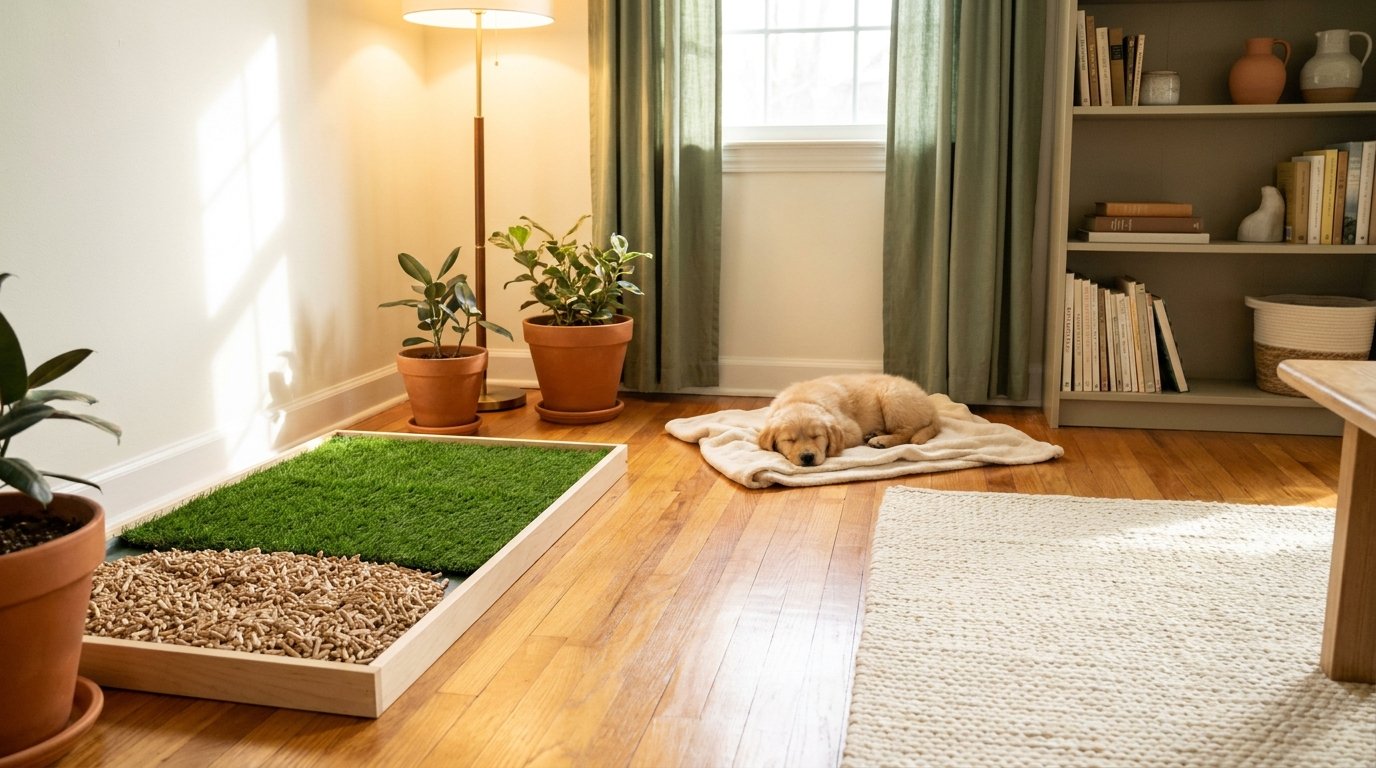
Indoor Potty Training Options: Pads, Grass, and Litter Boxes Compared
It is late at night, and you are staring at your new puppy while praying they do not squat on your living room rug. If you live in a high-rise apartment on the tenth floor or are navigating freezing winter weather, rushing your dog outside every two hours simply is not realistic. Choosing the right indoor potty setup is the best way to protect your floors and maintain your sanity during the first few weeks home.
Many first-time owners worry that using an indoor system will permanently stall outdoor housebreaking. According to mainstream training guidance from organizations like the American Kennel Club (AKC), indoor systems can be used successfully as a stepping stone, provided you maintain a consistent transition plan.
Let’s look at how disposable pads, real and synthetic grass patches, and indoor dog litter boxes compare in monthly costs, upkeep, and daily living practicality so you can pick the right fit for your home..
Side-by-Side Comparison: Costs, Upkeep, and Best Use Cases

| Option | Estimated Monthly Cost | Odor Control | Maintenance & Cleaning | Best Use Case |
|---|---|---|---|---|
| Disposable Pee Pads | $15 – $30 / month | Moderate (requires immediate disposal) | Low (throw away after use) | Budget-friendly quick setups & travel |
| Real Grass Patches | $30 – $60 / month (subscriptions) | High (natural soil absorbs odor) | Very Low (replace whole patch bi-weekly) | Apartment living & smooth outdoor transition |
| Synthetic Turf Trays | $5 – $10 / month (cleaning supplies) | Low to Moderate (requires daily rinsing) | High (frequent tray washing needed) | Eco-friendly reusable setups on balconies |
| Dog Litter Boxes | $15 – $25 / month (paper pellets) | High (absorbent paper/recycled pellet) | Moderate (daily scooping + weekly change) | Small breeds & long workday schedules |
Choosing an indoor potty system depends heavily on your dog’s adult size, your floor plan, and how much daily maintenance time you can commit to. The following breakdown compares the three primary options across cost, upkeep, and trade-offs.
Note: Monthly cost ranges are calculated based on average retail pricing for consumer packs, subscription shipping rates for grass patches, and standard consumption rates for single-puppy households.
Disposable Pee Pads: The Classic Quick Fix

Disposable absorbent pee pads are the most widely available indoor option, often used during the first few weeks when a puppy’s bladder capacity is limited to just 60 to 90 minutes. Modern pads typically feature a plastic backing to protect flooring and a polymer core that locks in liquid.
Maya’s Pro Tip on Pee Pad Shredding:
“When testing pee pads with energetic puppies, the single biggest issue isn’t tracking—it’s shredding. If your pup starts chewing on the absorbent lining, immediately swap to a plastic pad holder tray with a snap-in grate. This keeps paws dry while preventing accidental ingestion of pad material.”
The primary advantage is convenience: soiled pads go straight into the trash without washing. However, they come with notable trade-offs. Many puppies view the crinkly plastic texture as a toy, leading to shredded pads and swallowed plastic fragments. To minimize this, anchor pads to a secure rubber tray holder. Keep in mind that dogs trained exclusively on soft, flat paper surfaces may later struggle to distinguish between a pee pad and your living room rug or bath mat, making consistency essential.
Real Grass Patches: The Natural Instinct Solution

Real grass subscription services deliver fresh, hydroponically grown sod patches directly to your doorstep weekly or bi-weekly. Because real grass emits organic outdoor scents, it taps into a puppy’s natural instinct to eliminate on earth and grass rather than synthetic textiles.
Maya’s Pro Tip on Real Grass in High-Rises:
“Real grass patches are by far the fastest option for teaching puppies what surface texture to target before moving outdoors. If you live in an apartment on a higher floor, place the grass patch on a covered balcony or near a well-ventilated doorway to maintain freshness while building strong outdoor potty instincts.”
This option is particularly helpful if your ultimate goal is a smooth transition to outdoor housebreaking, as your puppy never learns to associate indoor elimination with indoor fabrics. On the downside, real grass boxes are heavy, require weekly tray disposal, and can occasionally track small amounts of loose soil onto apartment floors. If you place a grass patch on a balcony or near living spaces, pair it with a waterproof floor mat to protect your decking or hardwood from any overspray.
Synthetic Turf Trays and Washable Systems

Synthetic turf systems feature a plastic grass mat resting on top of a drainage grid and a collection tray underneath. Unlike disposable pads, these systems are reusable and mimic the texture of lawn turf without requiring a recurring weekly subscription for fresh sod.
Maintaining synthetic turf requires daily rinsing with warm water and an enzyme cleaner to neutralize uric acid crystals. If neglected even for a single day, synthetic turf can develop a strong, persistent odor that permeates small apartments. When evaluating drainage trays, look for models with deep collection reservoirs to prevent paws from standing in accumulated liquid during multi-hour work blocks.
Dog Litter Boxes: The Small Breed Secret

While often associated with felines, specialized indoor dog litter boxes work exceptionally well for toy breeds such as Chihuahuas, Pomeranians, and Maltese puppies. These boxes feature low-entry thresholds and are filled with non-toxic, dust-free paper or wood pellets rather than traditional clay cat litter, which can be dangerous if ingested by a curious puppy.
Litter boxes excel at containing liquid and solid waste within a defined perimeter. The main adjustment is managing tracking: puppies frequently kick or scatter pellets when exiting the box. Placing a deep-grooved litter trapping mat underneath the box will catch stray pellets before they spread across your apartment flooring.
Odor Control Strategies That Actually Work

Indoor potty areas inevitably produce odors if not managed with a strict hygiene routine. Standard household surface cleaners often mask smells temporarily rather than breaking down organic compounds.
- Use Enzymatic Cleaners: Always clean trays and surrounding flooring with a pet-safe bio-enzymatic cleaner that breaks down uric acid crystals at a molecular level.
- Incorporate Air Purification: Placing a HEPA air purifier with an activated carbon filter near the indoor potty station significantly reduces ambient pet odors in enclosed spaces.
- Establish a Strict Disposal Schedule: Never let soiled disposable pads or waste bags sit in open indoor bins. Use a sealed, odor-locking diaper pail for immediate disposal.
Preventing Substrate Confusion and Managing Setbacks

One of the most common challenges with indoor potty training is substrate confusion—when a puppy learns that indoors is acceptable, but generalizes that rule to mean all soft household textiles like carpets, rugs, and laundry piles.
To prevent this confusion, keep bedroom and living room doors closed when your puppy is unmonitored, and restrict their freedom using baby gates or an indoor playpen. If your puppy starts sniffing around a rug, immediately redirect them to their designated indoor potty station. If an accident occurs on the floor, clean it thoroughly with an enzyme spray to remove all lingering scent markers that might attract them back to the same spot.
Step-by-Step Outdoor Transitioning

Transitioning your puppy from an indoor setup to outdoor grass requires patience, especially if they received all their early vaccinations late or experienced harsh weather during their first month home.
- Move the Station Gradually: Over the course of 7 to 10 days, move your indoor pad, grass patch, or litter box a few feet closer to the exit door every single day.
- Bridge the Gap to the Threshold: Once the indoor setup sits right next to the exterior door, open the door and place a small piece of soiled pad or a blade of grass right outside on the target outdoor spot to provide a familiar scent cue.
- Reward Immediate Success: Take your puppy directly to that outdoor spot on leash, wait for them to eliminate, and immediately deliver high-value treats and praise within three seconds of finishing.
If your puppy exhibits prolonged regression or persistent avoidance of outdoor elimination, consult your veterinarian or a certified positive reinforcement trainer to rule out underlying medical issues like a urinary tract infection.
Frequently Asked Questions

Q: How do I prevent my puppy from chewing or shredding disposable pee pads?
Puppies often chew pads out of teething boredom or curiosity about the crinkly texture. Secure the pad inside a locking plastic tray holder, apply a bitter-apple deterrent spray safely around the border, or temporarily switch to a mesh-grid turf system or a dog litter box that conceals loose materials.
Q: Will using pads stop my puppy from learning to go outdoors?
Not necessarily. Indoor and outdoor toileting can both be taught, but the puppy needs a clear routine and practice at the locations you want them to use. If outdoor toileting is your goal, plan a gradual transition instead of assuming the puppy will switch automatically. (VCA: House Training for Puppies and Dogs, AKC: The Ins and Outs of Potty Pad Training)
Q: Are real grass subscription boxes safe for indoor apartment use?
Yes, commercial grass patches are grown hydroponically without chemical pesticides and are safe for indoor use. However, because real soil retains moisture, you must empty and wipe down the underlying collection tray weekly to prevent mold growth or damp wood smells.
Q: Will indoor potty training delay my puppy’s ability to learn outdoor housebreaking?
It can extend the timeline slightly if the puppy becomes deeply habituated to eliminating on soft indoor textures. To keep training on track, treat the indoor system strictly as a temporary stepping stone and begin moving the station toward the exit door as soon as your puppy’s bladder control improves.
Q: How often should I wash synthetic turf potty trays?
Rinse the turf mat daily with warm water and mild dish soap or an enzymatic spray, and perform a deep disinfectant soak once a week. Letting urine sit on synthetic turf for multiple days causes ammonia buildup that is difficult to wash out.
Q: Can I use regular cat litter in a dog litter box for my puppy?
No. Traditional clay cat litters clump when wet and can form dangerous blockages if ingested by a puppy who mouths or tastes the litter. Always use safe, non-toxic paper pellets, wood shavings, or specialized dog litter alternatives.
Q: What is the best indoor potty option for working full-time outside the home?
Real grass patches or large-capacity synthetic turf trays with deep drainage reservoirs work best for working owners, as they handle multiple liquid eliminations safely during an 8-hour workday without overflowing.
Q: How do I stop my puppy from playing with or digging in their indoor grass patch?
Redirect their attention with a chew toy the moment they start digging, and reward them with a treat only when they squat to eliminate. If digging persists, switch to a grated tray system that keeps their paws physically separated from the loose soil or grass blades.
Conclusion

Selecting the right indoor potty system requires balancing your home’s layout, your daily cleaning routine, and your long-term outdoor training goals. Whether you choose disposable pads, fresh grass, or a dog litter box, consistency and prompt cleanup are the keys to success.
Sources and scope
This guide draws on house-training guidance from the American Kennel Club and VCA Animal Hospitals. It compares types of indoor potty systems; it does not claim that specific brands were hands-on tested. Product care, costs, and suitability vary by product and household.
For questions about your puppy’s health, vaccination status, or whether a particular material is appropriate, consult your veterinarian.


Maya is the founder and writer behind PuppySettled, where she shares practical, situation-specific guides for first-time dog owners. After bringing her own puppy home to a small apartment and realizing most advice out there assumed a house and a yard, she started writing the guides she wished had existed — for real budgets, real schedules, and real first-time-owner questions. When she’s not writing, she’s usually on a walk figuring out the next thing worth covering.