
How to Introduce a New Puppy to Your Cat: A Step-by-Step Plan
To safely introduce a new puppy to your resident cat, use a slow, scent-based transition over 1 to 3 weeks, keeping them strictly separated behind baby gates or closed doors until calm curiosity replaces defensive posturing.
Bringing a bouncy, sharp-toothed puppy into a home where a cat already rules the roost is one of the most nerve-wracking transitions a pet owner can face. When you search for how to introduce a new puppy to your cat, you are usually sitting in your living room watching your adult cat glare in utter betrayal from the top of the refrigerator while your new puppy bounces frantically at the base of the stairs. Rushing this introduction by letting them face off on day one is a recipe for scratched noses, shredded curtains, and long-term feline stress. By understanding how to manage scent swapping, setting up secure room boundaries, and protecting your cat’s vertical sanctuary space, you can guide your pets toward a peaceful coexistence.
Why You Should Never Let Your Cat and Puppy Meet Right Away

Forcing an immediate, face-to-face meeting between a cat and an excited puppy triggers a cat’s fight-or-flight response, often resulting in permanent defensive hostility or injury.
When a new puppy arrives, they are bursting with erratic energy, unrefined social boundaries, and an instinctual urge to chase anything that runs. To an established resident cat, an incoming puppy looks less like a potential friend and more like a terrifying, unpredictable predator.
- The danger of a bad first impression: If your cat’s very first experience with the puppy involves being cornered, barked at, or chased across the living room, their brain locks that memory in as a trauma response. Reversing that initial panic can take months of intensive behavioral rehabilitation.
- Protecting delicate feline anatomy: Cats have thin, sensitive skin and delicate eyes that can easily be injured by a clumsy puppy’s sharp claws or snapping jaw during an unsupervised scramble. Starting slow is an act of love for both animals.
Step 1: The Scent-Swapping Phase (Days 1 to 3)

During the first three days, keep your puppy and cat in completely separate areas of your home, allowing them to investigate each other’s scent safely through closed doors and blanket swaps.
Scent is a cat’s primary tool for processing their environment. Before your cat ever lays eyes on the puppy, they should already be deeply familiar with how the puppy smells in a positive context.
- The blanket exchange: Rub a clean washcloth or small blanket gently over your puppy’s cheeks and paws to collect their scent, then place it near your cat’s food bowl or favorite sleeping spot. Do the reverse by letting your puppy sniff a blanket your cat has used.
- Feeding across a closed door: Feed both animals on opposite sides of a closed bedroom or bathroom door. This positive association helps your cat connect the puppy’s unique scent with the delicious anticipation of dinner.
Step 2: Visual Introduction Through a Barrier (Days 4 to 7)

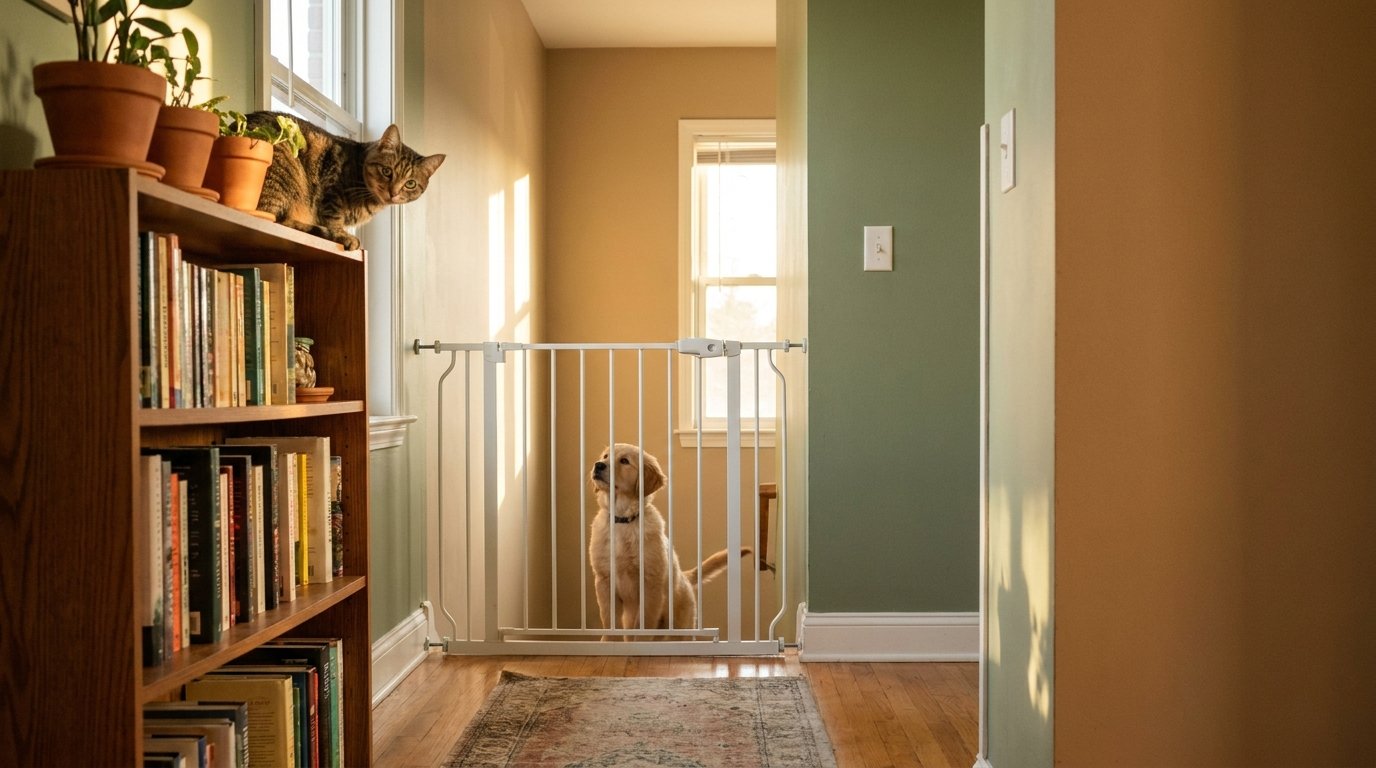
Once scent acceptance is established, introduce visual contact using a sturdy baby gate or a glass storm door, allowing both pets to observe each other without physical access.
Visual exposure lets your cat study the puppy’s body language from a safe position of absolute control.
- Setting up the barrier: Install a tall, secure baby gate across a doorway (or stack two gates if your puppy is an active jumper). Let your puppy explore the hallway while your cat watches from the other side.
- Rewarding calm behavior: If your cat approaches the gate with relaxed ears and a soft body, reward them with high-value treats. If your puppy starts whining, barking, or lunging at the gate, calmly lead the puppy away into another room to prevent over-arousal.
Step 3: Controlled Face-to-Face Meetings on Leash (Week 2 and Beyond)

Conduct your first direct, face-to-face meetings only when your puppy is physically tired out from a walk or play session, keeping the puppy securely leashed while your cat has an open escape route.
Timing is everything when transitioning from barriers to shared floor space. Never attempt a face-to-face meeting when your puppy is running on high-octane morning energy.
- The post-exercise calm: Wait until your puppy has completed an active play session and a nap, when their impulse control is at its highest. Put your puppy on a secure 6-foot leash and hold it loosely.
- Allowing feline agency: Ensure your cat has an unobstructed pathway to an elevated piece of furniture or an adjoining room. Never force your cat to stay in the room or hold them in your arms near the puppy, as this strips them of their natural defense mechanisms.
Creating Vertical Safe Zones and Cat-Only Sanctuaries

Protecting your cat’s mental well-being in a small apartment or home requires establishing dedicated vertical “escape routes” where the puppy cannot reach them.
Cats cope with stress by gaining altitude. If a cat feels trapped on floor level with a persistent puppy, their anxiety skyrockets.
- Vertical escape routes: Install wall-mounted cat shelves, tall scratching posts with perches, or clear pathways across the tops of bookcases. Your puppy should quickly learn that the upper half of the living room belongs exclusively to the cat.
- Gated cat-only rooms: Use a baby gate with a small cat-door cutout (or lift one side of a standard gate slightly) to create a safe room where your cat can eat, use the litter box, and sleep in total peace away from puppy curiosity.
Managing High-Energy Puppy Breeds Around Nervous Cats

High-energy puppy breeds—such as Labradors, Terriers, or Herding mixes—require rigorous indoor exercise redirection and physical management to prevent them from terrorizing a nervous cat.
Some puppies have intense prey or herding drives that make ignoring a darting cat nearly impossible. Relying on sheer willpower during training will fail; environmental management is your best defense.
- The house-leash protocol: Keep a lightweight, handleless 6-foot leash attached to your puppy’s harness indoors during the first month. If your puppy starts fixating or stalking your cat, you can calmly step on the leash or guide them away before they break into a chase.
- Redirection over punishment: Never yell or physically punish your puppy for staring at the cat, as punishment increases household tension. Instead, interrupt the fixation by calling their name, offering a high-value treat, and redirecting their energy toward an approved tug toy.
Frequently Asked Questions (FAQ)

How do I introduce a new puppy to my cat?
Introduce a new puppy to your cat slowly over several weeks, progressing from scent swapping through closed doors to visual barrier checks behind a baby gate, and finally to controlled, leashed meetings.
How long does it take for a cat to accept a new puppy?
It typically takes anywhere from two weeks to several months for a cat to fully accept a new puppy, depending heavily on the cat’s previous experience with dogs and the puppy’s overall temperament.
Should I let my cat and puppy meet right away?
No, letting a cat and puppy meet face-to-face right away can trigger panic, defensive scratching, or aggressive chasing that damages their relationship from day one.
What is the best way to introduce a puppy to a resident cat?
The best method uses a slow, phased approach of scent swapping, visual barrier exposure behind a baby gate, and short, leashed interactions while maintaining high-altitude escape routes for the cat.
How do I know if my cat and puppy will get along?
You will know they are progressing when your cat stops hissing, begins approaching the baby gate out of curiosity rather than fear, and can relax in the same room while the puppy is calm.
Is it normal for my cat to hiss at a new puppy?
Yes, occasional hissing is a completely normal, healthy boundary-setting communication from a cat telling an over-enthusiastic puppy to back off.
My cat keeps hissing at my new puppy, is that normal and how long will it last?
Hissing is normal as long as your cat is not trapped, cornered, or attacking aggressively; it usually subsides within a few weeks as the puppy learns to respect their space.
Conclusion

Introducing a new puppy to your resident cat tests your patience, timing, and organizational skills. By moving at the cat’s pace, maintaining strict physical barriers during the first week, and securing vertical safe zones throughout your home, you can successfully build a harmonious, stress-free multi-pet household.


Maya is the founder and writer behind PuppySettled, where she shares practical, situation-specific guides for first-time dog owners. After bringing her own puppy home to a small apartment and realizing most advice out there assumed a house and a yard, she started writing the guides she wished had existed — for real budgets, real schedules, and real first-time-owner questions. When she’s not writing, she’s usually on a walk figuring out the next thing worth covering.