
How Long Can a Puppy Stay in a Crate by Age? Safe Guidelines & Schedules
It is 2:00 PM on a workday, you are sitting at your desk or miles away at an office, and a sudden wave of guilt washes over you as you wonder how long your puppy has been sitting quietly in their crate. Bringing home a young dog means balancing their safety with their physical limitations, and trying to figure out safe confinement limits is one of the most stressful parts of early puppyhood. You want to keep your apartment clean and your furniture safe, but you also want to make sure you are treating your puppy fairly.
A puppy can generally stay in a crate during the day for a number of hours roughly equal to their age in months plus one (up to a reasonable limit), but young puppies need frequent potty breaks and cannot endure a full eight-hour workday alone. Let’s break down age-by-age daytime limits, separate daytime confinement from overnight sleeping, and look at how to manage a crate schedule while working.
Crate Duration by Age: The Quick Answer

If you need a fast benchmark for how long your puppy can safely stay in a crate during daylight hours, use the age-in-months-plus-one rule as a general starting point, while remembering that individual bladder control varies.
- 8 to 10 Weeks Old: 1 to 2 hours maximum during the day.
- 3 Months Old: 2 to 3 hours maximum during the day.
- 4 Months Old: 3 to 4 hours maximum during the day.
- 5 Months and Older: 4 to 5 hours maximum during the day.
This formula represents a biological limit for holding urine and energy management, not an ideal target. Forcing a puppy to stay crated up to their absolute limit day after day can lead to house-training setbacks, anxiety, and restlessness [Crate Duration Limits and House-Training Integrity].
Daytime Confinement vs. Overnight Sleeping: Why the Rules Change

New owners often make the mistake of applying daytime crate limits to nighttime sleeping, which causes unnecessary confusion and sleep deprivation.
During the day, a puppy’s metabolism is fast, they are actively drinking water, playing, and digesting food, meaning their bladders fill up rapidly. At night, a puppy’s metabolic rate slows down significantly while they sleep, allowing them to hold their bladder for longer stretches (typically equal to their age in months plus two, depending on the individual). Daytime crating is about managing active bladder capacity and preventing boredom, whereas nighttime crating is about resting safely in a secure den [Circadian Metabolic Variations and Crate Management].
Age-by-Age Crate Duration and Limitations Table

Use this reference table to evaluate appropriate daytime crate windows and keep physical limitations in mind as your puppy grows.
| Puppy Age Range | Maximum Daytime Crate Window | Key Physical & Developmental Limitations |
| 8 to 10 Weeks | 1 to 2 hours | Tiny bladder capacity; immature digestive tract; high need for socialization and frequent potty breaks [Pediatric Canine Physiology and Developmental Requirements]. |
| 3 Months | 2 to 3 hours | Bladder control improving slightly; teething discomfort beginning; prone to boredom and vocalization. |
| 4 Months | 3 to 4 hours | Active adolescent phase starting; higher energy levels; requires mental enrichment and structured play. |
| 5 to 6 Months | 4 to 5 hours | Greater physical stamina; adult teeth erupting; can handle slightly longer stretches, but daily breaks remain vital. |
Can a Puppy Stay in a Crate While You Are at Work?

One of the most common questions from working pet parents is whether an eight-week or twelve-week-old puppy can remain crated for an eight-hour workday.
The short answer is no. Expecting a young puppy to stay crated for a full workday is biologically impossible and risks harming their house-training progress. If you work full-time outside the home, you cannot leave a young puppy crated all day without intervention. You will need to arrange for a mid-day dog walker, a trusted neighbor, or a pet sitter to come by every two to three hours to let the puppy out, or set up a secure exercise pen with an indoor potty solution.
Managing Crate Limits in a Small Apartment

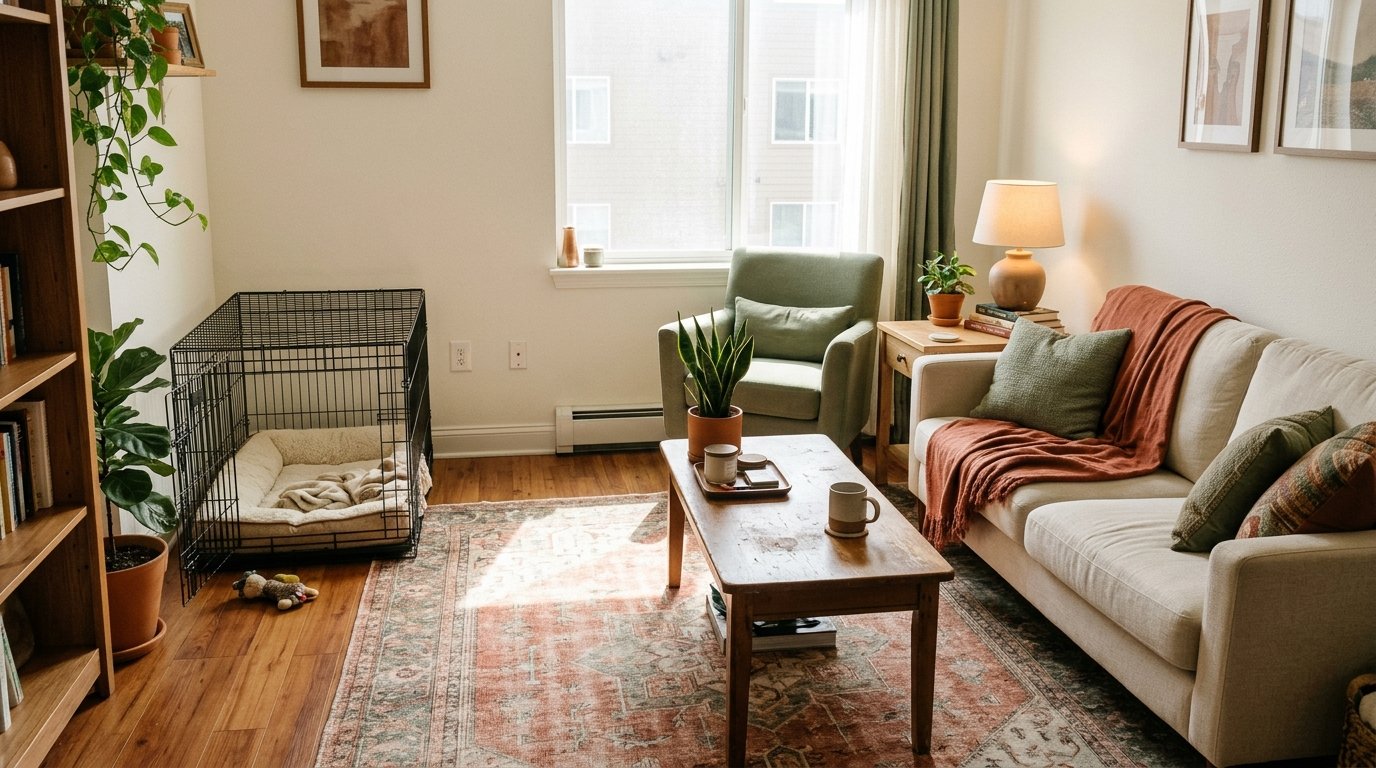
Living in a compact apartment or condo adds an extra layer of urgency to crate scheduling, as crying or barking can quickly alert shared-wall neighbors.
When space is tight, keeping a strict schedule helps prevent the frustration that leads to excessive whining. Ensure your puppy’s crate is placed in a quiet, low-traffic corner away from drafty windows or hallway doors. Pair their time in the crate with a special, long-lasting chew toy so they view the space as a rewarding den rather than a restrictive cage [Spatial Management, Environmental Placement, and Positive Crate Association].
Common Mistakes That Overstretch Crate Limits

Pushing a puppy past their biological limits can quickly erode the positive association you have built with their crate.
- Treating the Crate Like Babysitting: Using the crate for six hours straight simply because you are busy with chores or remote work.
- Ignoring Whining Cues: Assuming a puppy is just protesting when they have actually been confined past their bladder limit and desperately need to eliminate.
- Skipping Exercise First: Crating a high-energy puppy without burning off physical and mental energy beforehand, leading to frantic pacing and distress.
When to Consult Your Veterinarian

While standard crate limitations follow general developmental timelines, certain red flags require professional medical input [Clinical Indicators and Medical Red Flags in Juvenile Canines].
If your five-month-old puppy who previously held their bladder for three hours suddenly starts dribbling urine every thirty minutes, or if they show signs of pain, straining, or lethargy while confined, contact your veterinarian immediately [Pediatric Urinary Tract Pathologies and Acute Systemic Red Flags]. Conditions like urinary tract infections or bladder stones can make normal crate durations physically impossible.
Frequently Asked Questions

How long can a puppy stay in a crate during the day?
During the day, a puppy can generally stay in a crate for a number of hours equal to their age in months plus one, ranging from 1 to 4 hours depending on their age [Daytime Confinement and Bladder Capacity Guidelines].
Can a puppy stay in a crate for an 8-hour workday?
No, young puppies cannot hold their bladders for an 8-hour workday and require mid-day bathroom breaks, dog walkers, or an exercise pen setup [Workplace Schedule Management and Pediatric Bladder Limits].
What is the age-by-age rule for puppy crating?
The general guideline is one hour of daytime crating per month of age plus one (e.g., a 3-month-old puppy can manage roughly 3 to 4 hours) [Age-Based Daytime Confinement Formulas].
Is overnight crating different from daytime crating?
Yes, puppies can sleep longer stretches at night because their metabolic rate slows down, whereas daytime crating requires much more frequent bathroom breaks [Circadian Rhythms and Nocturnal Confinement Capacity].
Where should I place my puppy’s crate in an apartment?
Place the crate in a quiet corner away from direct hallway drafts or shared party walls to minimize environmental triggers and neighbor disturbances [Acoustic and Thermal Isolation in Urban Crate Management].
What should I do if my puppy wets the crate?
Clean the crate thoroughly with an enzymatic cleaner to remove lingering odors, review your daytime schedule, and shorten the time between potty breaks [Enzymatic Sanitation and Proactive Schedule Adjustment].
Conclusion

Understanding how long a puppy can stay in a crate by age helps you balance home safety with your puppy’s developing physical needs. By following age-appropriate duration guidelines, arranging mid-day support if you work, and keeping expectations realistic, you can support healthy house training.


Maya is the founder and writer behind PuppySettled, where she shares practical, situation-specific guides for first-time dog owners. After bringing her own puppy home to a small apartment and realizing most advice out there assumed a house and a yard, she started writing the guides she wished had existed — for real budgets, real schedules, and real first-time-owner questions. When she’s not writing, she’s usually on a walk figuring out the next thing worth covering.