
Can Dogs Eat Chicken Bones? What’s Actually Safe and What to Do If They Ate One
This guide is for general informational purposes only and isn’t a substitute for professional veterinary advice. If your puppy is showing signs of illness, contact your veterinarian.
No, dogs should never eat cooked chicken bones because the cooking process makes them brittle and prone to splintering into sharp, dangerous shards that can puncture the digestive tract.
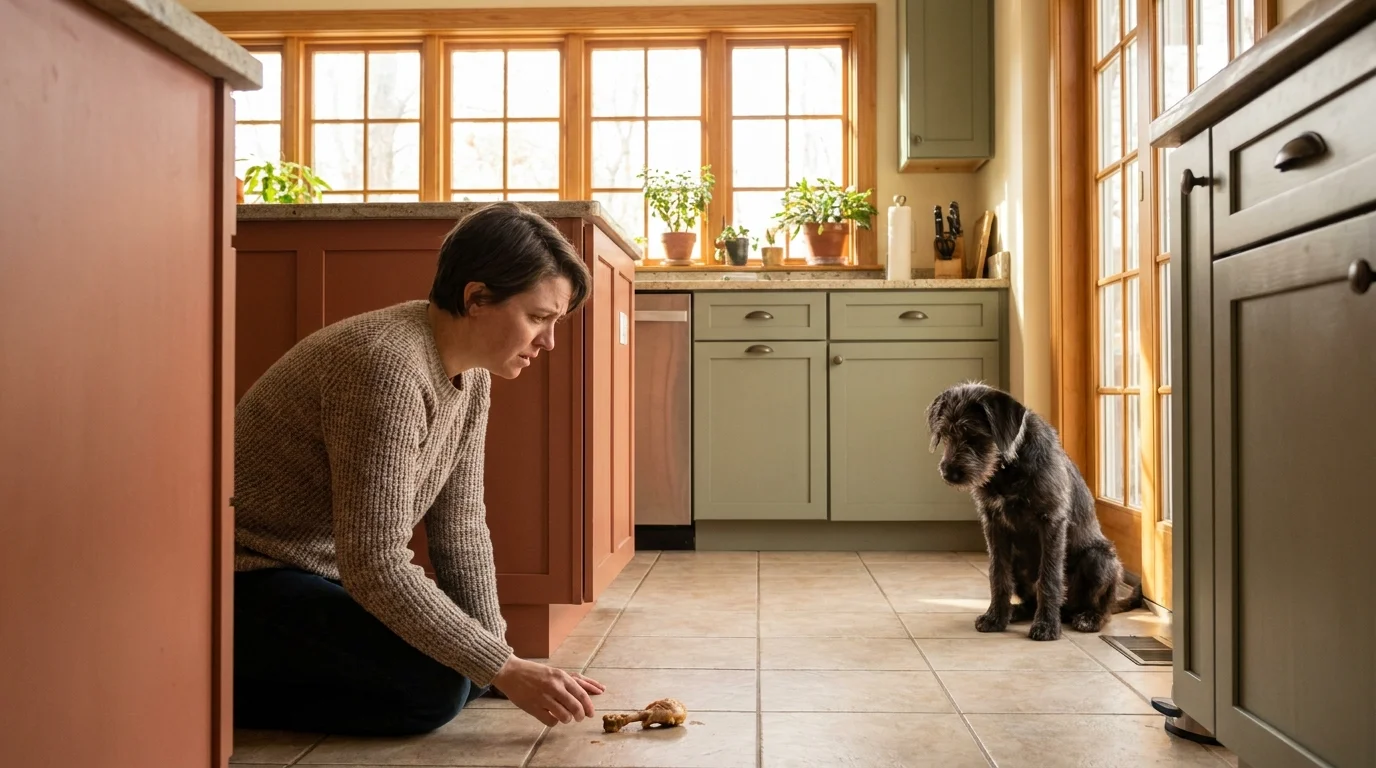
Finding an empty rotisserie chicken carcass on the kitchen floor is a heart-stopping moment for any pet parent. If you just caught your dog crunching down on a leftover wing or thigh bone, your mind is probably racing through worst-case scenarios. You might be wondering whether raw bones are safer, what symptoms to watch for over the next few hours, and whether you need to rush to an emergency clinic right this second.
Can dogs eat chicken bones? The straightforward answer is that cooked chicken bones are a severe medical hazard, while raw chicken bones carry significant bacterial risks and can still pose choking threats, making any type of poultry bone a risky gamble for your furry friend. In this guide, we will break down the real dangers of poultry bones, clear up the common myths surrounding raw versus cooked options, and give you an actionable checklist of what to do if your dog just helped themselves to a dangerous snack.
Can Dogs Eat Cooked Chicken Bones? Why They Are Dangerous

Cooked chicken bones are dangerously brittle, meaning they splinter easily under a dog’s powerful jaws into sharp shards that can pierce the stomach or intestines. Many people assume that because dogs are descendants of wolves, crunching on bones comes naturally. However, once chicken bones are cooked, baked, or boiled, their internal moisture evaporates and their cellular structure changes entirely.
When your dog bites down on a cooked bone, it shatters instead of crushing cleanly. These razor-sharp fragments can slice open delicate gum tissue on their way down, lodge painfully in the esophagus, or puncture the lining of the stomach and intestinal tract. A gastrointestinal perforation is a life-threatening medical emergency requiring immediate surgical intervention. Never let your dog scavenge leftover dinner scraps containing cooked poultry bones.
Are Raw Chicken Bones Safe for Dogs?

Raw chicken bones are softer and less prone to splintering than cooked ones, but they still present significant risks, including choking hazards, dental fractures, and severe bacterial contamination. You may have heard about raw-feeding movements where dogs crunch on raw meaty bones. While raw bones do not shatter into dangerous splinters the way cooked ones do, they are far from risk-free.
Raw chicken often carries harmful bacteria like Salmonella and Campylobacter. These pathogens not only threaten your dog’s digestive system, but they also shed into your home environment, posing health risks to human family members. Furthermore, a whole raw bone can easily become lodged in a dog’s throat or cause a dangerous intestinal blockage if swallowed in large chunks. If you are considering a raw diet, consult your veterinarian for safe, appropriately sized alternatives rather than handing over raw poultry bones.
Can Dogs Die From Eating Chicken Bones?

Yes, dogs can die from eating chicken bones if the fragments cause an internal puncture, an unresolving intestinal blockage, or severe internal bleeding. While many dogs manage to pass small bone fragments without incident, the potential complications are severe enough that veterinarians treat chicken bone ingestion with great caution.
According to veterinary organizations like the American Veterinary Medical Association (AVMA), sharp bone fragments can cause peritonitis—a painful and often fatal inflammation of the abdominal cavity—if they pierce the stomach wall. Additionally, large clumps of bone fragments can create a solid mass in the digestive tract, blocking blood flow and leading to tissue necrosis. The risk level depends heavily on your dog’s size, the quantity of bones eaten, and whether the bones were cooked.
My Dog Ate a Chicken Bone But Seems Fine: Should I Still Worry?

Even if your dog ate a chicken bone and seems fine right now, you should still worry and monitor them closely because symptoms of internal injury can appear hours or days later. It is completely normal to feel relieved when your dog finishes licking their chops and goes back to napping as if nothing happened. However, damage to the digestive tract does not always manifest instantly.
As sharp bone fragments slowly travel through the winding path of the digestive system, they can scrape or bruise tissue over a prolonged period. A dog that appears entirely normal at noon might begin showing signs of distress by midnight as a splinter works its way deeper into the intestinal lining. Keep a close watch on your dog for the next 48 to 72 hours, and never assume they are completely out of the clear just because they survived the initial snack.
What to Do Immediately If Your Dog Ate a Chicken Bone

If your dog just ate a chicken bone, you should contact your veterinarian or a local emergency animal hospital immediately for professional guidance rather than trying to induce vomiting at home. Panicking will not help, but swift and deliberate action can prevent a minor kitchen accident from turning into a tragedy.
- Call your veterinarian or an animal poison control hotline immediately to report your dog’s size, weight, and the amount and type of bones consumed.
- Do not attempt to make your dog vomit using hydrogen peroxide or any other home remedy unless a licensed veterinarian explicitly instructs you to do so, as sharp bones coming back up can cause severe esophageal damage.
- Check your dog’s mouth gently if they will allow it, but do not try to pull a bone out of their throat if it is wedged deeply, as you risk pushing it further down or getting bitten.
- Gather any remaining bones from the trash to give your vet an accurate idea of how many fragments your dog ingested.
- Prepare for a vet visit, where your veterinarian may recommend taking an abdominal X-ray to locate the bone fragments and determine the safest course of action.
Dog Ate Chicken Bones: Symptoms to Watch For

The key symptoms to watch for after a dog eats chicken bones include sudden lethargy, repeated vomiting, straining to defecate, bloody stools, and a painful, hard abdomen. Knowing what red flags demand an immediate car ride to the clinic helps you catch complications before they become fatal.
- Persistent vomiting or dry heaving: A sign that a bone fragment is irritating the stomach lining or causing an obstruction.
- Blood in the stool or vomit: Bright red blood or dark, tarry stools indicate internal bleeding or tearing in the digestive tract.
- Lethargy and weakness: A dog that refuses to get up, plays listlessly, or hides in quiet corners is often experiencing significant abdominal pain.
- Loss of appetite: Refusing meals or turning away from favorite treats points toward nausea or physical blockage.
- Straining without producing stool: If your dog repeatedly squats and strains, bone fragments may be causing a painful blockage in the lower colon.
- Abdominal discomfort: Whining when picked up, panting heavily without physical exertion, or adopting a “prayer position” (front paws down, rear end up) are classic signs of severe belly pain.
Frequently Asked Questions

What kind of bones can dogs eat?
Dogs should generally only chew on specially manufactured, vet-approved dental chews or large, raw recreational bones that are too big to swallow whole and do not splinter easily. Cooked bones of any kind, pork bones, and small poultry bones should always be avoided.
Will chicken bones dissolve in a dog’s stomach?
While canine stomach acid is strong, chicken bones do not dissolve quickly enough to prevent sharp shards from causing injury as they travel into the delicate intestinal tract. Relying on stomach acid to break down large bone pieces is extremely risky.
What three meats should dogs avoid?
Dogs should generally avoid processed meats high in sodium, fatty cuts of meat that can trigger pancreatitis, and any meats containing cooked bones, such as chicken wings, pork ribs, and turkey legs.
My dog accidentally ate a chicken bone — what should I do?
If your dog ate a chicken bone, stay calm, remove any remaining trash, and call your veterinarian or an emergency animal clinic immediately for instructions tailored to your dog’s size and the quantity consumed.
Can dogs die from eating chicken bones?
Yes, dogs can die from eating cooked chicken bones if the sharp fragments puncture the stomach or intestines, cause a severe internal infection, or create an unresolving blockage in the digestive tract.
My dog ate a chicken bone but seems fine — should I still worry?
Yes, you should still worry and monitor your dog closely for 48 to 72 hours, because internal injuries and splinter punctures can take time to develop symptoms even if your dog initially acts completely normal.
Conclusion

Cooked chicken bones are a genuine medical hazard rather than an old wives’ tale, and if your dog manages to steal one, a quick phone call to your veterinarian beats waiting around to see what happens. By recognizing the hidden dangers of splintered poultry bones, skipping risky home remedies, and watching closely for red-flag symptoms, you can protect your dog from preventable emergencies. Keep counters clear of holiday scraps, trust your instincts as a pet parent, and let your clinic handle the heavy lifting when your dog gets into trouble.
A note on your puppy’s health: This article is intended to help you recognize patterns and know when to seek care — it is not a diagnosis and does not replace an exam by a licensed veterinarian. If your puppy is lethargic, refusing food or water, vomiting repeatedly, or showing any of the emergency signs described above, contact your vet or the nearest emergency animal hospital right away rather than waiting to see if symptoms improve.


“Alex is the go-to for anything practical — from picking the right harness to knowing when a puppy’s upset stomach needs a vet visit versus a little patience. Before joining Puppy Settled, she spent years working at a small-animal vet clinic and running a pet supply review blog on the side, which means every gear recommendation here has been tested (and every health tip double-checked). Alex owns a rescue mutt named Otis, who has personally ‘reviewed’ more chew toys and dog beds than any dog should probably need.”