

Dog Dental Checkups for Puppies: How Often You Need Them and What to Expect
This guide is for general informational purposes only and isn’t a substitute for professional veterinary advice. If your puppy is showing signs of illness, contact your veterinarian.
Sitting on your living room rug trying to peek at your puppy’s tiny teeth while they squirm or nip can feel surprisingly stressful. If you just typed dog dental checkups into your search bar, you are likely wondering whether that funny breath is normal, if those sharp little needle teeth are falling out right, or what a vet actually does during an initial exam. Starting early with dental care sets the foundation for your puppy’s lifelong health, saving you from major dental bills and medical stress down the road. Let’s break down exactly what to expect, when to schedule, and how to handle your puppy’s growing mouth with confidence.
Quick Answer / Executive Strategy Section

Puppies should have their first professional dental evaluation integrated into their standard veterinary wellness exams starting around 8 to 12 weeks of age, followed by routine checks at every vaccine booster visit. At home, you should begin gentle gum and tooth desensitization within the first week of bringing your puppy home. The core strategy involves three pillars: short daily positive-reinforcement touch exercises, a veterinarian-guided oral assessment during routine checkups, and monitoring the transition from milk teeth to adult teeth between 4 and 6 months of age. Consistency from day one prevents fear and builds lifelong cooperative care habits.
1. When Should You Schedule Your Puppy’s First Dental Checkup?

Your puppy’s very first dental checkup happens much sooner than you might think. Veterinarians inspect the oral cavity during the initial wellness exam, which typically occurs around 8 weeks old. During this visit, the vet checks for correct bite alignment, cleft palates, retained deciduous (baby) teeth, and early signs of congenital abnormalities. You do not need a standalone dental appointment at this stage; rather, oral health is a core component of every early pediatric vet visit. Getting your puppy accustomed to veterinary handling during these early months ensures they remain calm during future examinations.
2. How Often Do Growing Puppies Need Vet Dental Evaluations?

Throughout their first year of rapid growth, puppies require regular veterinary oversight to monitor jaw development and adult teeth eruption. Your veterinarian will check your puppy’s teeth during scheduled vaccine visits at 12 weeks and 16 weeks, and again during their juvenile or pre-neuter/spay exam around 6 months. Once your puppy reaches adulthood, annual dental evaluations become standard. However, if you notice rapid plaque buildup, persistent foul breath, or trouble chewing during their teething phase, you should schedule an interim checkup right away.
3. What Happens During a Veterinary Puppy Dental Exam?

Many first-time owners worry that a vet dental checkup involves scary equipment or anesthesia right away. For a healthy puppy, a routine awake exam is quick, gentle, and non-invasive. The veterinarian lifts the puppy’s lips to inspect the gumline, counts the incoming adult teeth, checks the occlusion (how the upper and lower jaws meet), and looks for signs of inflammation or trauma. If there are no complications, the visit takes less than a minute. The vet will also ask about your home-care routine and recommend appropriate chew items tailored to your puppy’s exact age and breed size.
4. Understanding the Puppy Teething Timeline (4 to 6 Months)

The most critical window for your puppy’s dental health is the teething phase, which typically peaks between 4 and 6 months of age. During this period, 28 sharp baby teeth fall out to make way for 42 permanent adult teeth. You might find tiny teeth on your rug or notice mild bleeding on chew toys—both are entirely normal. Your primary job during this phase is monitoring the mouth daily to ensure baby teeth fall out completely as adult teeth push through, preventing overcrowding or painful misalignments.
5. What Are Retained Baby Teeth and Why Do They Matter?

Retained deciduous teeth occur when a puppy’s baby tooth fails to fall out even though the permanent adult tooth has already started erupting beside it. This most commonly affects the tiny front incisors and the canine teeth in small-breed puppies. If left unchecked, retained baby teeth trap food and bacteria, leading to rapid periodontal disease, abnormal wear, and misaligned adult bites. If you spot a double row of teeth or a baby tooth lingering past 7 months of age, schedule a veterinary checkup promptly so the retained tooth can be safely extracted.
6. Spotting the Early Warning Signs of Puppy Dental Problems

While mild puppy breath is common, severe foul odors or physical symptoms can indicate underlying dental trouble. Watch for excessive drooling, pawing at the mouth, reluctance to chew hard kibble or rubber toys, bright red inflamed gums, or yellowish-brown tartar crusts building up on the back molars. Catching these signs early prevents minor gum irritation from escalating into painful gingivitis or early-stage periodontal disease before your dog reaches their first birthday.
7. How to Introduce Tooth Brushing at Home Without a Fight

Starting tooth brushing early is the single most effective way to protect your dog’s long-term dental health. Do not start with a toothbrush immediately; instead, spend the first week letting your puppy lick specialized, dog-safe poultry or peanut butter flavored toothpaste off your finger. Progress to wrapping a piece of gauze around your finger to gently wipe their front teeth, and finally introduce a soft-bristled canine toothbrush. Keep sessions under 60 seconds, always pair the experience with praise or treats, and aim for a gradual rollout.
8. Choosing Safe and Effective Teething Chews and Toys

During the heavy teething phase, your puppy has an intense biological urge to chew to relieve sore gums. Selecting the right items protects both your furniture and their developing teeth. Opt for firm rubber chew toys that can be lightly chilled in the refrigerator (never freeze solid, as rock-hard items can fracture fragile puppy teeth). Avoid hard bones, antlers, and nylon toys that are too rigid for juvenile teeth, as these frequently cause painful tooth fractures in young dogs.
9. Understanding the Cost of Puppy Dental Care

Preventive puppy dental care is remarkably affordable, primarily consisting of dog-safe toothpaste, a toothbrush, and appropriate chew toys. Routine veterinary dental checks are generally bundled into your standard wellness exam fees. However, specialized procedures—such as the surgical extraction of retained deciduous baby teeth under anesthesia—can range from $200 to $600 depending on your region and clinic. Investing in pet insurance or maintaining a small wellness savings fund helps buffer against unexpected pediatric dental interventions.
10. Nutrition, Kibble, and Your Puppy’s Developing Teeth
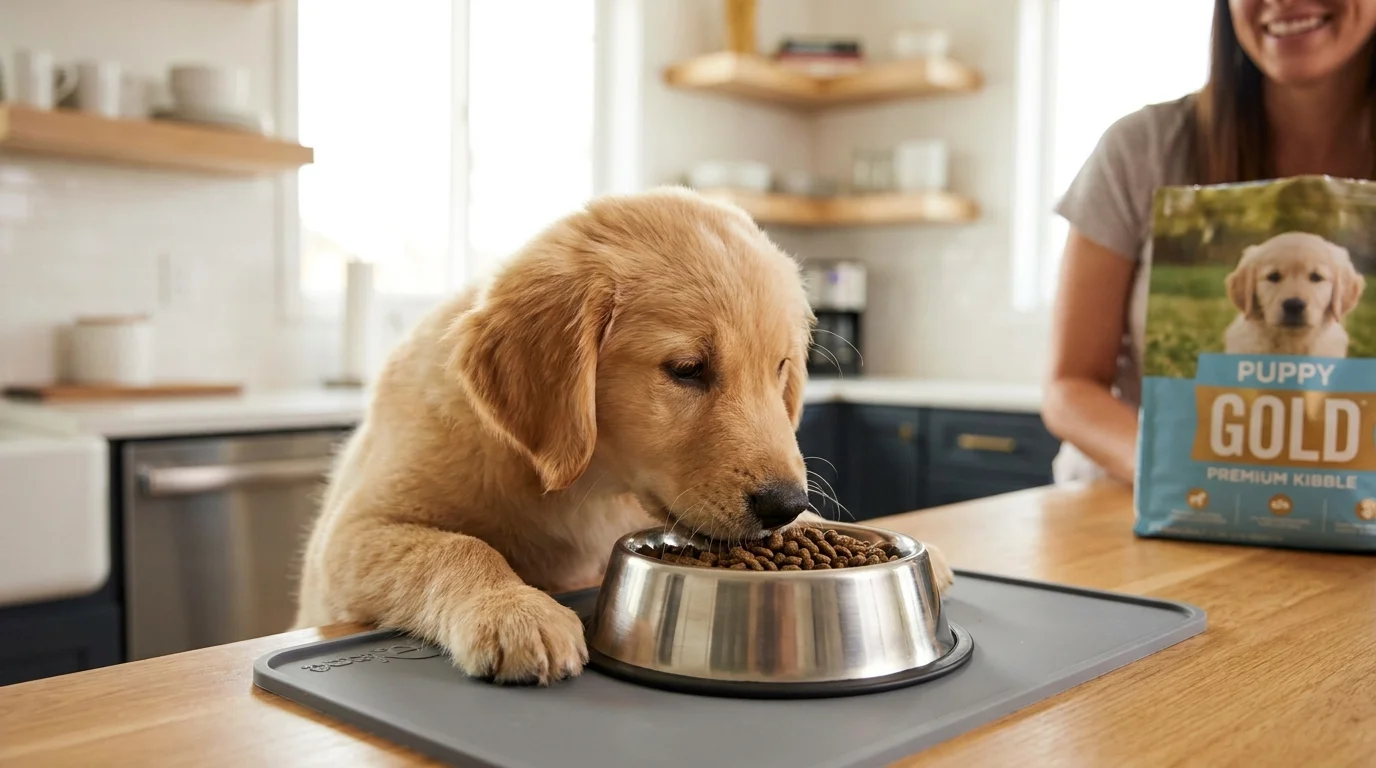
Diet plays a subtle yet vital role in supporting your puppy’s oral health during their transition to adulthood. High-quality puppy kibble provides appropriate mechanical abrasion against the teeth compared to strictly wet-only diets, though it does not replace brushing. Ensure your puppy’s food is formulated specifically for their breed size (small, medium, or large breed puppy formulas) to support healthy bone and jaw mineralization during their rapid growth phase.
11. Common Mistakes New Owners Make With Puppy Dental Care

Many well-meaning owners make a few common missteps when navigating puppy dental health for the first time. The biggest error is waiting until adulthood to start dental care, making it much harder to get an adult dog to accept a toothbrush. Another mistake is using human toothpaste, which contains fluoride and foaming agents that are toxic if swallowed by dogs. Finally, assuming that dry kibble alone keeps teeth entirely clean leaves many young dogs vulnerable to plaque accumulation along the gumline.
12. Breed-Specific Dental Considerations for Puppies

Not all puppies face the same dental challenges; genetics and skull shape play a massive role in oral health. Brachycephalic breeds—such as French Bulldogs, Pugs, and English Bulldogs—have compacted jaws that crowd teeth together, making them exceptionally prone to trapped debris and early periodontal disease. Conversely, toy breeds like Chihuahuas and Pomeranians frequently struggle with retained baby teeth. Knowing your puppy’s specific breed tendencies helps you partner with your vet to monitor high-risk areas from day one.
13. How to Conduct a Weekly At-Home Dental Check

Building a weekly 60-second oral check into your puppy’s routine keeps you ahead of potential dental issues. Choose a quiet time when your puppy is relaxed, gently lift their lips on both sides, and check three simple things: gum color (should be a healthy bubblegum pink, not white or angry red), breath quality, and tooth alignment. Rewarding your puppy immediately afterward with a high-value treat turns what could be an invasive check into a positive bonding ritual.
14. Preparing Your Puppy for Future Veterinary Dental Cleanings

Even with stellar daily home care, most dogs will eventually require professional ultrasonic scaling and polishing under anesthesia later in life. You can prepare your puppy for this future reality by conditioning them to accept having their face, muzzle, ears, and paws handled for extended periods. When your puppy is comfortable with gentle physical restraint and mouth inspections, veterinary visits become significantly less stressful for both your dog and the veterinary team.
15. Frequently Asked Questions About Puppy Dental Care

When should I start brushing my puppy’s teeth?
You can start desensitizing your puppy to having their mouth handled within the first few days of bringing them home. Introduce dog-safe toothpaste flavors on your finger around 8 to 12 weeks of age, and transition to a soft puppy toothbrush once they are comfortable with the taste and touch.
Is bad breath normal for a teething puppy?
Mild bad breath can occasionally occur during the heavy teething phase (4 to 6 months) due to minor gum inflammation and loose baby teeth trapping small bits of debris. However, overwhelmingly foul breath, excessive drooling, or bleeding gums warrant a prompt veterinary checkup.
Do puppies need professional dental cleanings?
Healthy puppies with normal bite alignment and good home brushing habits typically do not need professional dental cleanings under anesthesia during their first year. Professional cleanings are usually reserved for older dogs showing significant tartar buildup, unless a medical extraction (such as a retained baby tooth) is required.
What should I do if my puppy swallows a baby tooth?
Do not panic! It is completely normal for puppies to swallow their tiny deciduous teeth while eating or chewing on toys. The teeth will pass safely through their digestive system without causing harm.
Conclusion
Navigating your puppy’s dental development doesn’t have to feel overwhelming when you break it down into simple, manageable weekly steps. By introducing gentle mouth handling early, monitoring their teething milestones, and keeping up with regular veterinary wellness checks, you set your puppy up for a lifetime of healthy smiles and fresh breath. Take it one day at a time, and remember that consistency right now pays off massively in the long run.
A note on your puppy’s health: This article is intended to help you recognize patterns and know when to seek care — it is not a diagnosis and does not replace an exam by a licensed veterinarian. If your puppy is lethargic, refusing food or water, vomiting repeatedly, or showing any of the emergency signs described above, contact your vet or the nearest emergency animal hospital right away rather than waiting to see if symptoms improve.


“Alex is the go-to for anything practical — from picking the right harness to knowing when a puppy’s upset stomach needs a vet visit versus a little patience. Before joining Puppy Settled, she spent years working at a small-animal vet clinic and running a pet supply review blog on the side, which means every gear recommendation here has been tested (and every health tip double-checked). Alex owns a rescue mutt named Otis, who has personally ‘reviewed’ more chew toys and dog beds than any dog should probably need.”