
How to Puppy-Proof a Small Apartment (Room by Room)

You’re standing in your apartment, staring at the floorplan, and suddenly realizing every single item you own looks like a chew toy. If you’re panic-searching at 11 PM because your new puppy just arrived and is already trying to eat your favorite rug, take a deep breath. Puppy proofing apartment layouts doesn’t mean you have to pack your entire life into storage boxes. But it does require a different strategy than a suburban house with a massive yard and endless extra rooms. In a small space, you can’t just close the door on the mess. We’re going to walk through your space room by room, identifying the hidden hazards and saving your security deposit from sharp little teeth.
The Executive Strategy: Zone Defense in Small Spaces
When you live in an apartment, the biggest mistake you can make is giving a new puppy free roam from day one. You simply cannot puppy-proof an entire apartment flawlessly enough to leave an unsupervised landshark wandering around. Instead, our philosophy for a small space is “Zone Defense.”
Your goal is not to sanitize the whole apartment; it’s to create one or two highly secure zones where your puppy can hang out safely while you take a shower, hop on a Zoom call, or cook dinner. The rest of the apartment remains a heavily supervised “training zone.” We’ll show you how to lock down the critical hazards in every room, but always remember that physical management—like baby gates, exercise pens, and closed doors—is your best friend right now.
By strategically blocking access and managing the environment, you remove the opportunity for bad habits to form. Let’s get into the nitty-gritty of making your specific apartment floor plan safe, starting from the ground up.
1. The “Puppy-Eye-Level” Apartment Audit

Before you buy a single gate or latch, you need to see your apartment the way your puppy sees it. Drop down on your hands and knees in the middle of your living room. Seriously, do it right now.
When you get down to puppy-eye level, a whole new world of hazards appears. That forgotten pill you dropped under the sofa last month? It’s right there. The stray thumbtack by the baseboard? Easy pickings. In a small apartment, dust bunnies, dropped change, and stray rubber bands accumulate under radiators and tight furniture gaps. Sweep and vacuum with a flashlight to illuminate those dark crevices. A puppy explores the world with their mouth, and if a dropped ibuprofen or a paperclip is within their line of sight, they will swallow it before you even realize what happened.
2. Securing the Entryway and Front Door

Apartment entryways are notoriously tight, often serving as a drop zone for shoes, mail, and wet umbrellas. For a puppy, this is a treasure trove of fascinating smells.
First, get your shoes off the floor. Even if your puppy doesn’t chew them, the dirt tracked in from city sidewalks can contain parasites or bacteria. Second, consider the “door dash” risk. If your apartment door opens directly into a busy hallway or immediately outside to a parking lot, you need a physical barrier. Set up a freestanding pet gate or an exercise pen to block the immediate entryway. This creates a small “airlock” so if a delivery driver knocks or you’re hauling in groceries, your puppy can’t slip past your legs and bolt.
3. Taming the Living Room Tangle: Cords and Cables

In a small apartment, your TV, internet router, and phone chargers are usually clustered in one central living room corner. To a teething puppy, these look like expensive, highly dangerous spaghetti.
Start by unplugging everything you don’t actively need. For the essentials, you must block access entirely. Tuck cords behind heavy furniture, or use heavy-duty cable management sleeves. Do not rely on bitter sprays to deter a puppy from chewing an active electrical cord; the risk of electrocution is too high. If your TV stand is open and accessible, use a modular playpen to fence off the entire entertainment center. It might look a little clunky for a few months, but it will save your electronics and keep your pup safe.
4. Protecting Your Apartment Deposit: Baseboards and Walls

Renters know the sheer terror of hearing a puppy gnawing on a wooden baseboard. Landlords will absolutely charge you for repairing chewed drywall or trim.
To puppy proof a small space effectively, you need to make the apartment fixtures taste terrible before the puppy even tries them. Liberally apply a bitter apple or cherry spray to exposed baseboards, door frames, and the corners of low cabinets. Reapply it every single day for the first two weeks—the spray loses its potency quickly. If your puppy is a dedicated termite and the spray isn’t working, use clear, renter-friendly furniture protector sheets directly on the doorframes, or block access entirely by rearranging your sofa or placing heavy storage bins in front of their favorite chewing spots.
5. Rugs, Carpets, and Hardwood Floor Protection

Hardwood floors are great for wiping up accidents, but their slippery surface is tough on developing puppy joints. On the flip side, plush area rugs are magnets for potty accidents and are incredibly difficult to clean in a small apartment without a hose or driveway.
If you have expensive rugs, roll them up and put them in your closet for the next four months. It is simply not worth the stress. Replace them temporarily with inexpensive, rubber-backed bath mats or washable rugs that you can easily toss into your building’s laundry machines. If your apartment has wall-to-wall carpeting, invest in a high-quality enzymatic cleaner and keep it stocked in multiple rooms. [Internal link opportunity: How to clean puppy accidents properly → Potty Training].
6. The Kitchen: Securing Trash and Low Cabinets

Apartment kitchens are often galley-style or tiny open-concept corners, meaning your puppy is always underfoot while you cook.
Your absolute first priority is the trash can. An open-top bin is an invitation for disaster. Upgrade to a heavy, step-to-open trash can with a locking lid, or move your trash underneath the sink. Next, evaluate your lower cabinets. If you store cleaning supplies, bleach, or dishwasher pods down low, you must install baby latches. Puppies are incredibly clever and can easily nudge cabinet doors open with their noses. If installing locks violates your lease, move all chemical cleaners to an upper cabinet or a high shelf in a hall closet immediately.
7. Toxic Foods to Move Out of Reach

In a compact kitchen, counter space is a luxury, which means things often get left out on low coffee tables or kitchen islands. A determined puppy can easily surf a low table.
You need to ruthlessly audit your accessible food. Grapes, raisins, onions, garlic, macadamia nuts, and chocolate must be locked in a pantry or upper cabinet. Pay special attention to sugar-free gums or peanut butters containing xylitol (sometimes labeled as birch sugar), which is highly toxic to dogs. If you keep a fruit bowl on a low coffee table, relocate it to the fridge or the highest counter. Never underestimate the vertical leap of a motivated, hungry puppy when you turn your back for 30 seconds.
8. Balcony and Patio Safety for High-Rise Pups

If you are lucky enough to have a balcony in your apartment, it can be a great spot for a fresh air break. But high-rise balconies present terrifying risks for small or clumsy puppies.
Check the gaps between the balcony railings. If a puppy can squeeze their head through, they can squeeze their body through. Buy a roll of heavy-duty plastic mesh or outdoor safety netting and zip-tie it securely along the entire length of the railing, right down to the floor. Check for gaps underneath the railing as well. Additionally, remove any light chairs or planters near the edge that a puppy could use as a step-stool to jump over. Until they are fully grown, a puppy should never be allowed on an apartment balcony unsupervised, even for a minute.
9. The Bathroom: Hidden Dangers in Small Spaces

Bathrooms are full of appealing textures and smells for a dog. The toilet bowl, the trash can, and the toilet paper roll are a holy trinity of puppy mischief.
Always keep the bathroom door closed when not in use. It is the easiest room to secure. If your apartment layout means the bathroom door must stay open for airflow, you have to lock down the contents. Get a lidded trash can—used tissues and hygiene products can cause severe intestinal blockages. Keep the toilet lid closed at all times to prevent them from drinking chemical-treated bowl water. Finally, tuck the toilet paper roll into a drawer or a protective cover, unless you want to come home to a winter wonderland of shredded paper.
10. Bedroom Preparation: Under-Bed Blocking
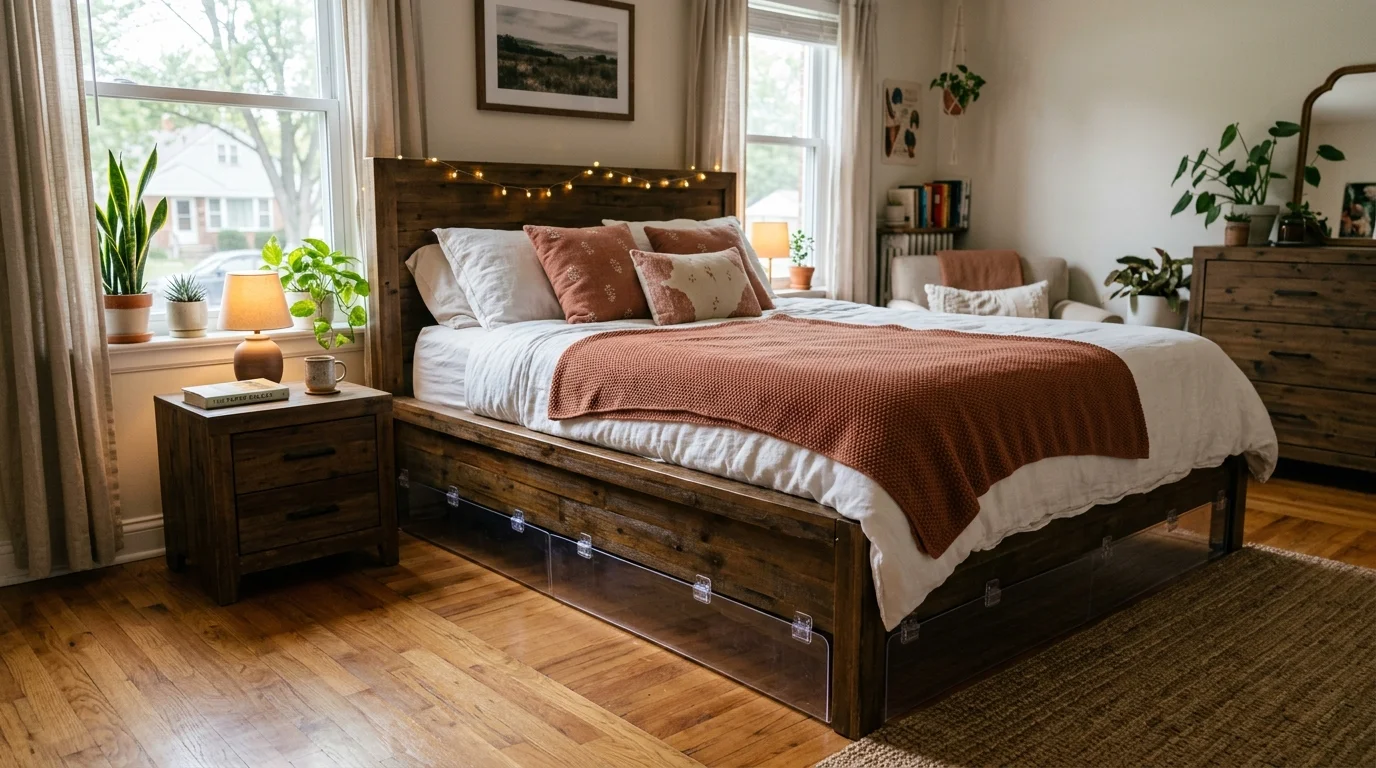
The bedroom should be a calm sanctuary, but for a puppy, the space under your bed is the ultimate secret hideout. It’s dark, quiet, and usually full of dust and lost socks.
If your puppy crawls under the bed and refuses to come out, or decides to potty under there, you will have a miserable time trying to retrieve them in a cramped apartment bedroom. Block off the underside of your bed completely. You can use clear under-bed blockers made specifically for pets, slide long plastic storage bins under the frame to close the gap, or wedge rolled-up blankets around the perimeter. Keep laundry off the floor; a puppy will happily chew the crotch out of your favorite sweatpants or swallow a sock whole, leading to expensive emergency vet surgery.
11. Closet Safety for Shoes and Small Items

Apartment closets often have sliding doors, bifold doors, or even just curtains. These are incredibly easy for a puppy to nose their way into.
Keep your closet doors firmly shut. If your sliding doors are loose, consider adding a child-proof latch or a tension rod in the track to prevent the puppy from sliding it open. Inside the closet, ensure all shoes, belts, and low-hanging scarves are elevated. Shoelaces in particular are very dangerous if swallowed. If you use your closet floor for overflow storage, place small items into heavy, lidded plastic bins rather than open cardboard boxes, which a puppy will happily shred to pieces.
12. Creating a Safe Confinement Zone (Playpen/Crate)

Because you can’t puppy-proof a small apartment perfectly, you absolutely need a dedicated safe zone. This is where your puppy stays when you cannot supervise them with 100% of your attention.
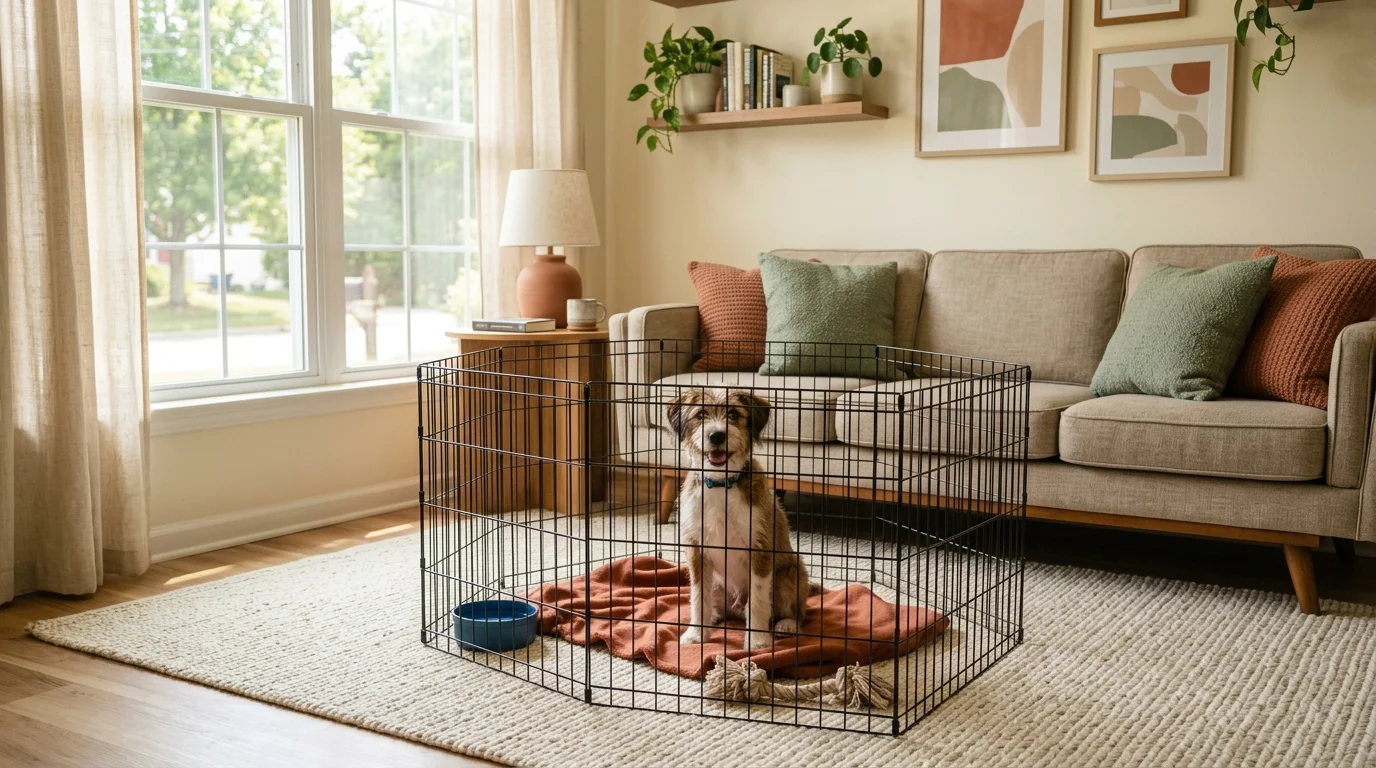
In an apartment, an exercise pen (x-pen) attached to a crate is the gold standard. [Internal link opportunity: How to set up a puppy crate → Crate Training & Sleep]. Choose a corner of the living room away from direct heat sources, drafts, and trailing cords. Place a heavy-duty waterproof mat down to protect your apartment flooring, set up the pen, and put their crate, a water bowl, and safe chew toys inside. This is their room within your room. When they are in the pen, you can cook, work, or shower knowing they are physically incapable of chewing a baseboard or eating a sock.
13. Houseplants: Identifying and Elevating Toxic Greens

Bringing nature indoors is common in apartments, but many trendy houseplants are highly toxic to dogs. A bored puppy will eventually investigate the dirt and leaves of your floor plants.
Take an inventory of your greenery. Popular plants like Monstera, Pothos, Snake Plants, ZZ plants, and Philodendrons are toxic if chewed or ingested. You must elevate these entirely out of reach. Use hanging macrame planters, tall plant stands that cannot be knocked over, or place them on top of high bookcases. For large floor plants that you cannot move, tightly wrap the base of the pot in a physical barrier (like chicken wire or a decorative basket) and heavily spray the leaves with a bitter deterrent to prevent nibbling.
14. Managing Trash Across a Small Floor Plan

We covered the kitchen, but what about the rest of the apartment? Small open wastebaskets in the bedroom, bathroom, and home office are prime targets.
A crumpled sticky note or a discarded staple might seem harmless, but they are dangerous to tiny digestive tracts. The easiest solution is to remove all auxiliary trash cans from your apartment for the first few months. Force yourself to walk your trash into the secure kitchen bin. If you absolutely must have an office bin, buy a small one with a secure step-pedal lid and keep it tucked under your desk where the puppy cannot easily tip it over.
15. Studio Apartment Specifics: Zonal Defense

Puppy proofing a studio apartment is a unique challenge because there are no doors to close to keep the puppy out of the kitchen or bedroom.
In a studio, you have to use furniture and freestanding gates to create artificial boundaries. Use a long, modular baby gate to section off the “kitchen” half of the apartment. Use your sofa as a physical barrier to block access to your bed area. In a studio, utilizing a covered crate and an exercise pen is non-negotiable, as it is the only way to guarantee your puppy is completely safe when you leave for errands. Keep your floor completely clear—in a single room, every dropped item is instantly accessible.
People Also Ask: Apartment Puppy Proofing FAQs

How long does puppy proofing take?
You can tackle the critical physical barriers in your apartment in about two hours on a weekend. However, true puppy proofing is an ongoing process of management for the first 6 to 12 months as you learn your specific dog’s habits and chewing preferences.
Can I leave my puppy to roam the apartment while I work?
Absolutely not. Until a dog is fully potty trained and has outgrown the chewing phase (usually around 1–1.5 years old), they should be confined to a crate or a puppy-proofed playpen when you leave the apartment to prevent injury and damage to your rental.
What are the best baby gates for renters?
Look for pressure-mounted gates. These require no drilling and will not damage your door frames. Just make sure to measure your hallway or doorframes carefully, as apartment dimensions can be surprisingly narrow or awkwardly wide.
Setting Your Puppy Up for Apartment Success
Taking the time to puppy-proof your small space isn’t just about saving your security deposit—it’s about lowering your daily stress. When you know your puppy can’t access cords, toxins, or your favorite shoes, you can actually relax and enjoy their goofy, playful energy. Take it one room at a time, rely heavily on your playpen and gates, and remember that this phase doesn’t last forever. Now that your space is secure, it’s time to tackle the next big apartment challenge.


Maya is the founder and writer behind PuppySettled, where she shares practical, situation-specific guides for first-time dog owners. After bringing her own puppy home to a small apartment and realizing most advice out there assumed a house and a yard, she started writing the guides she wished had existed — for real budgets, real schedules, and real first-time-owner questions. When she’s not writing, she’s usually on a walk figuring out the next thing worth covering.