
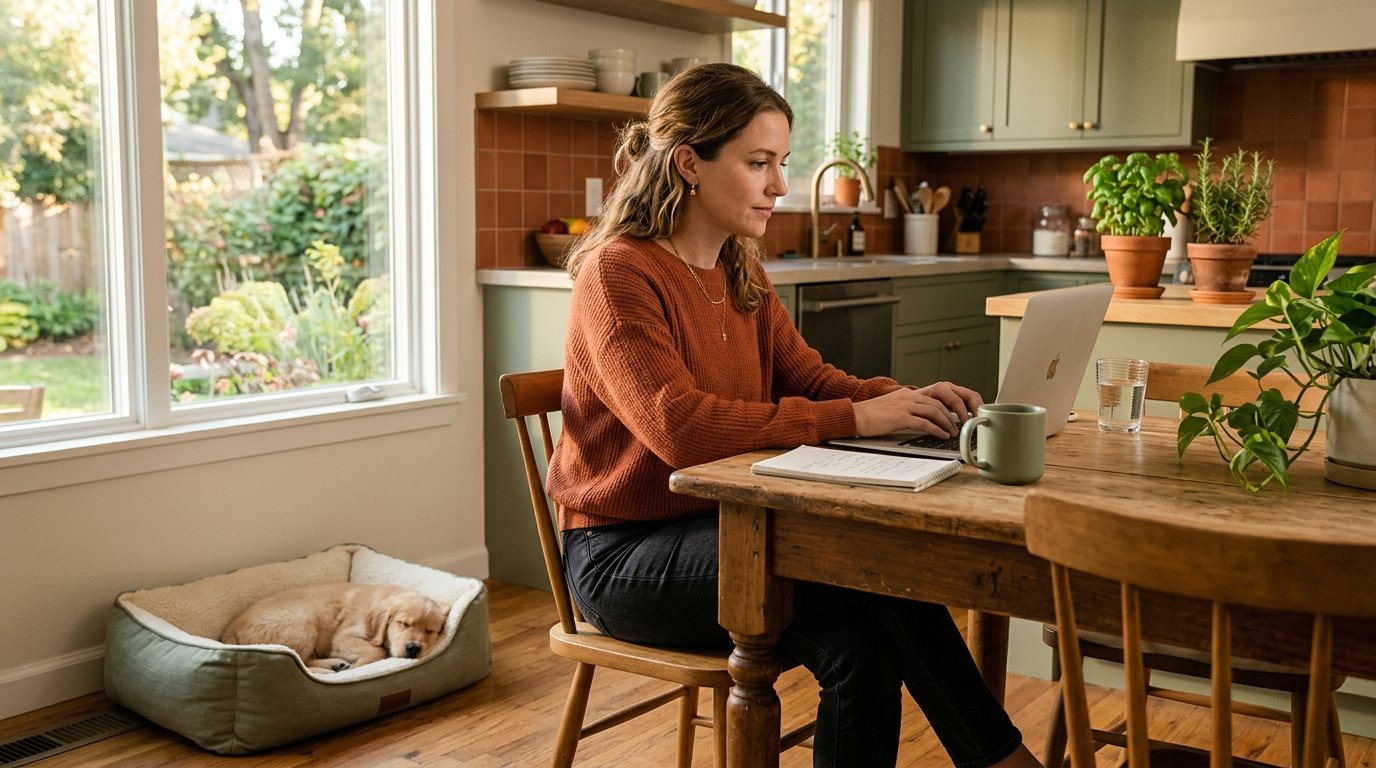
Puppy Training Schedule for Working Owners: How to Train a Puppy With a 9-to-5 Job
If you are staring at your alarm clock at 6:30 a.m. while dreading the commute ahead, wondering how on earth you are supposed to raise a puppy, survive an eight-hour workday, and keep your sanity intact, take a deep breath. You are not failing as a pet parent, and having a full-time job does not mean you cannot raise a well-behaved dog. When you search for a puppy training schedule for working owners, you are usually sitting in your living room feeling the heavy weight of conflicting advice—some dog trainers act like you need to be home 24/7, while others offer generic tips that completely ignore the reality of a 9-to-5 commute.
Puppy Training Schedule for Working Owners: The Quick Answer

Puppy training for working owners works best in short, consistent 5–10 minute sessions built around your existing routine — before work, during lunch if possible, and in the evening — rather than one long session. Consistency across the day matters more than total training time.
Trying to squeeze in an hour of intense obedience training after a grueling workday is a recipe for frustration for both you and your puppy. By breaking training down into bite-sized micro-sessions, partnering with a midday walker or neighbor, and structuring your evenings intelligently, you can build a reliable routine that fits right into a working life.
How Much Training Time Does a Puppy Actually Need Each Day?

A working owner only needs to invest about 20 to 30 minutes of active training per day, split across three or four micro-sessions, because young puppies possess very short attention spans.
Many working professionals make the mistake of thinking training requires culling a full hour out of their evening. In reality, a puppy’s developing brain tires out rapidly. After about eight minutes of focused learning, a puppy’s attention drifts, and pushing past that window leads to biting, errors, and frustration.
- Quality over marathon length: Four separate five-minute sessions spread across your morning, lunch, and evening yield vastly better behavioral results than one exhausting thirty-minute drill at night.
- Integrating training into daily life: The secret for busy owners is treating everyday transitions—like asking for a sit before opening the back door or waiting calmly before putting down a food bowl—as informal training repetitions.
The Before-Work Training Window: What to Fit In

Your pre-work training window should focus entirely on an early morning bathroom trip, a high-energy feeding puzzle, and a brief five-minute obedience session while your energy is fresh.
Mornings in a working household are a sprint, but establishing a predictable dawn routine sets a calm emotional tone before you walk out the door.
- The early wake-up flow: Take your puppy straight outside the moment you wake up for an uninterrupted potty break. Follow this with their first breakfast meal, delivered either through training rewards or a slow feeder to engage their brain.
- The pre-departure energy burn: Spend five minutes practicing polite leash walking down the hallway or working on foundational name recognition. Getting your puppy’s brain working before you leave makes it much easier for them to settle into their morning crate rest.
Using a Midday Dog Walker or Break to Reinforce Training

If you work outside the home, hiring a midday dog walker or dropping home on your lunch break provides a vital bathroom reset and a brief, consistent reinforcement of morning cues.
Leaving an eight-to-twelve-week-old puppy crated for eight hours straight is impossible for bladder control and detrimental to house training.
- The midday pit stop: Aim for a 20-to-30-minute midday visit. Your walker should take the puppy outside for a thorough potty break, spend ten minutes on indoor enrichment or gentle play, and refresh their water bowl.
- Maintaining training consistency: Leave clear, simple instructions for your walker or pet sitter. If you are working on a polite sit at doorways, ask them to use that exact same cue when taking the puppy out, keeping rules consistent across different handlers.
The After-Work Training Window: Sit, Stay, and Recall Practice

Your evening training window is the ideal time for longer focus exercises, such as practicing solid sits, door manners, and loose-leash walking, once you return home.
By the time you walk through your front door in the evening, your puppy has likely spent hours resting and is ready to stretch their legs and engage with you.
- Decompression first: Before launching into training drills, take your puppy outside for a proper sniff-walk and bathroom break so they can release pent-up physical energy.
- Dedicated evening micro-sessions: Dedicate two five-minute blocks during your evening routine—perhaps while cooking dinner or relaxing on the couch—to practice basic obedience using positive reinforcement markers like “Yes!” paired with high-value treats.
Daily and Weekly Puppy Training Schedule for Working Owners

To help you visualize how to weave training into a standard 9-to-5 lifestyle, use this structured daily and weekly framework:
| Time Block | Daily Routine Focus | Training Activity & Duration |
| 6:30 AM – 7:15 AM | Morning Wake-Up & Potty | Outdoor potty trip, breakfast fed via training, and 5 minutes of name-game practice. |
| 7:15 AM – 12:00 PM | Morning Crate Rest | Enforced crate nap while you commute and work; puppy rests quietly. |
| 12:00 PM – 12:30 PM | Midday Break | Dog walker or owner drop-in for potty relief, fresh water, and 10 minutes of indoor play. |
| 12:30 PM – 5:00 PM | Afternoon Crate Rest | Second block of quiet daytime rest and crate settling. |
| 5:30 PM – 6:30 PM | Evening Decompression | Arrival home, immediate outdoor potty trip, and a decompression sniff-walk. |
| 6:30 PM – 8:00 PM | Dinner & Evening Practice | Second meal, followed by a 5-minute sit/stay obedience block during family time. |
| 8:00 PM – 10:30 PM | Wind-Down & Bedtime | Final bathroom break, calm cuddling, and lights-out in the crate for the night. |
| Weekend Focus | Socialization & Endurance | Longer weekend outings, public socialization, and consolidated obedience practice. |
How to Crate Train a Puppy Around a Full-Time Work Schedule

Successful crate training on a working schedule relies on building positive daytime crate associations through high-value frozen KONGs, ensuring the crate is never used for punishment.
Crate training often terrifies working owners because they worry about locking their puppy away for long stretches. The secret is ensuring the crate feels like a safe, rewarding den rather than a jail cell.
- Gradual absence building: On your days off or during mornings before work, practice closing the crate door for just 30 seconds while you stand nearby, gradually building up duration over weeks.
- The frozen distraction: Whenever you leave the house for work, hand your puppy a KONG stuffed with frozen Greek yogurt or wet food. The intense licking releases calming endorphins, helping them transition smoothly into a silent, peaceful nap.
Weekend Training: Making Up for Weekday Time Constraints

Weekends are your secret weapon as a working owner, offering extended blocks of time for public socialization, environmental exposure, and structured obedience classes.
Because your weekday training sessions are kept deliberately short, weekends let you dive deeper into real-world experiences.
- Front-loading socialization: Use Saturday and Sunday mornings to take your puppy to quiet parks, outdoor cafe patios, or suburban shopping centers to check off items on your socialization checklist.
- Catching up on mental fatigue: A single structured weekend outing where your puppy sniffs new environments and meets friendly strangers will tire them out more effectively than three hours of indoor crate time.
Positive Reinforcement Techniques That Fit Into Short Sessions

Positive reinforcement training uses high-value food rewards, verbal markers, and toys to encourage desired behaviors instantly, making micro-sessions exceptionally efficient.
When you only have five minutes to train before rushing to a work call, you cannot afford wasted time using outdated, confusing correction methods.
- The power of the marker word: Say your positive marker word (“Yes!”) the exact microsecond your puppy performs the correct action, followed immediately by a tasty treat. This precise timing builds lightning-fast neural connections.
- High-value currency: Save specialized treats—like tiny cubes of boiled chicken or freeze-dried liver—strictly for training sessions so your puppy remains intensely motivated.
Puppy Socialization Classes: Are They Worth It for Working Owners?
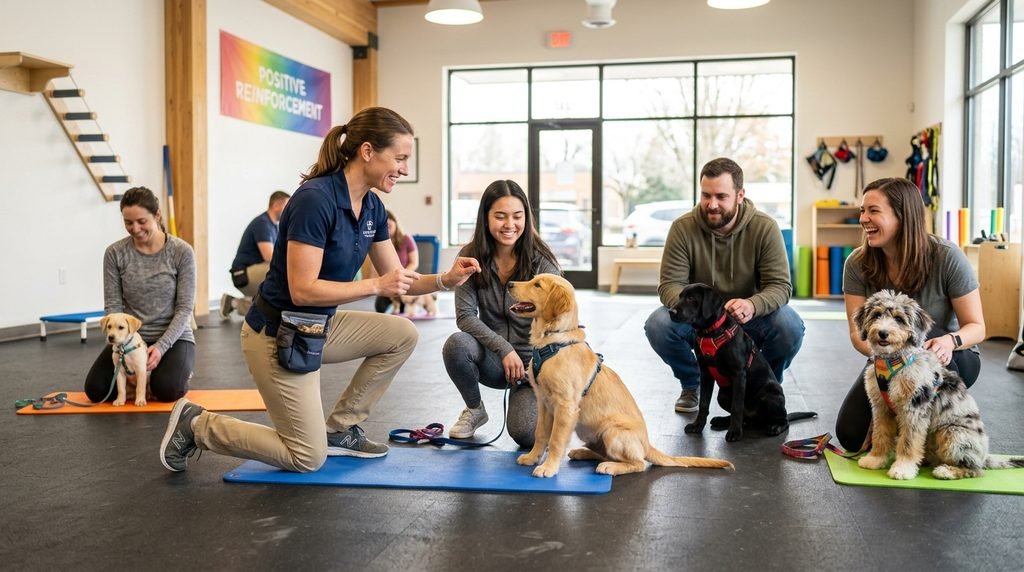
Puppy socialization classes are exceptionally valuable for working owners because they provide professional guidance, structured exposure, and built-in weekend accountability.
When you work a 9-to-5 job, it is easy to let weekends slip away without exposing your puppy to enough novel environments and strange dogs.
- Outsourcing the heavy lifting: Enrolling in a weekly positive-reinforcement puppy kindergarten class ensures your puppy meets diverse dogs and people in a controlled, veterinarian-approved indoor setting.
- Learning human handling skills: These classes train you just as much as the puppy, teaching you how to read canine body language and execute timing mechanics efficiently during your busy week.
Realistic Expectations: What Training Progress Looks Like on a Working Schedule

Realistic training progress on a working schedule involves slow, incremental gains with occasional regressions during adolescent teething phases, rather than overnight perfection.
Busy owners often feel discouraged when their puppy masters a “sit” on Tuesday but forgets it entirely on Thursday. Canine learning is non-linear.
- Embracing the slow curve: Expect consistent, small improvements over months. Celebrate small victories—like your puppy sleeping through a work meeting without whining or waiting patiently at the back door.
- Forgiving yourself for interruptions: If a heavy work week forces you to scale back training to just basic management and potty breaks, don’t panic. Your puppy will not regress permanently; simply pick up your micro-sessions as soon as your schedule lightens.
Frequently Asked Questions (FAQ)

How much time does puppy training actually take each day?
Puppy training takes about 20 to 30 minutes of active work per day, broken down into short, consistent 5-to-10-minute micro-sessions.
Can I train a puppy if I work full-time?
Yes, you can successfully train a full-time working puppy by utilizing micro-sessions before and after work, organizing midday breaks, and maintaining strict consistency.
How do I crate train a puppy while I’m at work all day?
Crate train around a work schedule by using midday walker check-ins, feeding meals in frozen KONG toys, and building crate duration gradually.
Are puppy training classes worth it if I’m busy?
Yes, weekly classes provide essential structured socialization and professional accountability that fit easily into a weekend routine.
What’s the best time of day to train a puppy?
The best time to train is when your puppy is alert and slightly hungry—typically right before a scheduled mealtime—rather than when they are overtired or over-energized.
How do I teach sit and stay in short sessions?
Lure your puppy’s nose upward with a treat until their rear touches the floor, mark with “Yes!”, and reward immediately in sessions lasting under five minutes.
Conclusion

Raising a puppy with a 9-to-5 job is an exercise in smart time management, patience, and consistency. By swapping marathon training sessions for efficient micro-habits, partnering with midday support, and making the most of your weekends, you can raise a confident, well-behaved dog without sacrificing your career.


“Alex is the go-to for anything practical — from picking the right harness to knowing when a puppy’s upset stomach needs a vet visit versus a little patience. Before joining Puppy Settled, she spent years working at a small-animal vet clinic and running a pet supply review blog on the side, which means every gear recommendation here has been tested (and every health tip double-checked). Alex owns a rescue mutt named Otis, who has personally ‘reviewed’ more chew toys and dog beds than any dog should probably need.”