
Puppy Socialization Checklist: The Critical Window (3–16 Weeks) and How to Do It Safely
If you are carrying your eight-week-old puppy out of your apartment elevator while holding them tight against your chest to avoid letting their paws touch the lobby floor, it is easy to wonder if you are keeping them safe or accidentally ruining their future. When you search for a puppy socialization checklist, a high-stakes tug-of-war usually traps you between two opposing fears: the absolute terror of exposing your unvaccinated puppy to deadly viruses like Parvovirus, and the nagging warning from every behaviorist that failing to expose them to the world right now might cause them to grow up fearful, reactive, or aggressive.
Striking the right balance between medical safety and behavioral development is one of the most stressful hurdles of early pet parenting. By understanding the true 3-to-16-week critical window, mastering safe pre-vaccination exposure techniques, and learning to read the subtle body language signs of overstimulation, you can open up the world to your puppy without risking their health.
The Critical Window: When Does the Puppy Socialization Window Close?

Spanning from approximately 3 to 16 weeks of age, the puppy socialization window forms a critical developmental period. During this time, a puppy’s brain uniquely wires itself to accept new sights, sounds, people, and environments as normal rather than terrifying.
This brief neurological window is the single most important developmental phase in a dog’s life. During these early weeks, a puppy’s natural fear responses remain muted, allowing them to process novel stimuli with curiosity instead of defense. Once this window begins closing around 12 weeks and hardens shut near 16 weeks, the brain shifts toward a more cautious, neophobic response to unfamiliar things.
- The biological foundation: During the critical period, neural pathways form rapidly based on environmental exposure. Experiences encountered positively during this time become part of the puppy’s permanent baseline of “safe” things.
- The cost of missing the window: Research consistently demonstrates that a staggering percentage of adult canine behavior problems—including stranger reactivity, leash aggression, and severe noise phobias—stem directly from inadequate socialization during these vital opening weeks.
Is It Safe to Socialize My Puppy Before They’re Fully Vaccinated?

Low-risk, controlled environments prevent direct exposure to contaminated soil and unknown dogs, allowing you to safely and medically socialize your puppy before finishing their core vaccinations.
A common misunderstanding is that socialization requires walking your puppy on public sidewalks or visiting bustling dog parks where unvaccinated waste might linger. True socialization is about positive exposure, not physical contact with every surface or animal you encounter.
- Separating exposure from infection: You can safely build a puppy’s confidence by introducing them to novel sounds, sounds played from your phone, different floor textures inside your home, and friendly, vaccinated adult dogs in private, sanitized environments.
- Balancing medical and behavioral health: Veterinarians increasingly emphasize that dying from behavioral euthanasia due to severe, untreated fear aggression is a devastating statistical reality. Protecting your puppy’s physical health through smart containment must go hand in hand with protecting their mental health through proactive, controlled exposure.
Vaccine-Safe Socialization Methods: How to Explore Before Shots Are Done

Vaccine-safe socialization before 16 weeks relies on the “carry method” in public areas, hosting controlled playdates in private spaces, and utilizing sensory exposure rather than letting paws touch high-risk ground.
If you live in a high-rise apartment or a dense urban environment, navigating the pre-vaccination phase requires creative logistics. You cannot let an eight-week-old puppy walk across public park grass, but you can still give them a front-row seat to the world.
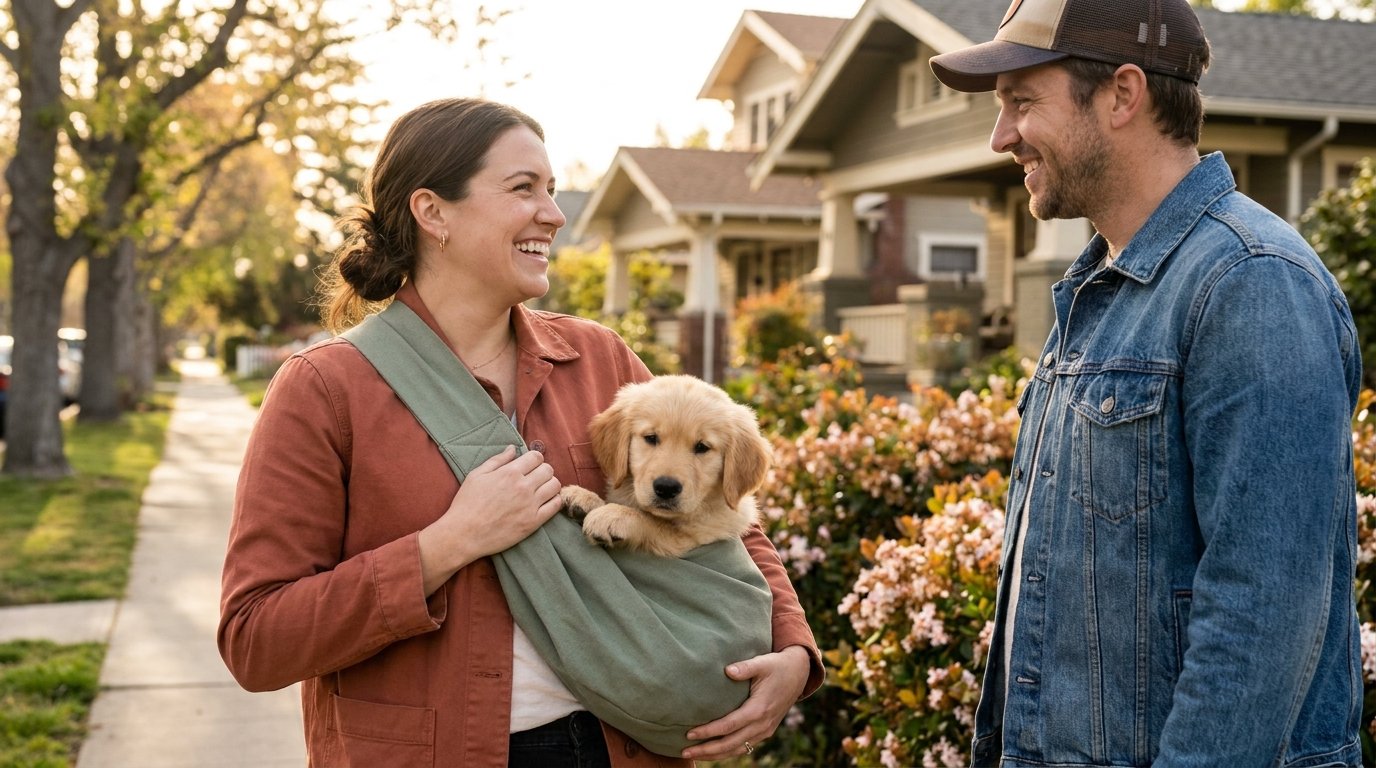
- The canvas sling and tote method: Slip your puppy into a secure, breathable sling or tote bag and carry them through outdoor coffee shop patios, busy sidewalks, and suburban shopping centers. They absorb all the sights, engine rumbles, and human chatter safely above ground level.
- Private, vet-vetted playgroups: Organize playdates exclusively with healthy, fully vaccinated adult dogs or enrolled puppies in private backyards that are known to be free of stray or unknown animals.
Puppy Socialization Checklist by Age: The Weekly Progression

A structured puppy socialization checklist breaks exposure down week by week—focusing on household sounds and gentle handling from 8 to 10 weeks, expanding to novel outdoor sights and public settings from 11 to 14 weeks, and reinforcing resilience through 16 weeks.
To prevent yourself from feeling overwhelmed, pace your puppy’s exposures across manageable weekly milestones rather than trying to cram everything into a single weekend.
- Weeks 8 to 10 (Home and Handling Foundation): Focus on domestic sounds (vacuum cleaners, blenders, doorbells), gentle handling of paws, ears, and mouth, meeting trusted human visitors, and short, positive crate experiences.
- Weeks 11 to 14 (World Exploration): Introduce carrying them through outdoor parking lots, meeting friendly strangers of diverse appearances (hats, beards, umbrellas), walking on different floor surfaces (tile, metal grates, gravel), and short car rides.
- Weeks 15 to 16 (Consolidation and Confidence): Reinforce previous exposures in slightly busier environments, practice polite calmness around passing bicycles or skateboards, and prepare for safe ground walking once final vaccine clearance approaches.
What’s the Difference Between Socializing and Overstimulating a Puppy?

Socialization is about calm, positive observation and curiosity, whereas overstimulation occurs when a puppy takes in too much sensory input, leading to frantic biting, whining, freezing, or frantic zoomies.
Many well-meaning owners make the mistake of dragging a tiny puppy through a crowded street festival or passing them around a noisy room of twenty people, assuming more exposure is always better. In reality, flooding a puppy’s nervous system creates trauma rather than confidence.
- Reading body language cues: A properly socialized puppy remains loose-bodied, accepts treats readily, and investigates objects with soft eyes and a wagging tail.
- Spotting shutdown or panic: If your puppy pins their ears back, refuses high-value food, pants heavily, tucks their tail, or tries desperately to climb up your chest to escape, they are deeply overstimulated. Immediately remove them from the environment and allow them to decompress in a quiet crate.
What Happens If I Miss My Puppy’s Socialization Window?

Missing the primary 3-to-16-week socialization window means a puppy’s brain hardens its defenses, leading to lifelong fearfulness, reactivity, or hesitation around novel things, though remedial socialization is still possible with professional support.
If you adopted an older puppy or rescue dog who missed early exposures, all hope is not lost. While the brain’s neuroplasticity is at its peak during those first four months, older dogs can still learn new associations through slow, patient counter-conditioning and desensitization.
- The remedial approach: Working with a positive-reinforcement trainer helps adult dogs unlearn fearful responses by pairing triggers with extraordinarily high-value rewards at a safe distance. Progress will be slower and require immense patience compared to early puppyhood windows.
Frequently Asked Questions (FAQ)

Your checklist should cover diverse human appearances (hats, beards, uniforms), environmental sounds (sirens, vacuums, appliances), novel surface textures (carpet, grass, gravel, metal), and controlled meetings with friendly, vaccinated dogs and people.
What is the 3-3-3 rule for puppies?
The 3-3-3 rule is a general guideline for rescue dogs describing the phases of adjustment: 3 days to decompress and feel safe, 3 weeks to learn the household routine and settle in, and 3 months to build complete confidence and feel truly at home.
Yes, you can continue shaping behavior and building confidence after 16 weeks through remedial socialization and counter-conditioning, though it requires significantly more time and intentional desensitization.
What is the 7 7 7 rule for puppies?
The 7-7-7 rule is a popular socialization benchmark suggesting that a puppy should experience 7 different types of surfaces, meet 7 different types of people, and explore 7 different environments before they reach 12 weeks of age.
Look for stress signals like heavy panting, refusing treats, freezing in place, trembling, or frantic attempts to escape or hide behind your legs.
Is it safe to take my puppy to pet store floors before vaccines are done?
No. High-traffic pet store floors are common hotspots for infectious pathogens like Parvovirus because thousands of dogs with unknown vaccination statuses walk across them daily. Always carry your puppy inside pet stores.
How many people should my puppy meet before 16 weeks?
Aim for 20 to 30 diverse, friendly individuals—including children, men with facial hair, people wearing hats, and individuals using mobility aids—before the 16-week mark.
True socialization is 90% about environmental exposure to sounds, sights, surfaces, vehicles, and human diversity, and only 10% about direct dog-to-dog play.
Conclusion

Guiding your puppy through their critical socialization window requires patience, vigilance, and a commitment to positive experiences. By utilizing safe pre-vaccination exposure methods, pacing your checklist week by week, and carefully monitoring your puppy’s body language for signs of stress, you can raise a confident, well-adjusted adult dog ready for any adventure.


“Alex is the go-to for anything practical — from picking the right harness to knowing when a puppy’s upset stomach needs a vet visit versus a little patience. Before joining Puppy Settled, she spent years working at a small-animal vet clinic and running a pet supply review blog on the side, which means every gear recommendation here has been tested (and every health tip double-checked). Alex owns a rescue mutt named Otis, who has personally ‘reviewed’ more chew toys and dog beds than any dog should probably need.”