
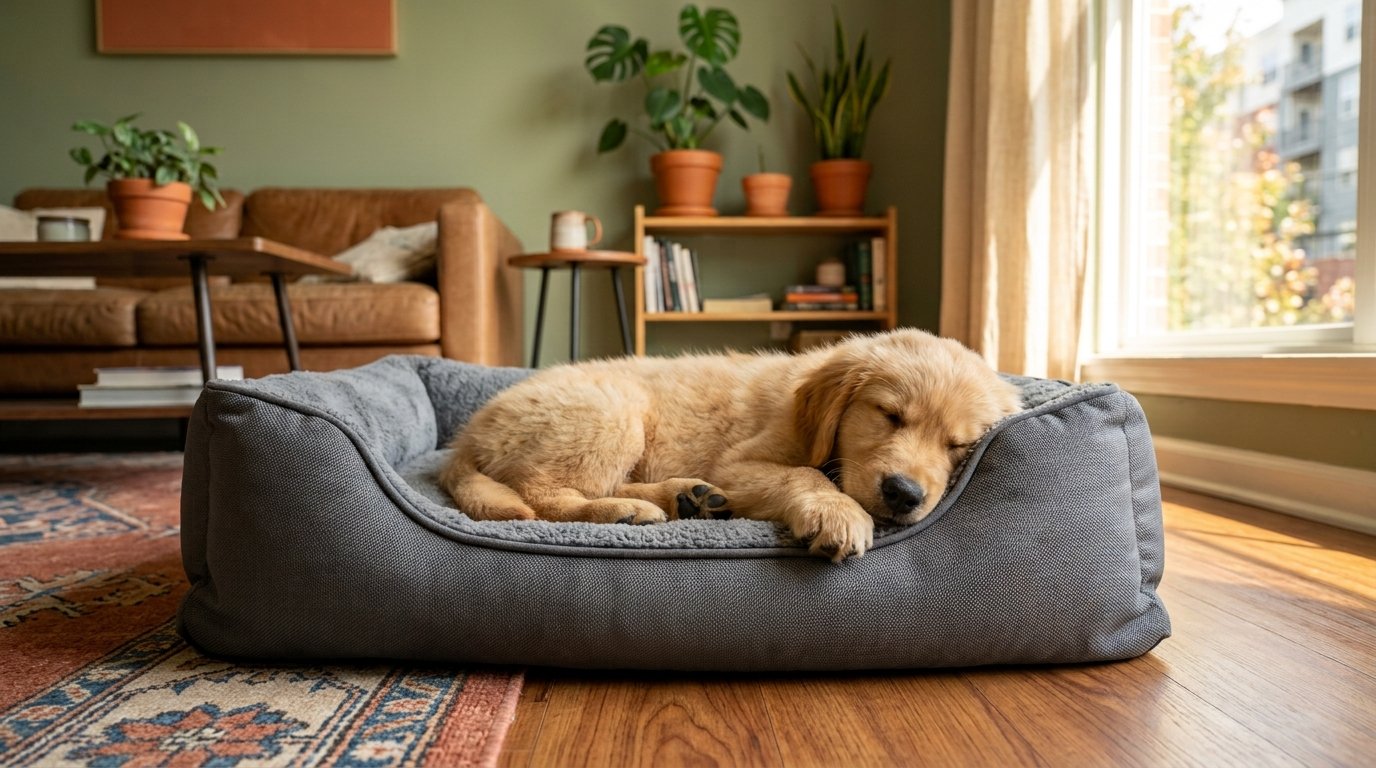
Best Puppy Beds: How to Choose by Size, Sleep Style, and Chew Resistance
If you are standing in your living room holding the shredded remains of your puppy’s second foam cushion in a week while wondering how an animal that weighs ten pounds can destroy a five-inch-thick mattress so fast, take a deep breath. You are not failing as a pet parent, and your puppy isn’t acting out of spite. When you search for the best puppy beds, two frustrating realities usually trap you: an expensive orthopedic mattress that becomes a chew toy within twenty-four hours, or old bath towels that offer zero support. Selecting the right puppy bed requires looking past marketing aesthetics and focusing on real-world practicalities. By mastering size measurements, choosing chew-resistant materials like ballistic nylon, and matching bed styles to your puppy’s unique sleeping posture, you can provide a cozy resting den that survives the teething phase.
1. Why Does My Puppy Keep Destroying Their Bed?

Destructive bed-chewing in puppies is typically driven by teething pain, boredom, or nesting instincts rather than simple malice, and it can be resolved through a mix of durable materials and mental enrichment.
When puppies enter the peak teething phase between 12 and 16 weeks of age, their inflamed gums crave pressure relief. Soft plush cushions, loose fabric seams, and projecting zippers act like an irresistible invitation for sore teeth. Furthermore, bored puppies left alone in crates often target bedding out of anxiety or pent-up energy. While upgrading to a heavy-duty, chew-resistant bed helps protect your wallet, solving the root cause requires pairing that durable bed with appropriate chew toys, interactive puzzle games, and proper mental fatigue.
2. What Size Bed Does My Puppy Actually Need?

The best way to determine your puppy’s bed size is to measure them from the tip of their nose to the base of their tail while stretched out flat on their side, then add six to eight inches for clearance.
Guessing a puppy’s adult size or buying a bed based purely on current weight often means the puppy outgrows it within a month, or finds it too cramped for comfort from the start.
- Measuring for sleep styles: A puppy that curls up into a tight “doughnut” shape can get by with a smaller round bolster bed, but puppies that sprawl out flat on their bellies or sides require rectangular or flat-mat styles where their limbs don’t hang off the cold floor.
- Crate-fit precision: If the bed is going inside a wire crate or an apartment exercise pen, measure the interior dimensions of the crate floor precisely. A bed that is even one inch too wide will bunch up against the wire walls, creating a crumpled ridge that tempts chewing and interferes with house training.
3. Should I Buy a Puppy Bed Now or Wait Until They Stop Chewing?

You should invest in a chew-resistant, easily washable puppy bed immediately rather than waiting, because proper rest is vital for a growing puppy’s joints and behavioral regulation.
Some owners try to save money by forcing a puppy to sleep on bare crate plastic or old towels while waiting for them to “grow out of chewing.” However, a comfortable, supportive resting surface protects growing joints and gives your puppy a designated safe den to decompress.
- The false economy of cheap beds: Buying a cheap ten-dollar pet store cushion that gets shredded on day one ends up costing more in replacement fees and vet risks than investing in a high-quality, rip-stop puppy bed designed specifically to withstand sharp needle teeth.
4. What’s the Best Puppy Bed Material for a Heavy Chewer?

The best puppy bed materials for heavy chewers are industrial-grade ballistic nylon, heavy rip-stop polyester, and Kevlar-reinforced canvas featuring hidden, heavy-duty zippers.
Standard plush fleece and cotton-blend beds offer zero defense against a determined puppy. When shopping for chew resistance, inspect how the bed is constructed.
- Ballistic nylon and rip-stop fabric: Originally engineered for military applications, ballistic nylon resists punctures, tearing, and clawing. It has a slick surface texture that discourages dogs from grabbing a fabric fold with their incisors.
- Hidden zippers and reinforced seams: Chewers almost always target seams and protruding plastic zipper pulls first. Look for designs where the zipper is tucked deep inside an internal fabric flap, completely out of reach of curious puppy teeth.
5. Is Memory Foam Safe for a Teething Puppy?

Traditional memory foam is generally unsafe for heavy-chewing teething puppies because if they rip open the outer cover, they can easily ingest the foam core, causing a severe intestinal blockage.
While orthopedic memory foam provides fantastic pressure relief for large-breed puppies or older dogs, it acts like a sponge for liquid and a soft snack for chewers.
- The safer alternative for young puppies: For puppies under six months old who still chew everything in sight, opt for waterproof, solid poly-fill pads or heavy canvas mats without loose foam stuffing.
- Saving memory foam for later: Save the expensive memory foam orthopedic beds for once your puppy has successfully graduated past the destructive teething phase and respects their indoor resting furniture.
6. How Do I Choose Between Bolster, Mat, and Donut Bed Styles?

Choosing the right bed style depends entirely on your puppy’s sleeping posture: bolster beds suit side-sleepers who like resting their heads on a pillow, while flat mats are ideal for crate use and hot-weather sprawl.
- Bolster and couch-style beds: Feature raised fabric walls around three or four sides. These provide a cozy sense of security and give puppies a soft headrest, making them ideal for living rooms and bedrooms.
- Flat crate pads and mats: Low-profile, streamlined pads designed to fit flush inside crates or travel carriers without taking up vertical head-space.
- Donut and cave beds: Deeply recessed, round beds with high, enclosing walls. These work wonderfully for tiny toy breeds or anxious puppies who love to burrow and hide.
7. Why Washability Is Non-Negotiable for Puppy Beds

A truly practical puppy bed must feature a removable, machine-washable waterproof cover to handle inevitable house-training accidents, muddy paws, and drool.
Puppyhood is messy. Between unexpected middle-of-the-night puddles, muddy backyard explorations, and heavy teething drool, a non-washable bed will harbor foul odors and bacteria within days.
- Internal waterproof liners: Look for beds that feature a TPU or waterproof polyurethane internal lining protecting the core stuffing. Even if your puppy has an accident on the bed, the liquid stays on the surface liner and never penetrates the inner filling, making cleanup as simple as zipping off the cover and tossing it in the washing machine.
8. Frequently Asked Questions (FAQ)

What size bed does my puppy actually need?
Measure your puppy from nose tip to tail base while they are stretched out on their side, then add six to eight inches to ensure they have ample room to sprawl comfortably.
Will my puppy destroy a regular dog bed?
Yes, most standard plush or cotton-stuffed dog beds will be shredded within days by an active teething puppy, which is why a ballistic nylon or rip-stop bed is recommended.
Is a chew-proof bed really worth the extra cost for a puppy?
Yes, because buying one high-quality, chew-resistant bed saves you from repeatedly replacing cheap cushions and eliminates the emergency medical risk of a foam intestinal blockage.
What’s the best puppy bed material for a heavy chewer?
Industrial-grade ballistic nylon and rip-stop polyester with reinforced seams and hidden zippers provide the strongest defense against heavy chewers.
Should I buy a puppy bed now or wait until they stop chewing?
Buy a durable, chew-resistant puppy bed immediately, as proper support is vital for growing joints and gives your puppy a designated place to settle.
Why does my puppy keep destroying their bed?
Bed destruction is typically driven by teething gum inflammation, boredom, or nesting instincts, which can be managed with durable gear and mental enrichment.
Is memory foam safe for a teething puppy?
Traditional memory foam is risky for young chewers because ingested foam can cause a dangerous intestinal blockage; save memory foam for after the teething stage.
How do I know if a bed will fit my puppy’s crate?
Measure the interior floor dimensions of your crate precisely, and choose a flat mat or crate pad that matches those exact measurements without bunching at the corners.
Conclusion

Choosing the right puppy bed protects your investment, safeguards your puppy’s health from ingestion hazards, and provides a comfortable anchor for their daily rest. By measuring accurately for their stretched-out sleep style, prioritizing chew-resistant ballistic nylon materials, and ensuring the cover is fully washable, you can set your puppy up for cozy, peaceful sleep.


Jordan writes PuppySettled’s training and behavior guides, drawing on years of hands-on experience fostering and training rescue puppies through local shelters in Denver, Colorado. Jordan focuses on practical, force-free training methods — crate training, potty training, and the tough early behavior challenges that come with a new puppy. When not writing, Jordan’s usually out on a walk with a foster dog in training.