
19 Things About The First Month With a Puppy: What’s Normal (and What’s Not)

Bringing a young pup into your home feels exciting. The initial weeks also bring sudden surprises and lost sleep. You might worry when your dog whines at night. You might wonder if your puppy is adjusting normally.
I felt that exact worry with my young rescue dog in Denver. She cried loudly during her first three nights home. My sleep vanished completely. I felt overwhelmed and stressed out.
Puppy Adjustment Curve (First 30 Days):
[Days 1-7: Shock & Fear] ——> [Days 8-21: Exploring Boundaries] ——> [Days 22-30: Real Routine]
(High Crying) (Biting & Zoomies) (Calm Trust)
Understanding what’s normal during your puppy’s first month helps you stay calm. Young dogs need structured care and clear routines to thrive. This guide breaks down what to expect during your puppy’s first month home. You will learn actionable solutions for biting, potty training, and sleeping.
Meet the person behind PuppySettled — helping first-time puppy owners settle in with practical, situation-specific advice for real homes and real schedules.
1. Expect Crying on Night One

First-night crying is completely normal for a young pup. Your dog just left their mother and littermates behind, and everything in your new home smells unfamiliar.
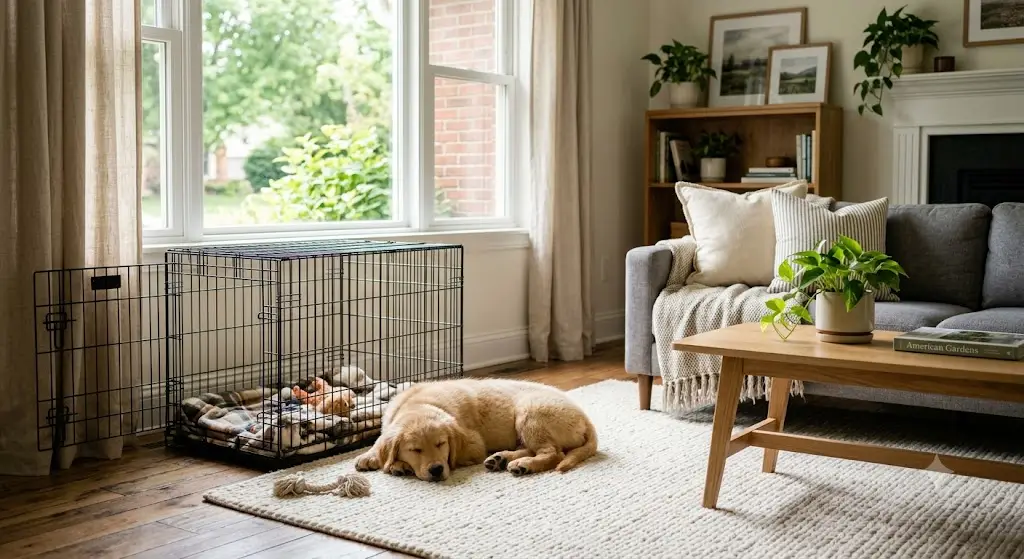
Place the dog crate right next to your bed. Put a warm hot water bottle inside the crate. Cover three sides of the crate with a blanket. Gentle breathing sounds help soothe nighttime anxiety fast.
2. Track Frequent Daily Potty Trips

Small puppies have tiny bladders with zero muscle control. Eight-week-old pups need potty breaks every two hours.
Daily Potty Routine:
[Wake Up] -> [Outside Immediately] -> [Breakfast] -> [Outside Again] -> [Nap Time]
Take your pup outside immediately after every meal and nap. Reward success outside with small liver treats instantly. Expect frequent accidents inside during your puppy’s first month home. Clean all floor accidents with specialized enzymatic sprays today.
3. Understand Painful Puppy Mouth Nipping

Puppies explore their new world using their teeth. Sharp puppy teeth will nip at fingers, ankles, and clothing — but that doesn’t mean your pup is aggressive.
Nipping does not mean your pup is aggressive. Redirect biting onto soft rubber toys or chew sticks. Stand up and freeze if sharp teeth touch human skin. Silence teaches young dogs that biting stops all fun games.
4. Learn Normal Puppy Sleep Patterns

Young puppies sleep up to eighteen hours every day. They run fast, eat meals, and crash suddenly.
Overtired puppies often throw loud temper tantrums indoors. Put your pup in a quiet room for scheduled naps. Regular nap times keep your puppy’s first-month behavior manageable. Rested dogs learn new house rules much faster.
5. Spot Early Signs of Separation Fear

Your pup wants to follow you everywhere initially. Whining at closed doors reflects basic survival instincts.
Practice leaving your room for short thirty-second intervals. Return calmly before your pup begins to panic or howl. Increase alone time gradually over the coming weeks. Building confidence early prevents long-term separation issues later.
6. Follow a Simple Weekly Growth Timeline

Tracking your puppy’s growth week by week keeps expectations realistic. Week one focuses entirely on comfort and safe bonding.
First Month Timeline:
- Week 1: Comfort, bonding, and basic crate adjustment
- Week 2: Initial potty routines and home exploration
- Week 3: Socializing to novel sounds and textures
- Week 4: Basic leash skills and cue training
Week two brings more curiosity and active play bursts. As you move into the third week, you can introduce light handling and fun grooming games. By week four, your pup will show better bladder control and improved focus.
7. Recognize Overtired Evening Zoomies

Sudden wild running across living room rugs happens nightly. Overtired puppies sprint, growl, and bite franticly at dusk.
Zoomies signal that your puppy needs a quiet nap. Lower indoor lights and turn off loud television screens. Place your pup inside a dark, calm crate room. Deep sleep stops crazy evening behavior rapidly.
8. Manage Mild Initial Eating Drops

New environments frequently cause mild appetite drops initially. Stress impairs digestion during early transitional days home.
Offer fresh kibble softened with warm water or broth. Avoid switching food brands suddenly during week one. Normal appetite returns as your dog settles in fully. Contact your veterinarian if food refusal lasts two days.
9. Start Gentle Basic Cue Training

Young puppies can learn basic cues at eight weeks old. Keep training sessions under three minutes long total.
Teach simple sit and watch cues using positive rewards. Use soft treats to guide your puppy into position. Stop training sessions while your dog remains happy and engaged. Early success builds strong handler focus naturally.
10. Handle Soft Digestive Stool Changes
Mild loose stool happens often during initial transition days. Environmental changes and new treats disturb young stomach bacteria.
Feed plain canned pumpkin to firm up soft stool. Ensure your puppy drinks plenty of fresh clean water. Contact your vet if soft stool contains bright blood. Persistent diarrhea requires professional veterinary attention right away.
11. Differentiate Normal Whining From Distress

Knowing how long it takes a puppy to settle in requires patience. Brief whining inside a crate represents testing new boundaries.
Frustration whining sounds light and stops within ten minutes. True distress involves heavy drooling, shaking, and frantic digging. Comfort distressed puppies with quiet, low-pitched vocal tones. Never punish a frightened pup for expressing genuine fear.
12. Introduce Gentle Handling Routines

Touch your puppy’s ears, paws, and tail daily. Pair light handling touch with delicious food treats instantly.
Handling practice prepares your dog for future vet visits. Cooperative care training reduces stress during nail trimming later. Start with three seconds of gentle paw holding today. Building trust early prevents handling struggles in adulthood.
13. Create Safe Indoor Free Zones

Unrestricted home access leads to heavy furniture chewing. Limit your new pup to one puppy-proof room.
Use sturdy baby gates or portable metal exercise pens. Remove floor rugs, electrical cords, and shoes from sight. Confined spaces make potty training and supervision much easier. Expand home freedom slowly as house training improves.
14. Socialize Safely Before Full Vaccines

Early socialization must happen before full vaccination completes. Exposure to novel sights prevents adult fear issues later.
Carry your puppy in a sling through busy neighborhoods. Let your pup observe passing cars, bicycles, and crowds. Avoid public ground surfaces where unknown dogs walk daily. Safe carried socialization builds strong mental confidence early.
15. Prepare Your Essential First Month Items

Gathering a complete first-month checklist saves valuable time. Essential gear prevents frantic late-night trips to stores.
Essential First Month Gear:
- [x] Adjustable nylon harness and 6-foot leash
- [x] Wire crate with divider panel
- [x] Enzymatic cleaner spray for accidents
- [x] Soft rubber chew toys and licking mats
Buy an adjustable harness, six-foot leash, and crate. Stock up on enzymatic cleaner and soft rubber toys. Having proper tools ready makes daily management smooth.
16. Stop Demand Barking Before It Starts

Puppies bark at owners to demand food or attention. Yielding to demand barking creates bad lifelong habits fast.
Turn your back whenever your pup barks at you. Wait for four seconds of total quiet behavior first. Reward calm stillness with attention or treats immediately. Silence teaches your dog that quiet actions produce results.
17. Master Leash Walking Basics Indoors

Heavy outdoor leashes scare small puppies during early attempts. Attach a light leash to a harness indoors first.
Let your pup drag the leash across living room carpets. Toss small treats forward to encourage smooth forward movement. Praise your pup for walking alongside your leg inside. Indoor practice makes real street walks much easier later.
18. Build Strong Positive Vet Connections

Schedule a routine wellness check within your first week. Bring high-value meat treats to the clinic lobby.
Feed treats while the veterinary staff examines your puppy. Positive clinic visits eliminate vet anxiety before shots begin. A happy first visit sets a great baseline forever.
19. Maintain Realistic Personal Expectations

Raising a young puppy brings genuine fatigue and frustration. The puppy blues affect thousands of loving dog owners.
Take short breaks by asking friends for puppy help. Remember that difficult puppy phases pass within several months. Consistent gentle effort yields a loyal, well-behaved adult companion.

Surviving your puppy’s initial weeks takes structure, patience, and kindness. Focus on basic potty routines, proper sleep, and gentle bonding daily. Celebrate small daily wins as your pup builds real confidence. Your hard work creates a wonderful lifelong bond with your dog.
What has surprised you most during your puppy’s first month? Leave a comment below and share your personal story with us!
Frequently Asked Questions (FAQ)
1. How much sleep does an 8-week-old puppy actually need?
Young puppies need 18 to 20 hours of sleep per day. Because their bodies and brains are growing rapidly, they play in short, intense bursts and then crash. If your puppy starts biting, growling, or sprinting wildly around the room (the “zoomies”), it is usually a sign that they are overtired and need a quiet nap in their crate or pen.
2. How often should I take my puppy out to go potty during the first month?
An 8-week-old puppy has a very small bladder with minimal muscle control and generally needs a potty break every 1 to 2 hours while awake, as well as immediately after:
- Waking up from a nap
- Eating or drinking
- Finishing an active play session
3. Is it normal for my puppy to cry in their crate on the first few nights?
Yes, night-one crying is completely normal. Your puppy has just been separated from their mother and littermates for the first time and is adjusting to a brand-new environment. To ease their anxiety:
- Keep the crate in your bedroom near your bed during the first week.
- Cover three sides of the crate with a light blanket.
- Place a warm hot water bottle (wrapped in a towel) or a heartbeat plush toy inside.
4. How do I get my puppy to stop nipping and biting my hands?
Puppies naturally explore the world with their mouth and teeth. When your puppy nips:
- Redirect immediately onto an appropriate chew toy or soft rubber ring.
- Freeze and go silent if teeth touch human skin—stepping away signals that biting stops all attention and fun.
- Avoid shouting or slapping, as negative reactions can be interpreted as exciting play or cause fear.
Yes, but safely. The critical socialization window opens between 8 and 16 weeks, before full vaccination is complete. To socialize safely:
- Carry your puppy in your arms or in a sling through public areas so they can observe new sights, sounds, and crowds without touching the ground.
- Avoid public ground surfaces (like park grass or pet store floors) where unknown or unvaccinated dogs may have walked.
- Host controlled playdates at home with calm, fully vaccinated dogs you know.
6. Why is my puppy eating less or having soft stools during their first week home?
Moving into a new home causes mild transitional stress, which can temporarily disrupt your puppy’s appetite and digestive system. To help:
- Moisten kibble with warm water or broth to make it more appealing.
- Stick strictly to the food brand the breeder or shelter was using—do not change diets suddenly.
- Add a tablespoon of plain canned pumpkin to help firm up loose stools.(Note: If food refusal lasts longer than 48 hours or if stools contain blood, consult your veterinarian right away.)
7. What are the essential items I need for my puppy’s first 30 days?
Your core setup should include:
- An adjustable wire crate with a divider panel
- An indoor exercise pen or baby gate to restrict free access
- An enzymatic cleaner spray designed for pet accidents
- An adjustable nylon harness and lightweight 6-foot leash
- A variety of soft rubber chew toys and licking mats


Maya is the founder and writer behind PuppySettled, where she shares practical, situation-specific guides for first-time dog owners. After bringing her own puppy home to a small apartment and realizing most advice out there assumed a house and a yard, she started writing the guides she wished had existed — for real budgets, real schedules, and real first-time-owner questions. When she’s not writing, she’s usually on a walk figuring out the next thing worth covering.