
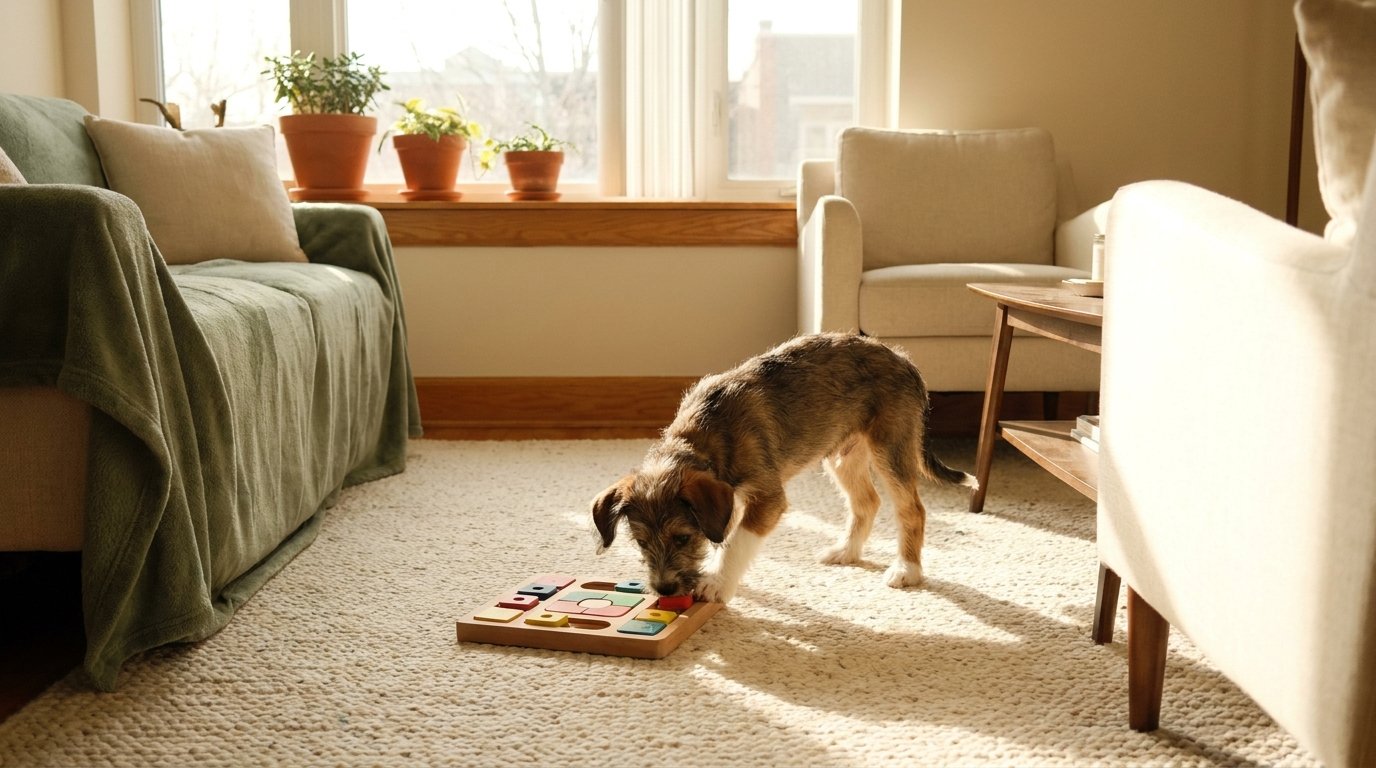
Indoor Exercise Ideas for Puppies with No Yard: Creative Ways to Burn Energy Inside
It is pouring rain outside, your apartment does not have a patch of grass, and your eight-week-old puppy is currently bouncing off the living room walls with endless, chaotic energy. Finding yourself housebound without a fenced backyard can feel overwhelming when you are trying to help a young puppy burn off steam safely. Many first-time owners worry that living in an apartment or navigating bad weather means their puppy will inevitably become destructive or restless. The good news is that physical exhaustion is only half the battle; mental stimulation and indoor games can tire a puppy out just as effectively as a long walk, without risking joint injury or violating building rules. Let’s explore how to set up safe indoor exercise routines, engage your puppy’s brain with creative games, and manage high-energy bursts right inside your living space.
Setting Up a Safe Indoor Exercise Zone

Before introducing any indoor games, you need to prepare a designated play area that protects both your puppy and your flooring. Standard living rooms often present hidden hazards, such as exposed electrical cords, slippery hardwood floors, and low coffee table corners.
- Clear Slippery Surfaces: Hardwood and tile floors can cause developing puppies to slip, slide, and strain their joints during sudden play bursts. Lay down large rubber-backed area rugs or interlocking foam mats to provide secure traction.
- Establish a Defined Boundary: Use indoor pet gates or a puppy playpen (exercise pen) to section off a safe zone. This prevents your puppy from wandering into unsafe areas or chewing baseboards while you are playing together.
- Remove Hazardous Objects: Pick up small items, children’s toys, electrical cords, and toxic houseplants before play begins to ensure a completely safe environment.
Low-Impact Physical Games for Small Spaces

When you cannot take your puppy outside for a traditional run, you still need ways to help them stretch their legs and burn off moderate physical energy. However, VCA veterinary guidance advises caution with strenuous exercise and activities involving high jumps, fast stops, or repeated direction changes while puppies are growing.
- Controlled Hallway Wandering: If your apartment has a carpeted hallway, use it for short, controlled leash walks or gentle lure-and-reward games using small, high-value treats.
- Gentle Indoor Fetch: Keep games of indoor fetch low-impact by using soft fabric toys or plush balls instead of heavy rubber spheres. Roll the toy slowly along the floor rather than throwing it high into the air to prevent jumping and sudden twists.
- Avoid Repetitive Stair Running: While some owners attempt to use stairs for puppy exercise, repetitive running up and down steps places high impact on growing joints. Limit stair access entirely during the first several months.
Mental Enrichment and Brain Games

Mental stimulation is often more exhausting for a young puppy than physical exertion. Engaging your puppy’s brain through problem-solving and foraging activities burns significant mental energy without putting stress on their developing skeletal system.
- DIY Muffin-Tin Puzzle Game: Place kibble or treats into the cups of a metal muffin tin, then cover each cup with a tennis ball. Your puppy must use their nose and paws to move the balls and uncover the food. Supervision note: Always supervise your puppy closely during this game. Tennis balls can pose a choking or swallowing hazard if chewed or torn apart, so remove them immediately if your puppy attempts to shred the fabric.
- Towel Roll-Up Game: Lay out an old cotton towel, scatter a handful of kibble across it, and roll it up loosely like a sleeping bag. Your puppy has to unroll and nudge the fabric to access their food. Supervision note: Watch your puppy to ensure they do not chew, shred, or swallow pieces of fabric.
- Cardboard Box Foraging: Fill a shallow cardboard shipping box with crumpled paper or paper towel rolls and hide dry treats inside. This encourages natural sniffing and searching behaviors in a safe indoor setting.
Scent Work and Indoor Tracking Exercises

Dogs experience the world primarily through their sense of smell, making scent games an exceptional way to tire them out mentally within a small apartment footprint.
- The “Find It” Game: Ask your puppy to sit and stay in the living room while you hide a few highly aromatic treats (such as small pieces of plain cooked chicken or xylitol-free peanut butter smeared lightly on a safe surface). Release them with a cue like “Find it!” and let them sniff out the prizes.
- Box-to-Box Scent Trails: Set up three or four empty cardboard boxes in a row across your living room floor. Place a treat inside only one of the boxes and encourage your puppy to investigate each box using their nose.
- Balancing Physical and Mental Output: Remember that individual exercise needs vary based on age, breed, health, and daily response. Always watch for physical signs of tiredness—such as slowing down, lying down with a toy, or losing interest in treats—and allow your puppy to rest before they become overtired [American Veterinary Medical Association (AVMA)].
Creating a Balanced Daily Indoor Routine

Relying solely on indoor play can become repetitive for both you and your puppy. Establishing a balanced daily routine helps structure indoor time while incorporating essential rest periods.
- Morning Routine: Begin with a short outdoor elimination trip, followed by a calm breakfast fed via a puzzle toy or snuffle mat to engage their brain early.
- Midday Management: During work or chore hours, provide a durable chew toy inside a playpen or crate, interspersed with short, 5-to-10-minute training or indoor sniffing sessions. [Internal link opportunity: Crate training schedule for working owners]
- Evening Wind-Down: Dedicate 15 minutes of quiet bonding and gentle petting in the evening to help your puppy transition into nighttime sleep mode.
Frequently Asked Questions

Q: How can I tire out a high-energy puppy in a small apartment without a yard?
Combine short, controlled indoor games—like scent tracking, puzzle toys, and gentle hallway walking—with regular outdoor trips to public parks or sidewalks for socialization and sniffing. Mental enrichment often exhausts high-energy puppies faster than physical running.
Q: Are interactive puzzle toys safe for unsupervised puppy use?
Most commercial puzzle toys are designed for supervised play. Always check manufacturer guidelines, inspect toys regularly for chewed plastic pieces, and remove them immediately if your puppy begins destroying the material.
Q: How do I know when my puppy has had enough indoor exercise?
Watch for subtle behavioral cues such as lying down voluntarily, ignoring food rewards, losing interest in toys, or becoming overly “mouthy” and hyperactive (which often signals overtiredness rather than a need for more play).
Q: Can I use peanut butter for DIY food puzzles with my puppy?
Yes, but you must check the ingredient label carefully to ensure the peanut butter is completely xylitol-free, as xylitol is highly toxic to dogs. Always offer peanut butter in moderation to avoid digestive upset.
Q: What is the best way to prevent my puppy from sliding on apartment hardwood floors?
Cover high-traffic pathways and play zones with washable rubber-backed runners, non-slip area rugs, or interlocking foam tiles to give your puppy secure traction and protect their developing joints.
Q: How should I structure indoor play if I live in an apartment with strict noise rules?
Focus on quiet mental games like scent work, lick mats, puzzle feeders, and soft toy rolling rather than high-energy games of fetch or tug-of-war that involve running, jumping, or barking.
Conclusion

Keeping a puppy entertained indoors without a yard requires creativity, safe equipment, and a strong focus on mental enrichment over high-impact physical exhaustion. By balancing scent games, puzzle toys, and gentle indoor routines, you can help your puppy burn energy safely while protecting your apartment living space.


Maya is the founder and writer behind PuppySettled, where she shares practical, situation-specific guides for first-time dog owners. After bringing her own puppy home to a small apartment and realizing most advice out there assumed a house and a yard, she started writing the guides she wished had existed — for real budgets, real schedules, and real first-time-owner questions. When she’s not writing, she’s usually on a walk figuring out the next thing worth covering.