How to Settle a Puppy in an Apartment (Stress-Free Guide)
How to Settle a Puppy Into a Small Apartment: A Stress-Free Survival Guide
If you’re reading this at 11pm with a puppy whining in the next room, a downstairs neighbor you’re worried about waking up, and a pee pad that somehow didn’t work — you’re not doing anything wrong. You’re just missing a plan built for your space, not a generic one written for someone with a backyard.
Most puppy advice assumes a house with a fenced yard and a mudroom. That’s not you, and it doesn’t need to be. Thousands of puppies settle beautifully into apartments and high-rises every year. The difference between a smooth first month and a miserable one usually isn’t the size of your home — it’s whether your routine is built around the specific challenges apartment life creates: no yard for potty breaks, close-quarters neighbors, and stairs or elevators between your puppy and the outside world.
Here’s exactly how to settle a puppy into a small apartment, step by step.
Start With a “Home Base,” Not the Whole Apartment
One of the biggest mistakes new apartment owners make is giving a puppy free run of the entire space on day one. In a small apartment, that can actually backfire — too much space too soon makes accidents harder to catch and supervision harder to maintain, even though the apartment itself is small.
Instead:
- Pick one room or a sectioned-off area (living room corner, a pen, a gated kitchen) as your puppy’s home base for the first 1–2 weeks.
- Keep their crate, water bowl, and a few toys in this zone.
- Expand their access to the rest of the apartment gradually, one supervised room at a time, once potty training is consistent.
This isn’t about restriction — it’s about setting your puppy up to succeed instead of guessing where accidents might happen.
Apartment Crate Training: Choosing the Right Setup
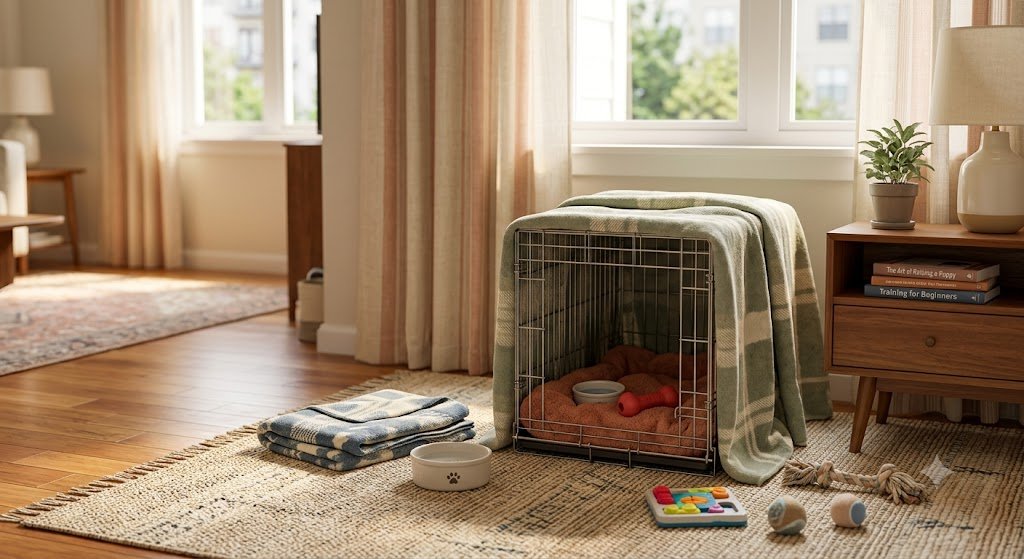
Crate training matters even more in an apartment, because it gives your puppy a den-like space that’s theirs in an environment where everything else — noise, smells, footsteps overhead — is new and a little overwhelming.
- Size it for now, not for later. A crate that’s too big gives a puppy room to potty in one corner and sleep in the other, which undermines the whole point. Look for a crate with a divider panel you can adjust as your puppy grows. [Affiliate opportunity: recommended crate size/style by puppy weight — no specific brand invented here.]
- Place it away from the front door. Hallway noise and neighbors passing by are extra stimulation your puppy doesn’t need while learning to settle.
- Cover three sides with a light blanket to create a calmer, den-like feel — helpful in open-concept apartments where the crate can otherwise feel exposed on every side.
Related: if you’re not sure how to start, see our guide on [first-night crate training for new puppies].
Indoor Potty Training When You Don’t Have a Yard
This is the number one stressor for apartment owners, and it’s solvable — it just takes a different approach than “let them out in the yard.”
The elevator/stairs problem. If reaching grass means an elevator ride or a flight of stairs, your puppy’s tiny bladder may not make it in time during the first few weeks. Two solid options:
- Litter box or turf pad training, using real or artificial grass indoors as a bridge until your puppy has better bladder control (usually improving significantly by 4–6 months).
- A designated balcony or patio spot, if you have one, with pee pads or a turf box — supervised, since balconies come with their own safety risks for small puppies.
Build a tight, predictable schedule. In an apartment, you don’t have the luxury of “just let them out in the yard” when you sense they need to go — you have to beat them to it. Take your puppy out or to their indoor spot:
- Immediately after waking up
- Within 15 minutes of eating or drinking
- After any period of play
- Every 1–2 hours for very young puppies
Use the same door and path every time. Consistency helps your puppy connect the route with the routine, which matters more in an apartment where there isn’t an obvious “outside” visible from every room.
Managing Barking and Noise for Apartment Living
Thin walls and shared hallways mean barking isn’t just a training issue in an apartment — it’s a relationship-with-your-neighbors issue. Address it early, gently, and consistently.
- Desensitize to hallway sounds on purpose. Several times a day, calmly expose your puppy to the sounds that trigger barking (footsteps, elevator dings, the mail slot) at a low intensity, rewarding calm behavior with treats. Gradually increase exposure as they stay relaxed.
- Avoid reacting big when they bark. Yelling “quiet!” can sound like you’re joining in from your puppy’s perspective. Instead, wait for a pause in barking, then calmly redirect to a toy or command they know.
- Give them a job during high-noise times. A stuffed food toy during a noisy building period (trash pickup, delivery hours) can redirect focus before barking starts.
- Talk to your neighbors early. A quick heads-up that you have a new puppy and are actively working on the transition goes a long way if there’s an adjustment period.
Exercise and Mental Stimulation Without a Yard
No yard doesn’t mean no way to tire out a puppy — it means getting more intentional about it.
- Short, frequent walks rather than one long one — better for a puppy’s developing joints anyway, and easier to fit around apartment life.
- Hallway or stairwell fetch (where building rules allow) for quick bursts of indoor exercise on rainy days.
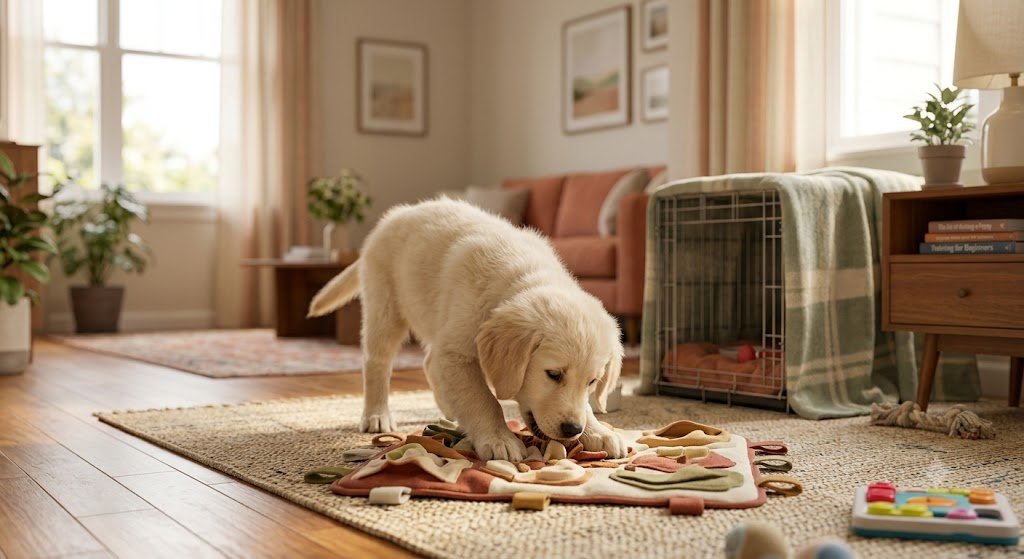
- Puzzle feeders and snuffle mats to work your puppy’s brain, which tires them out faster than physical activity alone in the first few months.
- Structured “settle” time. Apartment puppies especially benefit from learning to relax on a mat or bed near you, rather than needing constant activity to stay calm.
Setting Up Your Space for the First Month
A few small setup choices in week one save a lot of cleanup later:
- Keep a washable rug or mat near the potty spot for easy cleanup on hard flooring.
- Store an enzymatic cleaner within reach — accidents happen, and fast cleanup prevents your puppy from being drawn back to the same spot by scent.
- Use furniture and baby gates rather than closed doors when possible, so your puppy can see and hear you even when confined to their home base — reducing isolation-related whining, which travels through apartment walls more than you’d like.
For more on getting your whole space ready before day one, see our [apartment puppy-proofing checklist].
When to Ask for Extra Help
If barking, accidents, or anxiety aren’t improving after a few consistent weeks, that’s not a sign you’ve failed — some puppies (and some buildings) need more support. A force-free trainer experienced with apartment or condo living can often solve in a session or two what feels unsolvable at 11pm alone. [needs source: local trainer directories or breed-specific resources can be linked here once available.]
FAQ
How long does it take to potty train a puppy in an apartment?
Most puppies show real progress within 2–4 weeks of a consistent schedule, though full reliability often isn’t until 4–6 months old, since bladder control develops gradually.
Can you have a puppy in a small apartment without a yard?
Yes — with a structured potty routine (indoor turf, scheduled outdoor trips, or a balcony setup), consistent exercise, and crate training, puppies settle into apartments successfully every day.
How do I stop my puppy from barking at every noise in the hallway?
Desensitize gradually by exposing your puppy to common hallway sounds at low intensity and rewarding calm behavior, rather than only reacting after barking starts.
What size crate is best for an apartment?
A crate sized for your puppy’s current stage (with a divider panel for growth) works better in tight spaces than an oversized crate, since it feels more den-like and keeps the potty-training benefits intact.